
Gatekeeper
Pyronia tithonus
Description
How to identify
The Gatekeeper (Pyronia tithonus) is a butterfly belonging to the Nymphalidae family, widely distributed across temperate regions of Europe and parts of Asia.
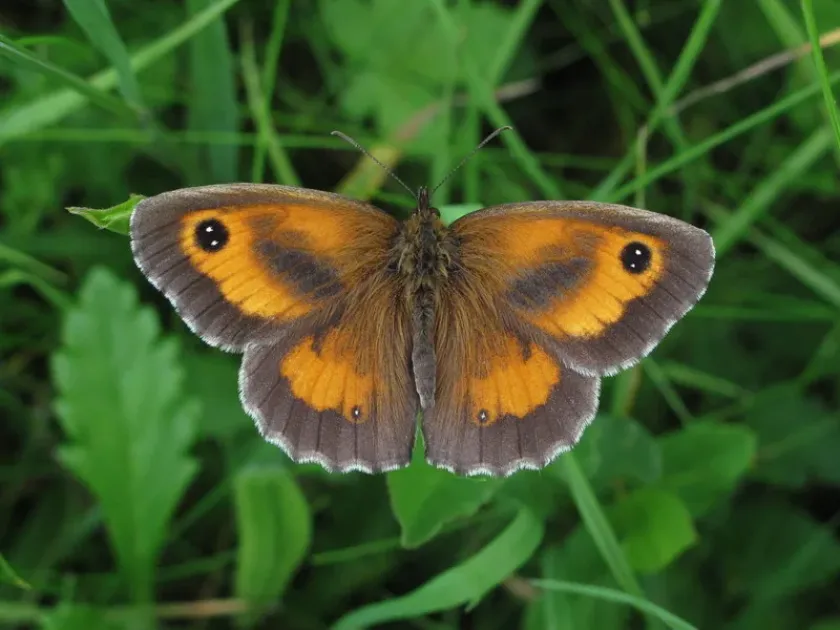
The adult butterfly is easily recognized by its bright orange wings with broad brown margins and distinctive black spots with white centers, known as 'eyespots'.
The larvae (caterpillars) are light green or yellowish, covered in short, fine hairs, and possess two small anal points, which are typical for this genus of satyrine butterflies.
The pupa is of the suspended type, usually light brown or green, providing excellent camouflage against the grass stems where development takes place.
As a species, it has a single generation per year, and its life cycle is synchronized with the phenology of various wild and cultivated grasses.
What it damages
The primary food sources for the larvae are several species of grasses, including bent, meadow-grasses, and various cereal crops when wild hosts are scarce.
Feeding larvae remove leaf tissue, which can significantly reduce the photosynthetic surface of the plant, especially in young cereal seedlings.
While often considered a pest of minor economic importance, in cases of severe infestation, yield reduction can occur due to loss of foliage and plant vigor.
Damage is typically most visible at the field margins, where the butterfly naturally breeds, before spreading into the interior of the agricultural crop.
The cumulative effect of larval feeding makes the grass stems more susceptible to drought stress and secondary fungal pathogens common in cereal farming.
When it appears
The adult flight period typically occurs from late June to August, when individuals are most active in warm, sunny weather conditions.
The species overwinters as a partially grown larva, hidden deep within the tussocks of grass near the base of the plant to escape frost.
Larval activity resumes in early spring, as temperatures rise and the host grasses begin their rapid vegetative growth phase.
Pupation takes place in late spring or early summer, with the duration of the pupal stage being strictly dependent on environmental temperature.
Monitoring the population throughout the spring is crucial to predict the scale of the upcoming summer adult flight and subsequent larval emergence.
Signs of infestation
Symptoms of infestation include irregular holes or notches along the leaf margins, often referred to as 'windowing' or margin consumption.
A high density of butterflies observed over the field during the summer months is a strong indicator of egg-laying activity in the vicinity.
Accumulation of larval frass near the base of stems is a reliable sign of recent caterpillar activity within the plant canopy.
Stunted growth or chlorosis of specific patches of crops may indicate heavy larval feeding concentrations, particularly during dry seasons.
Exposing the base of the grass in suspect patches will often reveal larvae resting during the cooler parts of the day.
Control measures
Cultural control is the most effective approach, focusing on the maintenance of field edges and the removal of tall, grassy weeds that serve as breeding sites.
Ploughing or harrowing of fallow land after harvest helps to eliminate the overwintering population of larvae by exposing them to predators and cold.
Biological control agents, such as Bacillus thuringiensis, can be applied if the larval population exceeds the damage threshold for the crop.
Chemical intervention should be reserved for severe outbreaks, utilizing selective insecticides that prioritize the preservation of beneficial insect populations.
Integrated Pest Management (IPM) practices, including the use of pheromone traps to monitor flight timing, allow for precision application of necessary protective measures.
Taxonomy
- Latin name
- Pyronia tithonus
- Order
- Lepidoptera (butterflies)
- Family
- Nymphalidae
- EPPO code
- PYNITI
Discussion
No discussions yet — be the first.