
Pyrgomorpha conica
Pyrgomorpha conica
Description
How to identify
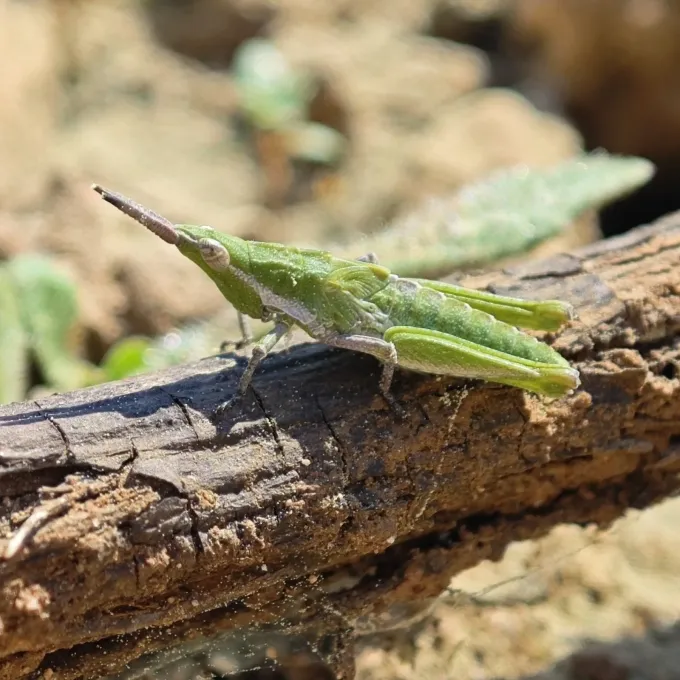
Pyrgomorpha conica is a species of grasshopper belonging to the family Pyrgomorphidae, characterized by its distinctive conical head shape.
The insect possesses a cryptic coloration ranging from green to brown, which helps it blend seamlessly into the surrounding dry or living vegetation.
Adults typically reach a length of 25 to 35 mm, with females being significantly larger and more robust than males, reflecting the sexual dimorphism common in this family.
They are easily identified by their narrow, elongated body structure and the pointed shape of the head, which distinguishes them from typical locusts.
These grasshoppers prefer open, arid environments and are often observed in agricultural fields adjacent to grasslands or fallow lands.
What it damages
As a polyphagous insect, Pyrgomorpha conica consumes a wide variety of plant species, causing significant stress to both cultivated and wild vegetation.
In agricultural settings, they frequently attack cereal crops such as wheat, barley, and maize, particularly during the early vegetative stages.
Vegetable crops and leguminous plants are also susceptible to infestations, leading to reduced plant vigor and potential loss of yield.
The insects feed by chewing on leaves, which results in jagged edges and partial defoliation of the affected plants.
When populations are high, the cumulative damage to the foliage reduces the plant's photosynthetic capacity and slows down overall growth.
When it appears
The life cycle of Pyrgomorpha conica consists of three stages: egg, nymph, and adult, which is typical for orthopteran insects.
The overwintering stage is the egg, which is laid in the soil by females in late summer or autumn, ensuring protection during winter.
Nymph hatching typically takes place in the spring, synchronized with the onset of favorable temperatures and the availability of fresh forage.
Adult activity peaks during the summer months, specifically between June and August, when feeding and reproductive behaviors are most intensive.
While there is generally one generation per year, the length of the warm season significantly influences the survival rate and population density.
Signs of infestation
The first indicator of an infestation is the presence of unevenly eaten leaf margins, which is a classic symptom of grasshopper damage.
Close inspection of the plants, particularly in the early morning or late afternoon, often reveals the insects resting on the stems or undersides of leaves.
Small fecal pellets found on the leaf surfaces or at the base of the plants are reliable evidence of active feeding by nymphs and adults.
Affected plants may exhibit signs of stress, including stunted growth and wilting, if the infestation level is severe enough to compromise the plant structure.
Empty exuviae, or cast-off skins from molting nymphs, can often be found on stems, indicating the presence of a developing population.
Control measures
Effective management begins with sound agronomic practices, such as deep autumn plowing to disturb and destroy egg pods hidden in the soil.
Maintaining clean field borders and eliminating weed growth around cultivated areas reduces the primary habitat and food source for early-stage nymphs.
Biological control options, including the use of entomopathogenic fungi, can be employed to manage populations in an environmentally friendly manner.
Chemical control should be reserved for instances where the economic injury level is exceeded, utilizing selective insecticides that minimize impact on non-target species.
Monitoring the fields regularly during the spring and summer allows for early intervention, preventing small localized infestations from spreading across the entire field.
Taxonomy
- Latin name
- Pyrgomorpha conica
- Order
- Orthoptera (locusts)
- Family
- Pyrgomorphidae
- EPPO code
- PYRMCO
Discussion
No discussions yet — be the first.