
Purpuricenus humeralis
Purpuricenus humeralis
Description
How to identify
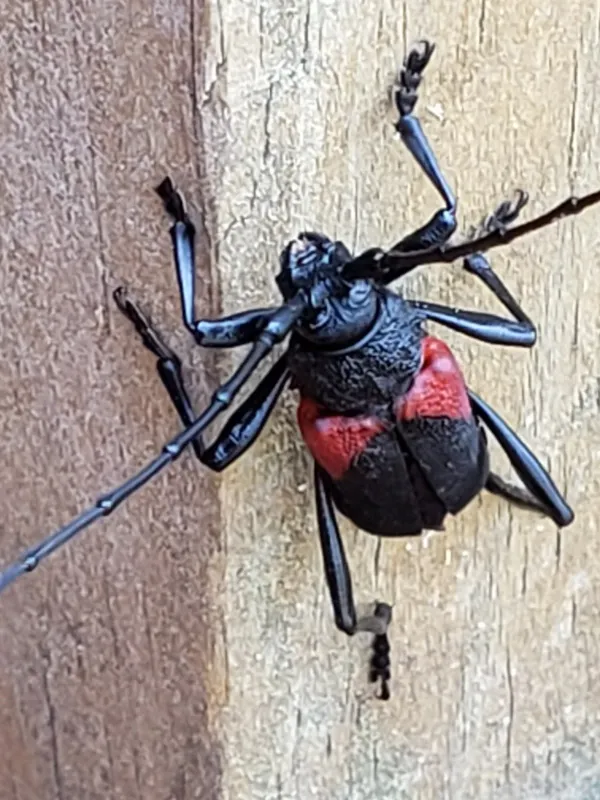
Purpuricenus humeralis is a species of longhorn beetle belonging to the Cerambycidae family, known for its distinctive and striking appearance.
Adult beetles feature a black body with characteristic bright red or purple spots on the shoulders of the elytra, giving them a unique look.
The body length of the adults typically ranges from 15 to 22 millimeters, and the body surface is covered with fine, soft hairs.
The larvae are typically legless, white to yellowish in color, and possess a well-defined dark head and strong mandibles for wood boring.
Pupation occurs within the wood, where the larva creates a specialized chamber that reflects the physical structure of the adult beetle.
What it damages
This beetle is classified as a wood-boring pest, primarily affecting various hardwood species in both orchards and natural forests.
Common hosts include fruit trees such as apple, pear, plum, cherry, and other varieties of stone and pome fruits.
The larvae are the most destructive stage, creating extensive tunnels within trunks and branches, which disrupts the tree's nutrient transport system.
Trees infested by this pest experience reduced vigor, lower crop yields, and, in severe cases, total dieback of affected branches or the whole tree.
Young saplings are particularly vulnerable, as the larval tunneling can easily girdle the main stem, leading to the rapid death of the tree.
When it appears
Adult beetle activity typically begins in late spring and continues throughout the summer months, which serves as the primary mating season.
Females lay their eggs in bark crevices or damaged areas of the trunk, seeking out trees that are already stressed or wounded.
The larvae hatch in mid-summer and immediately bore under the bark, beginning their life cycle of feeding on the phloem and sapwood.
The pest overwinters primarily in the larval stage, deep within the wood tissue, where it continues to feed until the next pupation phase.
The life cycle can take between one and two years, influenced by regional climatic conditions and the overall health of the host tree.
Signs of infestation
One of the first signs of infestation is the appearance of small, oval-shaped exit holes on the bark where the adults have emerged.
Gummosis or sap leakage is frequently observed at the entry points of the larvae, as the tree attempts to seal off the damaged tissues.
The presence of fine wood dust, often called frass, at the base of the tree or within branch crevices is a major indicator of active larval feeding.
Yellowing, wilting, and premature leaf drop on specific branches are clear indications of compromised internal transport systems.
Structural weakness, including canopy dieback and branches snapping under wind pressure, indicates that the wood has been significantly weakened.
Control measures
The primary control strategy involves rigorous sanitary practices, including the pruning and destruction of heavily infested branches or dead trees.
Wounds on the trunk should be treated and sealed with appropriate horticultural pastes to prevent females from finding sites for egg-laying.
Monitoring using pheromone traps during the summer season is effective for detecting the presence of adults and determining the timing for treatment.
Chemical control with contact-stomach insecticides may be necessary during peak beetle activity periods to protect healthy trees in the orchard.
- Maintain tree vigor through proper irrigation and balanced fertilization.
- Apply white wash to trunks to discourage female beetles from landing.
- Inspect orchards regularly for exit holes to ensure early detection of the pest.
Taxonomy
- Latin name
- Purpuricenus humeralis
- Order
- Coleoptera (beetles)
- Family
- Cerambycidae
- EPPO code
- PURPHU
Discussion
No discussions yet — be the first.