
Acalolepta rusticator
Acalolepta rusticator
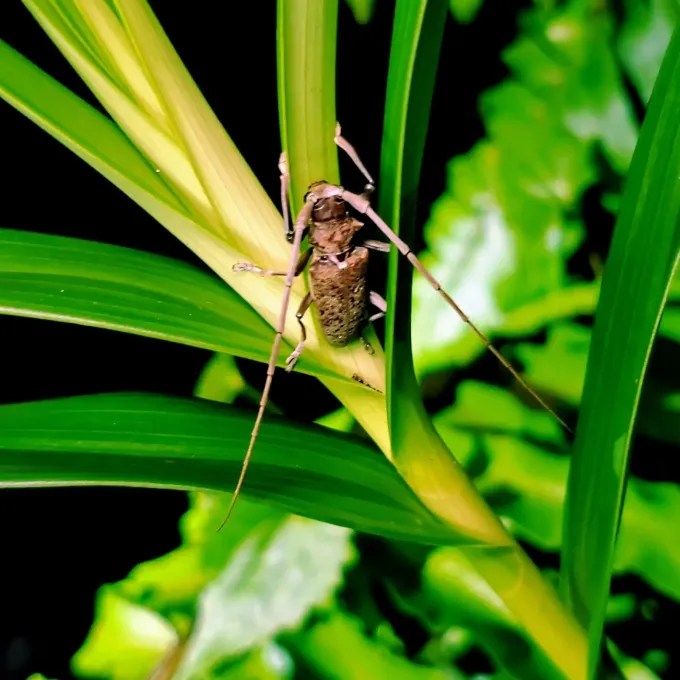
Description
How to identify
Acalolepta rusticator is a species of longhorn beetle (family Cerambycidae) known for its wood-boring behavior. These beetles possess long, graceful antennae and an elongated, robust body shape typical of the subfamily Lamiinae.
The adults are typically brownish or rusty in color, which provides excellent camouflage against the bark of the trees they inhabit, making them difficult to spot.
The larvae are white, cylindrical, and legless with heavily sclerotized mouthparts, specifically evolved to consume and tunnel through solid woody tissues.
Adult beetles are nocturnal, spending their days hidden in foliage or crevices and becoming active only after dusk, which is a major factor in their often-overlooked presence.
The complete life cycle, lasting for one or more years, takes place inside the wood, from the egg stage to the emergence of the adult beetle through an exit hole.
What it damages
This beetle acts as a polyphagous pest, affecting a wide variety of hardwood and fruit tree species, which creates risks for both forest management and private orchards.
Larvae are responsible for the primary damage, as they drill long, irregular galleries deep into the heartwood and sapwood, effectively disrupting the vascular system.
As the galleries proliferate, they compromise the structural integrity of the tree, causing branch dieback, crown thinning, and in severe cases, tree mortality.
The tunnels created by the larvae provide entry points for secondary fungal and bacterial infections, which accelerate the wood decay and overall tree death.
Economic losses arise not only from the loss of trees but also from the significant degradation of timber quality, rendering the wood unsuitable for commercial use.
Signs of infestation
One of the most noticeable signs of an infestation is the appearance of perfectly round exit holes on the surface of the bark, left behind when adults emerge.
The accumulation of wood shavings, known as frass, at the base of the tree or in the crotches of branches is a classic indicator of active larval feeding inside the trunk.
Visible decline in tree vigor, such as yellowing foliage, wilting branches, or stunted annual growth, indicates that the larvae have severely damaged the conductive tissues.
In some cases, the bark may show unusual cracking or localized bleeding of sap, which occurs as a defensive response to larval activity or associated rot.
During quiet nights, it is sometimes possible to hear the subtle sound of larvae chewing within the trunk, which can confirm the presence of an active infestation.
Control measures
Effective management begins with strict silvicultural practices, including the prompt removal and disposal of infested, dead, or dying trees to reduce breeding sites.
In high-value areas, targeted application of systemic insecticides can be used to protect healthy trees by killing larvae during the initial boring process.
The use of light traps is a recommended method for monitoring adult beetle populations and reducing their numbers in affected areas during the peak flight season.
Promoting a healthy ecosystem that supports natural predators, such as woodpeckers and various parasitic wasps, can help keep the beetle population under control.
Quarantine measures are essential in regions where the pest is not yet established, ensuring that no wood, logs, or nursery stock are transported from infested zones.
Taxonomy
- Latin name
- Acalolepta rusticator
- Order
- Coleoptera (beetles)
- Family
- Cerambycidae
- EPPO code
- MONCFI
Discussion
No discussions yet — be the first.