
Asian longhorned beetle
Acalolepta vastator
Description
How to identify
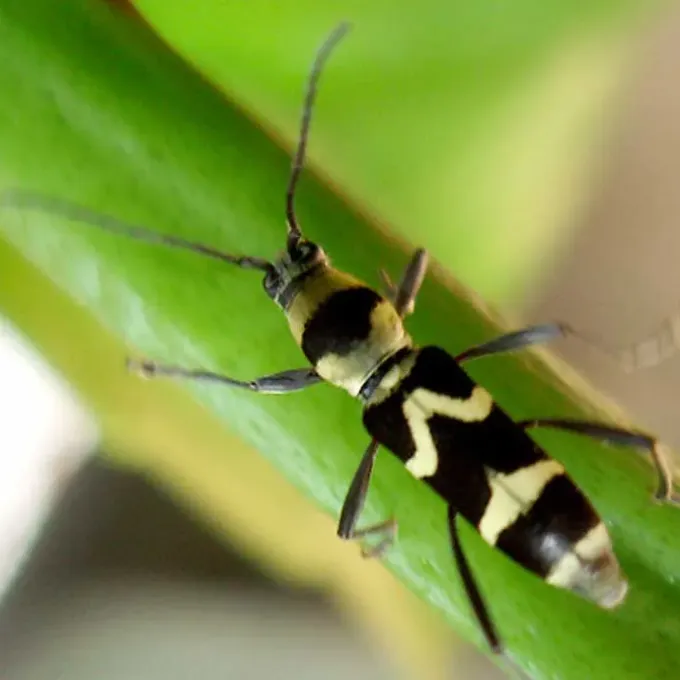
Acalolepta vastator is a large wood-boring beetle of the Cerambycidae family, commonly referred to as the Asian longhorned beetle. Adult beetles typically measure between 40 and 50 mm in length and exhibit a grey-brown coloration.
The most distinctive feature of this species is its exceptionally long antennae, which allow the beetle to navigate and detect suitable host trees for oviposition.
Larvae are legless, creamy-white in color, and possess robust mouthparts designed for boring into solid timber. They spend the majority of their development cycle hidden within the tree's vascular tissue.
The life cycle undergoes complete metamorphosis, including egg, larval, pupal, and adult stages. The adults are capable of flight, which facilitates their spread across wide geographic areas during the summer months.
These insects are highly adaptable and pose a significant threat to various tree species due to their ability to complete their life cycle inside the wood, making them difficult to detect.
What it damages
This beetle is a polyphagous pest, known to infest a wide range of fruit, ornamental, and forest trees, including citrus, fig, and grapevines. It targets both healthy and stressed plants.
The larvae tunnel deep into the sapwood and heartwood, creating extensive galleries that sever the tree’s water and nutrient transport systems, causing severe physiological stress.
Repeated infestation and the subsequent structural damage to the tree's wood often lead to the death of branches or, in severe cases, the entire tree over a few growing seasons.
Structural integrity is significantly compromised by larval tunneling, increasing the risk of branch breakage during high winds or heavy foliage loads.
In addition to direct damage, the entry holes created by the beetles serve as focal points for secondary infections by fungi and bacteria, further weakening the host tree.
Signs of infestation
The presence of large, round exit holes on the bark surface is a primary indicator that the beetles have completed their pupal development and emerged as adults.
Frass, which resembles sawdust or wood shavings, often accumulates at the base of the tree, around the trunk, or in branch crotches where larvae have been actively feeding.
Canopy dieback and yellowing leaves are common symptoms as the damaged internal wood prevents proper nutrient flow to the extremities of the tree.
Unexplained wilting of branches during the peak of the growing season may suggest significant larval activity deep within the vascular tissue of the affected tree.
Bark splitting or localized lesions on the trunk can sometimes be observed, often caused by the beetle’s oviposition sites or the resulting larval tunneling just beneath the surface.
Control measures
Strict quarantine measures on the movement of plant material are essential to prevent the human-aided spread of this beetle into new, uninfested areas.
Regular inspections of tree trunks and branches are necessary for early detection, allowing for the timely removal and destruction of infested wood to eliminate local populations.
While chemical control with systemic insecticides can be used to treat infested trees, it is often limited in efficacy once the larvae have bored deep into the wood.
Integrated pest management (IPM) strategies, including the use of pheromone traps, are recommended to monitor adult populations and determine the appropriate timing for protective interventions.
Biological control initiatives using beneficial nematodes or entomopathogenic fungi offer an environmentally friendly approach to managing larval populations within the wood galleries.
Taxonomy
- Latin name
- Acalolepta vastator
- Order
- Coleoptera (beetles)
- Family
- Cerambycidae
- EPPO code
- ACLPVA
Discussion
No discussions yet — be the first.