
Acalolepta sejuncta
Acalolepta sejuncta
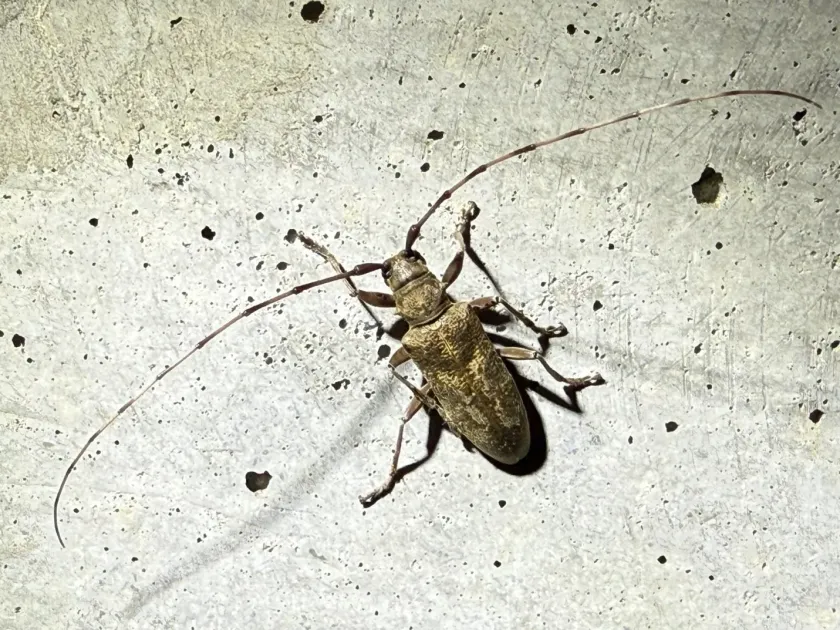
Description
How to identify
Acalolepta sejuncta is a species of longhorn beetle (Cerambycidae) known for its distinctive appearance, featuring long antennae typical of the family. These insects are adept at camouflage against tree bark.
Adult beetles possess robust mandibles designed for navigating and feeding on woody tissues. Their elongated bodies are well-adapted for moving within narrow spaces under the bark of host trees.
The larvae are typically legless and cream-colored, characterized by a well-developed, chitinized head capsule. Their physiology is perfectly suited for tunneling into wood.
As wood-boring insects, they play a specific ecological role but are considered significant pests when they infest managed orchards or ornamental tree plantations.
Identification usually involves inspecting the elytra texture and antennae length, as Acalolepta contains many morphologically similar species that occupy different ecological niches.
What it damages
This beetle primarily targets weakened or stressed deciduous trees. Healthy trees are usually less susceptible, but extreme weather conditions can lower their natural resistance.
The larvae bore tunnels through the phloem and xylem, effectively disrupting the plant's nutrient and water transport systems. This leads to progressive branch dieback.
Persistent infestations compromise the structural integrity of the wood, which can lead to wind damage and branch failure, particularly during storm events.
The galleries created by larvae serve as entry points for various pathogens, including fungi and bacteria, which often cause secondary rot and accelerate tree decline.
In mature trees, the damage might be latent for years, eventually resulting in the death of the entire tree once the internal wood is extensively tunneled.
When it appears
Adult emergence typically occurs during the warmer months, often starting in late spring. During this phase, beetles are active in mating and seeking suitable oviposition sites.
Eggs are deposited in small crevices or niches created by the female in the bark. Upon hatching, larvae immediately bore into the tree to begin their development.
The duration of the larval stage is highly variable, depending on host quality, environmental temperature, and moisture levels within the wood.
Adults emerge through characteristic exit holes, which are one of the most reliable indicators that the lifecycle has reached completion within a specific wood section.
The species survives the winter as larvae, dormant deep within the xylem, which protects them from extreme cold and desiccation during the colder months.
Signs of infestation
The presence of "frass"—a sawdust-like material created by the larvae as they tunnel—is a primary sign that an infestation is active.
Exit holes found on the surface of the bark are clear indications that adult beetles have recently emerged and that the tree has hosted a generation of the pest.
Visible wilting or yellowing of the canopy, especially starting from the top, suggests that the internal vascular system has been severely compromised.
Sap weeping or resin flow from specific spots on the trunk often marks the entry point or active larval feeding areas beneath the bark surface.
- Accumulation of sawdust-like frass.
- Circular exit holes on the bark.
- Progressive crown dieback.
- Sap or resin leaking from trunks.
Control measures
Proactive management focuses on maintaining tree vigor through proper irrigation, fertilization, and soil management to prevent the initial attraction of the beetles.
Sanitation is critical; all dead, dying, or heavily infested wood should be pruned and removed immediately to reduce the local beetle population.
For high-value trees, direct injection of systemic insecticides into the larval galleries can be performed to eliminate active infestations before they spread.
Pheromone-baited traps can be deployed to monitor and suppress adult populations, particularly during the peak spring and early summer flight periods.
Physical barriers, such as trunk wraps or protective whitewashing, can discourage females from finding suitable sites for egg deposition on the bark surface.
Taxonomy
- Latin name
- Acalolepta sejuncta
- Order
- Coleoptera (beetles)
- Family
- Cerambycidae
- EPPO code
- ACLPSE
Discussion
No discussions yet — be the first.