
Acalolepta
Acalolepta
Description
How to identify
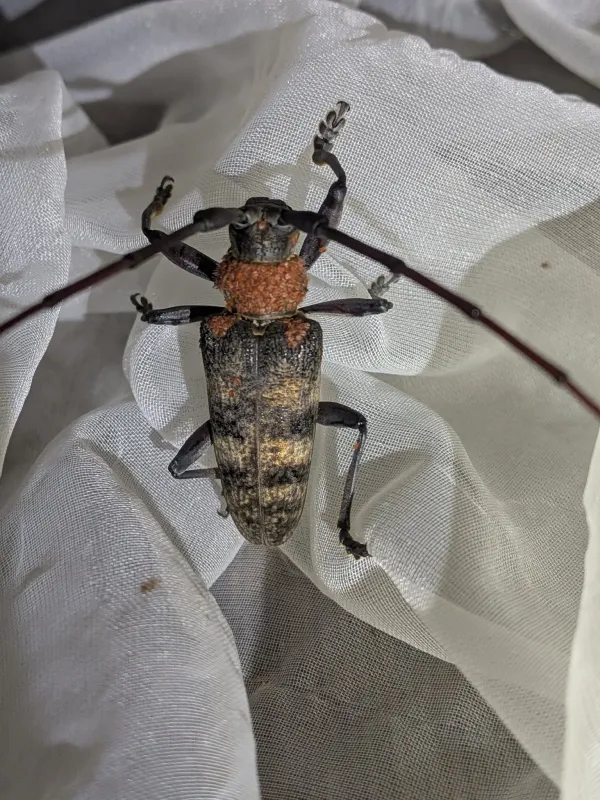
Acalolepta is a genus of longhorn beetles belonging to the family Cerambycidae. These beetles are recognized by their large, elongated bodies and remarkably long antennae, which can often be several times the length of the body.
The adults are typically camouflaged, with colors ranging from grey to brown, featuring intricate patterns that help them blend into tree bark. This makes them notoriously difficult to spot in their natural habitat.
The larvae are cylindrical, cream-colored, and legless, equipped with powerful mandibles capable of boring through the hardest wood. They spend their entire development period hidden inside the trunk or branches of the host tree.
The life cycle of Acalolepta varies depending on the specific species and environmental conditions, often spanning one to several years. Most of their lifespan is spent as larvae within the wood, which complicates their control.
Adult beetles are mostly active during the night and at twilight. They rely on their strong flight capabilities to locate suitable host trees for reproduction, often targeting stressed or decaying trees.
What it damages
Acalolepta species are known to attack a wide range of host plants, including valuable fruit trees like citrus and apple, as well as various ornamental and forest species. The larvae are the primary cause of destruction.
By boring deep tunnels into the sapwood and heartwood, the larvae disrupt the vascular system of the tree. This inhibits the transport of water and nutrients, leading to progressive decline and branch dieback.
Heavy infestations can significantly weaken a tree's structural integrity, making it prone to breaking during high winds. In severe cases, the tree may die completely due to extensive internal damage.
The presence of Acalolepta also makes trees susceptible to secondary infections by wood-decay fungi and other opportunistic pests, which can accelerate the tree's deterioration process.
For agricultural plantations, these pests represent a major threat to yield and long-term viability, as replacing infected mature trees involves significant financial and temporal costs.
Signs of infestation
The most reliable sign of an Acalolepta infestation is the presence of sawdust-like frass accumulating at the base of the tree or within branch crotches. This material is expelled from the tunnels by the larvae.
Careful inspection of the bark may reveal small, often oval-shaped holes or fresh feeding scars where the adult female beetle has chewed to lay her eggs.
Sudden yellowing of leaves and the wilting of foliage on specific branches during the growing season often indicate that the internal wood is damaged, restricting water flow.
If the bark is carefully peeled away at affected sites, one can often see the chaotic, wide galleries created by the larvae, filled with a mixture of woody debris and excrement.
During the night, in a quiet orchard, it is sometimes possible to hear a rhythmic scratching or scraping sound coming from within the trunk, indicating active larval boring.
Control measures
Effective control of Acalolepta starts with maintaining tree vigor through proper irrigation and fertilization. Stressed trees are much more attractive to the beetles than healthy ones.
Sanitation is critical; all dead, dying, or heavily infested branches and trees should be removed and destroyed by burning or chipping to eliminate the larval population before they emerge as adults.
In cases of chemical intervention, application of contact or systemic insecticides to the tree bark during the adult emergence season can help reduce the population and protect healthy trees from egg-laying.
Monitoring using pheromone traps is a recommended strategy to detect the presence of adults early, allowing for more precise timing of control measures.
- Remove and destroy all infested plant material.
- Monitor adult flight activity with traps.
- Maintain optimal tree health through good irrigation.
- Use insecticides on bark surfaces during peak flight.
Taxonomy
- Latin name
- Acalolepta
- Order
- Coleoptera (beetles)
- Family
- Cerambycidae
- EPPO code
- ACLPSP
Discussion
No discussions yet — be the first.