
Citrus leaf folder
Psorosticha zizyphi
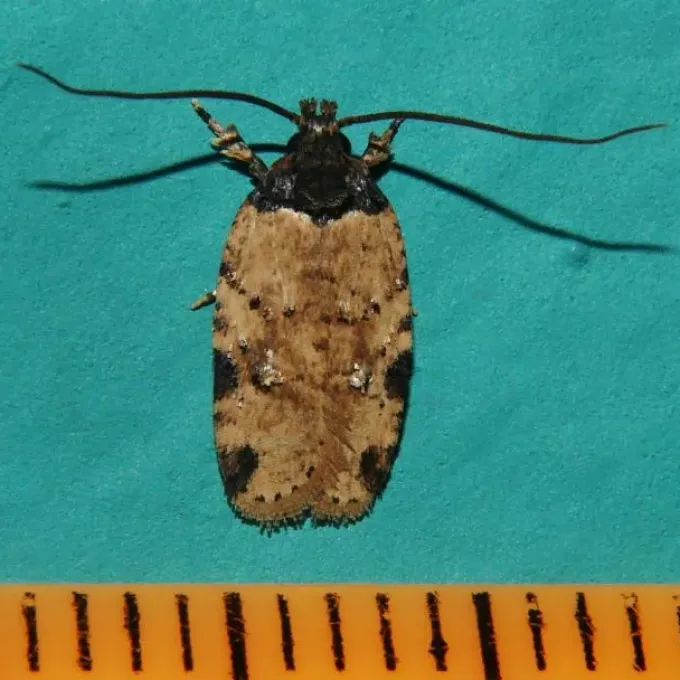
Description
How to identify
The citrus leaf folder (Psorosticha zizyphi) belongs to the Depressariidae family within the order Lepidoptera. The adults are small moths with narrow, greyish-brown wings that fold flat against their bodies when at rest.
Larvae develop through several instars, transitioning from a pale color in early stages to a vibrant green as they mature. They are characterized by a dark head and intense agility when disturbed.
Pupation takes place within the protection of leaves folded or rolled by the larva using silken threads. This cocoon provides a secure environment for metamorphosis to occur.
The biological cycle is strictly dependent on climatic conditions. In warm tropical or subtropical regions, this pest can complete multiple generations in a single growing season.
Adult moths are primarily nocturnal or crepuscular. During the day, they remain hidden within the dense canopy, making them difficult to detect without careful inspection.
What it damages
The pest primarily infests citrus species including lemon, orange, mandarin, and grapefruit. It is also known to feed on plants within the Rhamnaceae family, such as the jujube tree.
Larvae feed on fresh, tender leaves. They consume the leaf tissue while leaving the main veins intact, which can lead to severe skeletonization if the infestation is heavy.
By using silk webbing, the larvae draw leaf edges together, forming tubes or chambers. These structures protect them from natural predators and environmental stressors.
Heavy feeding on terminal shoots hinders new growth and distorts the overall shape of the tree. This damage significantly impacts the plant’s ability to photosynthesize effectively.
Economically, the citrus leaf folder causes a reduction in vigor and potential yield, and the presence of webbing and damaged foliage severely degrades the aesthetic quality of the fruit.
When it appears
The appearance of the pest aligns with the emergence of the spring flush. As the trees begin to produce new, tender foliage, the moths lay eggs on the leaves to ensure food for the hatchlings.
Activity peaks during the warm summer months, when high temperatures accelerate larval growth rates and shorten the duration of the life cycle between generations.
In warm climates, overlapping generations can result in continuous pressure on citrus orchards from spring through autumn, requiring vigilant monitoring.
The insect typically overwinters in the pupal stage or as an adult in sheltered locations such as bark crevices, leaf litter, or debris gathered at the base of the trees.
Environmental factors, specifically humidity and moderate temperatures, significantly influence the speed at which populations build up during the season.
Signs of infestation
The most distinctive sign of infestation is the presence of rolled or folded leaves bound together by silk threads. These nests are often visible throughout the canopy.
Frass (larval excrement) is often found inside the rolled leaves or scattered on the foliage directly below the feeding sites, serving as a clear indicator of infestation.
Torn leaf edges and uneven, jagged feeding patterns are hallmark signs of larvae activity. In severe cases, the terminal growth may appear stunted or necrotic.
If the canopy is disturbed, moths may flush out, revealing their presence. Examining the underside of leaves during twilight hours often helps in identifying the adult population.
Yellowing or premature browning of rolled leaf chambers indicates that the larva has consumed the internal tissue, leading to the eventual death of the affected leaf section.
Control measures
Regular orchard scouting is essential. Manual removal and destruction of rolled leaves in small-scale plantings can effectively lower the pest population.
Biological control methods using Bacillus thuringiensis are highly effective against larvae, especially when applied early in the infestation cycle.
For larger infestations, systemic insecticides can be applied to target larvae that are protected inside leaf rolls. Proper timing ensures the product reaches the pest effectively.
- Sanitary pruning to remove infested branches and leaf debris.
- Promotion of natural predators such as parasitic wasps and predatory beetles.
- Use of light traps to monitor adult moth flight patterns.
Cultural practices, including balanced fertilization and irrigation, help keep trees vigorous and better able to recover from leaf folder damage.
Taxonomy
- Latin name
- Psorosticha zizyphi
- Order
- Lepidoptera (butterflies)
- Family
- Depressariidae
- EPPO code
- PSOSZI
Discussion
No discussions yet — be the first.