
Psorosticha
Psorosticha
Description
How to identify
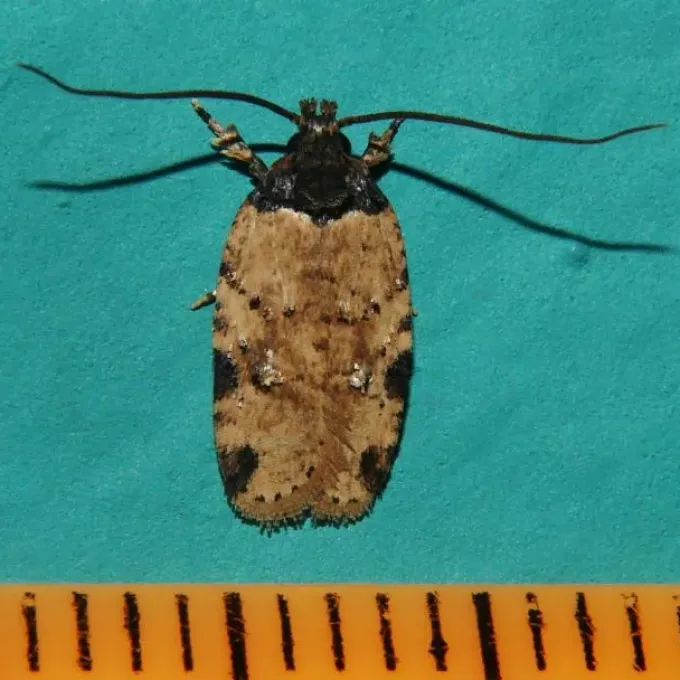
Psorosticha is a genus of moths belonging to the family Depressariidae (formerly Oecophoridae). These are small, inconspicuous moths that often go unnoticed in the early stages of infestation.
Adults possess a modest coloration, typically ranging from greyish-brown to ochre, which provides excellent camouflage against tree bark and foliage.
The larvae, known as caterpillars, are quite active and possess the ability to quickly hide within rolled leaves or silken webs, which complicates early detection.
Systematic classification of the species requires precise entomological analysis, as members of this genus can be easily confused with other leaf-rolling moth species.
The insect undergoes a complete life cycle, including egg, larva (caterpillar), pupa, and adult stages, with the larval stage being the primary cause of agricultural damage.
What it damages
The primary hosts for Psorosticha are various citrus species, including lemons, oranges, and mandarins, though they may also affect other woody plants.
The pest targets young shoots, developing buds, and leaves, which significantly hinders vegetative growth and reduces the tree's overall productivity.
Young orchards and nursery stock are the most vulnerable, as damage to terminal buds can lead to deformed canopy structures and stunted plant development.
The feeding damage creates entry points for secondary infections, such as various fungi and bacteria that thrive in the injured plant tissues.
In cases of high infestation levels, the pest can cause substantial yield losses and weaken the tree's immune system, making it more susceptible to environmental stress.
When it appears
The activity of Psorosticha is closely linked to temperature and plant phenology, with peak aggression occurring during the spring and summer growing seasons.
In regions with mild climates, the moth can produce multiple generations per year, creating a continuous threat throughout the growing season.
The first larvae typically appear as soon as buds begin to break and new, tender shoots emerge, providing the essential food source needed for rapid development.
As autumn approaches, the insects seek protected sites for pupation, hiding in bark crevices, dry debris, or other sheltered areas to survive the winter months.
Monitoring should begin as soon as the first spring buds appear, with consistent inspections of shoot tips and foliage to detect early-stage infestations.
Signs of infestation
The most visible sign of an infestation is the presence of rolled or folded leaves, often tied together with fine silken webbing created by the caterpillars.
On affected areas, one can observe traces of frass (caterpillar excrement) and irregular holes or ragged edges on the leaf blades where the larvae have been feeding.
- Deformed young shoots and necrotic buds.
- Visible silken webbing between leaves or branches.
- Premature leaf yellowing and drop in severely infested areas.
- Surface damage to young citrus fruit or peduncles.
Visual inspections of the underside of leaves and terminal shoots are crucial, as the caterpillars often hide in these areas to avoid direct sunlight.
Control measures
Integrated control starts with cultural practices, such as the manual removal and destruction of infested shoots and webbed nests to reduce the overall population.
When infestation thresholds are exceeded, the use of contact or systemic insecticides approved for citrus crops is necessary to manage the pest effectively.
Rotation of chemical agents with different modes of action is highly recommended to prevent the development of resistance within the Psorosticha population.
Biological control strategies, including the introduction of natural predators or the use of bio-rational pesticides, are becoming increasingly effective alternatives.
Consistent monitoring and maintaining good sanitary conditions within the orchard are foundational to preventing large-scale outbreaks and minimizing chemical usage.
Taxonomy
- Latin name
- Psorosticha
- Order
- Lepidoptera (butterflies)
- Family
- Depressariidae
- EPPO code
- PSOSSP
Discussion
No discussions yet — be the first.