
Psoroptes
Psoroptes
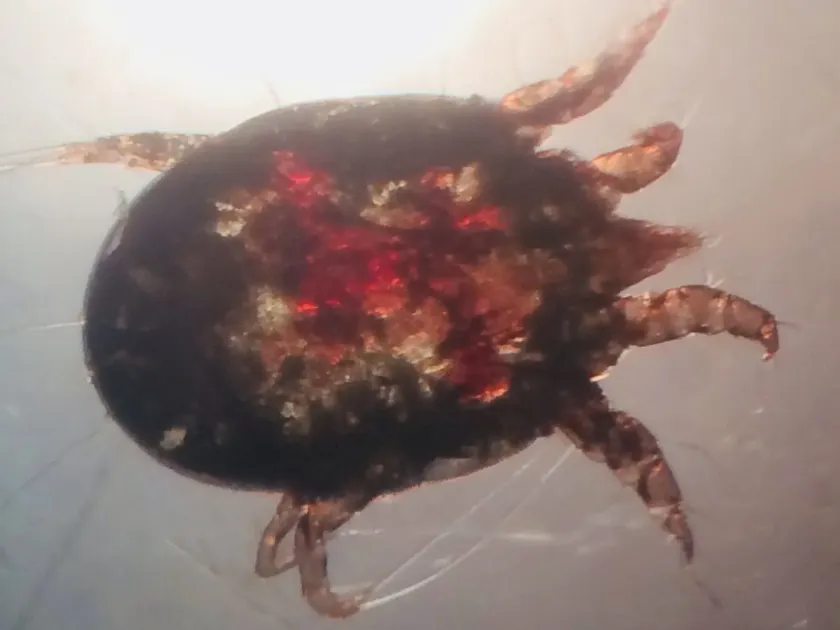
Description
How to identify
The genus Psoroptes belongs to the family Psoroptidae, order Sarcoptiformes, and represents a group of highly contagious parasitic mites.
These mites are microscopic, oval-shaped organisms that inhabit the skin surface of their mammalian hosts without burrowing deep into the dermis.
They possess specialized mouthparts used for piercing the epidermis and feeding on serum and tissue fluids, which triggers intense inflammatory reactions.
The life cycle is rapid and consists of egg, larva, two nymphal stages, and adult, taking approximately two weeks to complete in favorable conditions.
Since they spend their entire life cycle on the host, transmission occurs primarily through direct contact between animals or contaminated equipment.
What it damages
It is important to clarify that Psoroptes species are animal parasites; they do not attack plants, crops, or agricultural vegetation.
These mites are responsible for a condition known as psoroptic mange, which significantly impacts sheep, cattle, rabbits, and occasionally horses.
Economic damage includes reduced wool yield, decreased milk production, and hide damage, causing massive financial losses in global livestock farming.
The infestation can spread rapidly throughout a herd, especially in overcrowded housing conditions where animals are in constant contact.
Chronic cases lead to severe weight loss, lethargy, and in some instances, secondary complications due to infection of the damaged skin areas.
Signs of infestation
The most prominent clinical sign is intense pruritus (itching), which leads the host to rub against fences, troughs, or other animals.
As the infestation progresses, characteristic lesions appear, marked by crusting, scabbing, and extensive hair loss in the affected areas.
The skin becomes thickened and wrinkled, and the production of inflammatory exudate creates a crust that protects the mites from the outside.
Affected animals often exhibit signs of stress, irritability, and decreased appetite due to the constant irritation caused by the parasite.
Early identification is essential, as the visible signs often become apparent only after the mite population has grown significantly.
Control measures
Effective control relies on the administration of acaricidal agents, including pour-on solutions, injectable formulations, or therapeutic dips.
Rigorous sanitation of animal shelters and tools is required to eliminate mites that may survive for short periods in the environment.
A successful management strategy necessitates the simultaneous treatment of all animals within the herd to prevent re-infestation.
Quarantine protocols for newly acquired animals are crucial to prevent the introduction of mites into an established healthy herd.
Maintaining optimal nutrition and minimizing overcrowding helps improve the animals' immune responses, making them less susceptible to infestation.
Taxonomy
- Latin name
- Psoroptes
- Order
- Mites
- Family
- Psoroptidae
- EPPO code
- PSORSP
Discussion
No discussions yet — be the first.