
Chorioptes
Chorioptes
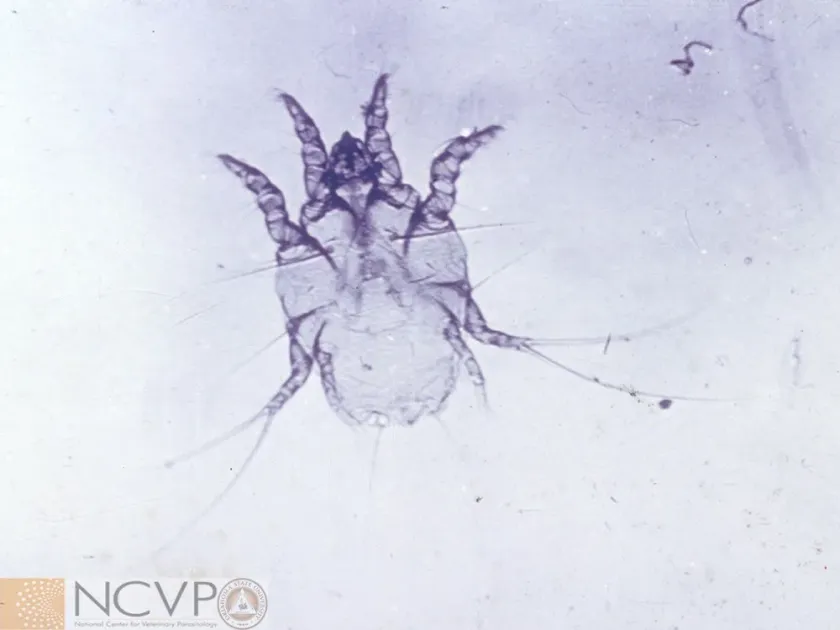
Description
How to identify
Chorioptes is a genus of microscopic parasitic mites belonging to the family Psoroptidae, order Sarcoptiformes. These mites are the causative agents of chorioptic mange, a common skin condition affecting various domestic livestock, including cattle, horses, sheep, and goats.
Adult mites are small, typically measuring between 0.3 and 0.5 mm in length. They possess a broad, oval-shaped body and are yellowish or grayish-white in color, making them difficult to spot with the naked eye during routine inspections.
Their morphological features include relatively short, stocky legs equipped with trumpet-shaped suckers (ambulacra) attached to short, unjointed stalks. These specialized structures are essential for the mites to remain attached to the host's skin while they feed.
The life cycle of Chorioptes is entirely dependent on the host. It proceeds through several distinct developmental stages: egg, larva, protonymph, deutonymph (or teleonymph), and finally the adult stage. The entire cycle occurs on the skin surface.
These mites are notably resilient; although they prefer the host's environment, they can survive for several weeks away from the animal in bedding or on contaminated equipment. This environmental persistence makes farm hygiene a critical component of any control program.
What it damages
The damage caused by Chorioptes is primarily focused on the epidermis. Unlike some other mange mites that burrow into the skin, Chorioptes mites stay on the surface, feeding on skin debris, scales, and tissue fluid, which causes irritation and inflammation.
The constant feeding and the mites' secretions trigger severe itching (pruritus). Animals become restless and start rubbing themselves against fences, walls, or troughs. This physical abrasion leads to further skin damage, open wounds, and secondary bacterial infections.
In dairy cattle, the economic impact is significant. Affected cows experience stress, which leads to reduced milk yield and poor body condition. The hair coat becomes matted and falls out, negatively impacting the animal's overall health and comfort.
Severe infestations can lead to thickening of the skin, a condition known as lichenification. This leathery texture is a hallmark of chronic chorioptic mange and can result in reduced hide quality if the animal is eventually processed for leather production.
Furthermore, because the infestation often spreads rapidly through a herd during close contact, an uncontrolled outbreak can affect a high percentage of the animals, leading to widespread decreased productivity and increased veterinary expenses.
Signs of infestation
Identification of the disease usually starts with observing animal behavior. Excessive scratching, restlessness, and the presence of localized skin irritation in specific areas are the primary indicators that suggest a mite infestation might be occurring.
Clinical signs are most frequently found on the lower parts of the limbs, the tail head, the udder, or the perineal region. These areas often show crusts, dry scabs, and patches of hair loss, which are caused by the animal's attempt to alleviate the intense itching.
Upon closer inspection, the skin underneath the crusts appears red, inflamed, and often covered with a greasy, whitish, or yellowish exudate. In advanced stages, the skin becomes deeply fissured and thick, which may cause pain to the animal upon movement.
Veterinary confirmation requires skin scrapings taken from the periphery of the lesion. When examined under a microscope, the presence of various developmental stages of the mite confirms the diagnosis of chorioptic mange.
- Restless behavior and frequent scratching.
- Hair loss and bald patches on the rump and legs.
- Thickened, crusty skin texture.
- Signs of secondary infection in scratched areas.
- General decline in physical condition and weight gain.
Control measures
Control strategies for Chorioptes focus on breaking the mite's life cycle. This involves a combination of direct treatment of infested animals and thorough cleaning of the environment to eliminate mites surviving off-host.
Acaricidal treatments are the cornerstone of management. Injectable macrocyclic lactones (such as ivermectin) are highly effective and commonly used. Additionally, topical applications like sprays, pour-on solutions, or medicinal baths are utilized to kill mites on the surface.
A crucial aspect of treatment is the application of repeat doses or multiple treatments. Since most acaricides do not kill the eggs, a second treatment is necessary 10–14 days later to eradicate the newly hatched larvae before they mature.
Environmental sanitation is equally important. All bedding should be removed and replaced, and stalls or equipment should be disinfected with appropriate acaricidal chemicals to prevent re-infestation of treated animals from the contaminated environment.
Finally, biosecurity measures such as quarantining new animals before introducing them to the main herd can significantly reduce the risk of bringing the parasite onto the farm. Regular herd monitoring remains the best defense against large-scale outbreaks.
Taxonomy
- Latin name
- Chorioptes
- Order
- Mites
- Family
- Psoroptidae
- EPPO code
- CHOISP
Discussion
No discussions yet — be the first.