
Chorioptes bovis
Chorioptes bovis
Description
How to identify
Chorioptes bovis is a species of parasitic mite belonging to the Psoroptidae family and the Acariformes order. It is a non-burrowing mite that lives on the skin surface.
The adult mites are small, measuring approximately 0.3 to 0.5 millimeters in length, and possess an oval body shape. They are typically light gray to brownish in color.
These mites are characterized by short legs with bell-shaped suckers located on long pedicels, which enable them to grip the skin and hair coat of their host effectively.
The lifecycle occurs entirely on the host and lasts about 2–3 weeks, comprising the egg, larva, protonymph, teleonymph, and adult stages.
As an ectoparasite, it is the primary cause of chorioptic mange, a chronic skin condition that affects various domesticated animals, most notably cattle.
What it damages
This parasite affects cattle, horses, sheep, and goats. It is strictly an animal health issue and does not damage crops or have any impact on plant agriculture.
Mites primarily target areas with thin skin and thick hair, such as the base of the tail, the inner surface of the thighs, the udder, and the pastern region of the legs.
Damage occurs due to the mite's feeding on skin debris and tissue fluids, causing intense irritation and inflammation of the epidermis.
Economic loss is significant, as infested animals experience weight loss, reduced milk production, and hide damage, all of which decrease the overall farm profit.
Severe infestations lead to thickening of the skin, crust formation, and potential secondary bacterial infections that complicate the recovery process.
Signs of infestation
The most prominent sign is severe pruritus, which causes the animal to rub against walls, feeders, and other objects in an attempt to alleviate the itching.
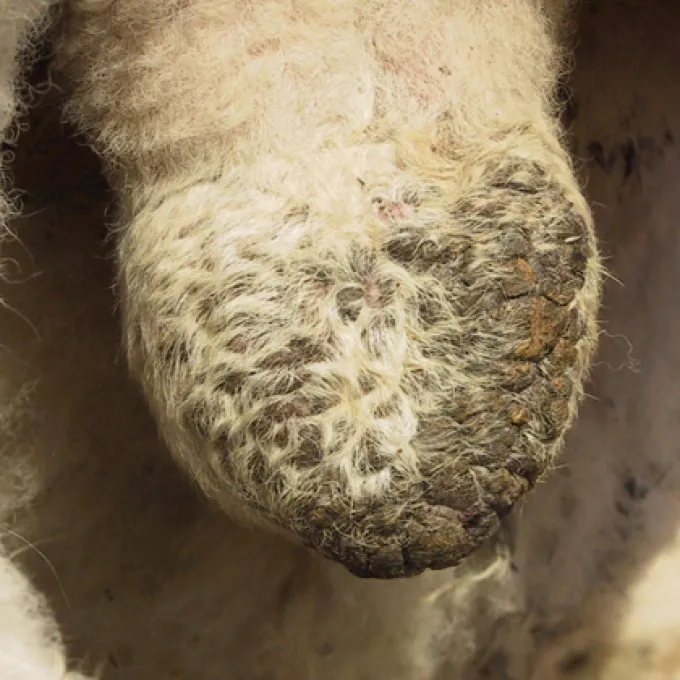
Lesions start as small papules that develop into crusty, scaly patches. The affected areas are typically covered in a grayish, dry exudate that hardens into thick scabs.
Hair loss occurs in the focal areas of infestation. Over time, the skin in these regions becomes hyperkeratotic, leathery, and deeply folded.
Close examination, particularly at the margins of the lesions, reveals the presence of mites, which appear as moving, tiny gray specks visible under low magnification.
Continuous irritation leads to restlessness, poor feed intake, and general stress, which eventually compromises the animal's overall condition and immune response.
Control measures
Effective control involves the application of approved acaricides, such as injectable, pour-on, or spray formulations, to eliminate the mite population.
It is crucial to treat the entire herd simultaneously to prevent re-infestation, as asymptomatic carriers can easily spread the mites to healthy animals.
Sanitation of the housing environment, including regular cleaning and disinfection of stalls, helps to reduce the number of mites in the immediate surroundings.
Maintaining high standards of nutrition and hygiene increases the animal's ability to heal damaged skin and improves overall herd health.
Repeat treatments are often necessary, timed to break the life cycle of the parasite and ensure that newly hatched mites are also eradicated before they can reproduce.
Taxonomy
- Latin name
- Chorioptes bovis
- Order
- Mites
- Family
- Psoroptidae
- EPPO code
- CHOIBO
Discussion
No discussions yet — be the first.