
Pigeon fly
Pseudolynchia canariensis
Description
How to identify
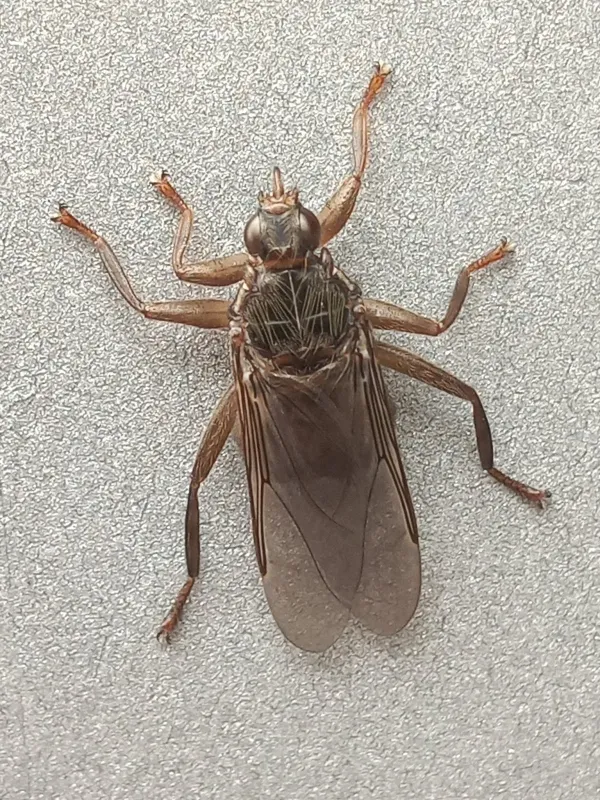
The pigeon fly, scientifically known as Pseudolynchia canariensis, is a parasitic insect belonging to the Hippoboscidae family. It is a flattened, leathery fly designed to crawl rapidly between the feathers of its host.
Adult flies possess wings, which they use to fly between birds, but once they find a host, they often shed their wings or move primarily by crawling. Their bodies are well-adapted to withstand the pressures of moving through thick plumage.
Equipped with specialized claws, these insects cling tightly to the bird's skin and feathers, making them difficult for the bird to remove. They are typically dark brown in color and measure about 5-7 mm in length.
The reproductive strategy of this species is unique; it practices pupiparous development. A female produces a single larva at a time, which develops inside her body until it is ready to pupate immediately upon being deposited.
This life cycle stage ensures that the fly spends almost its entire existence in close association with the host, while pupae remain hidden in cracks and crevices of the nesting area until the next generation emerges.
What it damages
While their primary hosts are pigeons, these flies are known to parasitize other birds, including various species of poultry. They cause significant harm by feeding on the blood of the host bird.
Heavy infestations lead to acute stress, irritation, and significant blood loss. The constant biting causes birds to become restless, leading to poor condition, weight loss, and reduced productivity in a loft or coop.
Pigeon flies serve as primary vectors for Haemoproteus columbae, a protozoan parasite that causes pigeon malaria. This disease can be devastating, causing severe anemia and mortality, particularly in young birds.
The skin irritation caused by the flies often leads to excessive self-preening and feather picking. This results in damaged plumage, which can be detrimental to birds used for shows or racing purposes.
Young squabs are particularly vulnerable to infestation. When flies move from the parents to the nestlings, the loss of blood and constant annoyance can significantly stunt the growth of the young birds.
When it appears
The activity of pigeon flies is heavily dependent on ambient temperature. They thrive in warm conditions, with populations peaking during the late spring and summer months when birds are actively nesting.
In temperate climates, the flies may survive the winter in a dormant pupal state, hidden in the nesting material or structural gaps of the housing. As soon as temperatures rise, the cycle resumes.
Inside consistently heated lofts or poultry houses, the breeding cycle of the pigeon fly can continue throughout the entire year. This lack of a seasonal break makes year-round monitoring essential.
The peak infestation period often aligns with the breeding season of the birds, as the high density of hosts in nests provides an ideal environment for the flies to multiply rapidly.
Early spring marks a critical window for management, as preventing the first generation of flies from establishing a foothold can significantly reduce the infestation pressure for the remainder of the year.
Signs of infestation
The most reliable sign of an infestation is direct observation of the flies. When parting the feathers under the wings or on the breast, one can see the fast-moving insects scurrying across the skin.
Birds infested with flies often exhibit restlessness, frequent preening, and sudden wing flapping. If you notice a bird acting unnaturally agitated while at rest, an inspection for ectoparasites is required.
Look for the presence of dark, crusty excrement on the walls or in the nests, which is often a telltale sign of fly activity. These droppings are usually distinct from those of the birds themselves.
In severe cases, feathers may look frayed or broken due to the bird’s attempt to scratch or bite at the areas of irritation. The bird’s overall appearance will likely be unkempt and dull.
If you find small, hard, dark-brown or black pupal cases in the crevices of the nest boxes, you have clear evidence of an active population of pigeon flies within the environment.
Control measures
Effective control of the pigeon fly requires a two-pronged approach: treating the birds directly and performing a thorough deep-cleaning of the living environment to eliminate pupae.
- Routine cleaning and disinfection of nest boxes and floor areas.
- Using bird-safe insecticides, such as sprays or powders, as directed by a veterinarian.
- Sealing cracks and crevices in the walls where pupae typically hide.
- Maintaining a dry environment in the coop, as moisture supports the survival of developing stages.
- Implementing strict quarantine protocols for any new birds added to the existing population.
Treatment must be repeated every two weeks to ensure that newly emerged flies are killed before they have a chance to reproduce. This timing is crucial due to the protective shell of the pupa.
Always choose high-quality pyrethroid-based products that are approved for use on birds. Avoid direct application into the eyes or nostrils of the birds to prevent toxicity or irritation.
Integrated pest management, focusing on sanitation and preventive maintenance, is the most sustainable way to keep your pigeon or poultry population free from this harmful parasite.
Taxonomy
- Latin name
- Pseudolynchia canariensis
- Order
- Diptera (flies)
- Family
- Hippoboscidae
- EPPO code
- PSELCA
Discussion
No discussions yet — be the first.