
Pseudoclavellaria
Pseudoclavellaria
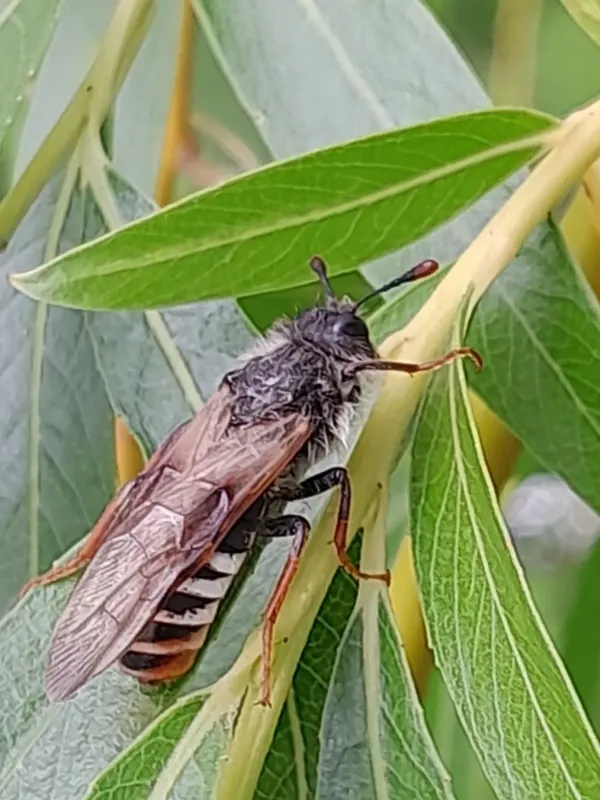
Description
How to identify
Pseudoclavellaria is a genus of insects belonging to the order Hymenoptera and the family Cimbicidae (club-horned sawflies). Adults are robust insects with distinctive club-shaped antennae, which serve as a primary diagnostic feature for identification.
The coloration of adults often varies, featuring dark, metallic, or yellowish tones. Larvae resemble butterfly caterpillars but differ in having a higher number of abdominal prolegs, an important morphological characteristic for field identification.
The life cycle follows complete metamorphosis: egg, larva, pupa, and adult. Adults are typically active during late spring and summer, when they deposit eggs into the leaf tissues of their host plants.
Larval development occurs externally on leaves, where they feed aggressively through several instars. Once feeding is complete, larvae typically drop to the soil or build cocoons in sheltered parts of the host plant to pupate.
These pests prefer moderately humid environments and are frequently found in woodlands, parks, and home gardens where suitable host trees are present.
What it damages
Host plants primarily include various broad-leaved tree species. Birch, willow, and poplar are among the most frequently attacked, particularly in forestry and urban landscaping settings.
In domestic gardens, the pest may occasionally infest ornamental shrubs and trees if their species composition aligns with the insect's natural host preferences.
The larvae cause the most significant damage due to their powerful chewing mouthparts. They can consume substantial amounts of leaf surface area in a very short period of time.
During outbreaks, severe defoliation can occur, leaving trees nearly bare. This reduces the plant's photosynthetic capacity, leading to a significant loss of vigor and stunted growth.
Weakened trees are highly susceptible to secondary attacks from wood-boring insects, bark beetles, and opportunistic fungal infections, which can ultimately lead to tree mortality.
Signs of infestation
The primary sign of infestation is skeletonized or heavily notched leaves. Larvae typically begin feeding at the leaf margins and progress toward the midrib, leaving irregular patterns of damage.
The presence of frass (larval excrement) on leaves or on the ground beneath the canopy is a clear indicator of active feeding. Large clusters of larvae can often be spotted on the undersides of leaves.
Premature leaf yellowing or drying during the peak of the growing season, in the absence of drought, often points to critical leaf loss caused by these pests.
Adults can be observed flying around host trees during the morning or evening hours as they engage in mating and searching for optimal egg-laying sites.
Cocoons found on tree bark or within the leaf litter beneath the canopy indicate the completion of the larval stage and the onset of the pupation phase.
Control measures
Biological control methods include encouraging natural predators such as insectivorous birds and predatory insects. Microbial insecticides based on specific bacteria can also be effective against sawfly larvae.
Cultural practices involve deep cultivation of the soil around the tree base in autumn. This disrupts overwintering pupae and exposes them to harsh weather conditions and ground predators.
For low-level infestations, manual removal of larvae in the morning hours is highly effective. Shaking larvae from branches onto a tarp allows for their safe collection and destruction.
During severe outbreaks, registered insecticides with systemic or contact action may be necessary. Applications should be timed precisely to target the early larval stages.
- Frequent monitoring of the tree canopy.
- Sanitary pruning of infested branches.
- Clearing leaf debris to remove pupation sites.
Taxonomy
- Latin name
- Pseudoclavellaria
- Order
- Hymenoptera
- Family
- Cimbicidae
- EPPO code
- PSCVSP
Discussion
No discussions yet — be the first.