
Avocado lace bug
Pseudacysta perseae
Description
How to identify
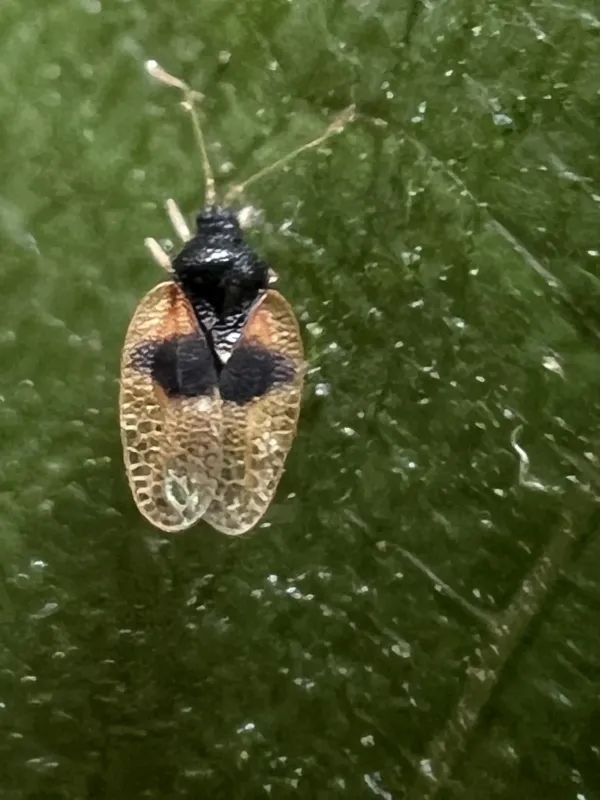
The avocado lace bug (Pseudacysta perseae) is a small insect belonging to the order Hemiptera and the family Tingidae. It is named for the intricate, lace-like pattern of veins on its wings, which is characteristic of all lace bugs.
Adult insects are about 2 millimeters long and exhibit a flattened body shape. Their head, thorax, and wings are covered in a reticulated, cell-like structure that provides excellent camouflage against the foliage of host trees.
Nymphs, or immature stages, appear darker than the adults and are often covered in small spines or filaments. They are relatively stationary and undergo several molts before reaching the winged adult stage.
This species is a specialist pest that primarily targets plants within the Lauraceae family. It is most prevalent in tropical and subtropical climates where environmental conditions remain favorable for continuous reproduction.
The life cycle of the insect is highly dependent on ambient humidity and temperature. In optimal conditions, multiple generations can emerge during a single growing season, leading to rapid population growth.
What it damages
The primary host of the avocado lace bug is the avocado tree (Persea americana). However, it can also infest other species within the genus Persea and related members of the Lauraceae family found in proximity to infested orchards.
Lace bugs are colonial insects that primarily colonize the underside of leaves. By feeding on plant cell contents, they sap energy from the tree, leading to significant physiological stress and reduced overall vigor.
Heavy feeding interferes with the tree's photosynthetic capability. When a large portion of the canopy is infested, the tree may show stunted growth, reduced fruit production, and a general decline in health.
Severe infestations frequently result in premature defoliation. This loss of foliage exposes the tree to further environmental stress and can significantly lower the quality and yield of the avocado crop for the season.
In addition to direct damage, the lace bug produces frass (excrement) which serves as a medium for the growth of sooty mold. This mold covers the leaf surface, effectively blocking sunlight and further hindering photosynthesis.
Signs of infestation
The earliest signs of infestation are chlorotic, yellowing spots on the upper side of the leaves. These spots eventually turn brown or necrotic as the leaf tissues die due to the insect's constant feeding.
Upon inspecting the underside of the leaves, one can observe colonies of lace bugs, dark shiny spots of excrement, and sticky secretions that lead to the development of the aforementioned sooty mold.
As the infestation progresses, leaves may curl, wither, and drop prematurely. A severely infested avocado tree often takes on a scorched, brownish appearance that is visible even from a distance.
Empty skins, or exuviae, left behind after the nymphs molt, are a clear indicator of a resident population. The presence of these skins confirms that the bugs have successfully completed their life stages on the tree.
In advanced stages of the infestation, the lower canopy may become entirely defoliated, exposing the bark of the branches to intense direct sunlight, which can lead to further damage like sunburn on the wood.
Control measures
The most effective strategy for managing the avocado lace bug is regular orchard monitoring. Early detection on the underside of leaves allows for localized treatment before the pest can spread throughout the entire plantation.
Biological control is highly encouraged in commercial avocado production. Encouraging natural predators, such as predatory bugs, lacewings, and parasitic wasps, can significantly keep lace bug populations below damaging thresholds.
In instances of high population density, chemical control via insecticides may be necessary. It is crucial to use products that are safe for beneficial insects and to rotate chemical classes to prevent the development of pesticide resistance.
Proper canopy management, including regular pruning, improves airflow and light penetration within the tree. This environment is less conducive to the reproduction of lace bugs and ensures better coverage when applying control agents.
Sanitation practices are vital; removing and destroying fallen leaves or heavily infested prunings helps reduce the population reservoir for future generations, preventing the pest from overwintering successfully in the orchard.
Taxonomy
- Latin name
- Pseudacysta perseae
- Order
- Hemiptera (bugs, aphids, leafhoppers)
- Family
- Tingidae
- EPPO code
- PSEYPE
Discussion
No discussions yet — be the first.