
Anderson's Slug
Prophysaon andersoni
Description
How to identify
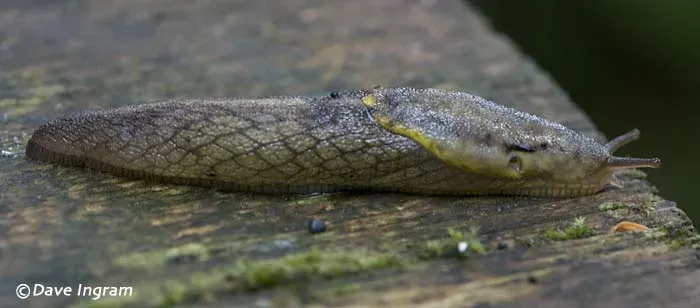
Anderson's slug Prophysaon andersoni belongs to the family Arionidae. This land mollusk typically reaches 3–5 cm in length and is distinguished by a mottled, often reticulated pattern on its mantle and body, ranging from grey to olive or brown.
A fascinating and unique biological trait is its ability to perform tail autotomy. When threatened, the slug can shed its posterior tail section, which later regenerates. This serves as a survival mechanism against various predators.
The species is primarily found in moist forest floors, garden beds, and areas with dense vegetation. They rely on high humidity to maintain their mucus coating, which is vital for their respiratory and locomotory functions.
The life cycle is closely linked to moisture levels. Eggs are typically laid in small clusters within damp soil crevices or under decaying organic matter, ensuring the next generation has immediate access to food and shelter.
Expert identification requires examination of the internal anatomy, specifically the reproductive system, as external coloration can be highly variable depending on the environment and the individual slug's age.
What it damages
This pest causes extensive damage to a wide range of horticultural crops, including leafy vegetables like lettuce and spinach, strawberries, and tender seedlings of various flowering ornamental plants.
In greenhouses and nursery environments, Anderson's slug can devastate entire batches of young transplants overnight. Their feeding habits are particularly destructive to succulent, young plant tissues that are not yet lignified.
The slug feeds using a radula, a specialized rasping organ, which creates large, irregular holes in the leaves. This feeding pattern often leads to a skeletal appearance of the foliage, as larger veins are left behind.
Besides direct tissue consumption, the slugs create pathways of mucus, which significantly reduces the marketability of crops. The presence of mucus can also lead to secondary bacterial or fungal infections on the damaged plant surfaces.
Ornamental flowers are frequently marred by damaged petals and buds, significantly reducing the aesthetic and economic value of nursery stock. Heavy infestations often result in the total loss of young, delicate plant specimens.
When it appears
The seasonal activity of Anderson's slug begins in the spring when soil temperatures reach a comfortable range for movement, usually starting above 10 degrees Celsius. This coincides with the peak planting season for most crops.
Peak damage occurs during the damp summer months and into the autumn. High precipitation levels correlate directly with increased movement and feeding activity, as the slugs are no longer restricted by dry conditions.
The species has multiple generations per season in favourable conditions. This continuous cycle makes consistent monitoring essential throughout the spring, summer, and early autumn months.
Overwintering occurs primarily in the egg stage. These eggs are highly resistant to cold, allowing the population to remain established year after year, regardless of the severity of the winter weather.
Agronomists suggest starting baiting programs early in the season to catch adult slugs before they can deposit the first generation of eggs, thereby reducing the population pressure for the entire growing season.
Signs of infestation
The most diagnostic signs of a slug infestation are irregular, jagged holes on the leaves of host plants. Unlike insect damage, which may have clean edges, slug feeding often results in ragged, messy margins.
Silvery, dried mucus trails on the soil surface, around stems, or directly on the leaves are clear indicators of slug presence. These trails often glisten in the sunlight and are easily detected during inspections.
If you suspect an infestation, inspect the underside of pots, large stones, or mulch layers during the day. Slugs are nocturnal and will seek out these cool, damp refuges to avoid dehydration during daylight hours.
Sudden wilting of seedlings, where the stem appears to be partially eaten at the soil line, is a classic sign of nocturnal slug feeding. The plant fails to thrive because its vascular system has been compromised.
- shiny, silvery mucus trails on surfaces;
- irregular, ragged holes in the foliage;
- seedlings cut off at the soil surface;
- slugs found in damp refuges during the day;
- damaged flower buds and petals.
Control measures
Cultural control is the first line of defense. Keeping garden areas free of weeds and debris eliminates daytime hiding spots. Regular soil cultivation can also help by exposing eggs to sun and drying conditions.
Physical barriers such as crushed eggshells, diatomaceous earth, or copper tape can be effective. These materials create an inhospitable surface that prevents the slugs from reaching the protected plant areas.
Biological control options include the use of predatory nematodes like Phasmarhabditis hermaphrodita. These beneficial organisms actively seek out and infect slugs, offering a non-toxic solution for larger plots.
Chemical control should be used as a last resort. Use commercial molluscicides, specifically those containing iron phosphate, which are effective against slugs while being significantly safer for pets and wildlife compared to metaldehyde.
Trap crops or beer/fermented juice traps are excellent for managing local populations. By burying containers level with the soil, you can attract and drown slugs, allowing for easy removal and monitoring of infestation levels.
Taxonomy
- Latin name
- Prophysaon andersoni
- Order
- Molluscs
- Family
- Arionidae
- EPPO code
- PRPYAN
Discussion
No discussions yet — be the first.