
Red slug
Arion rufus
Description
How to identify
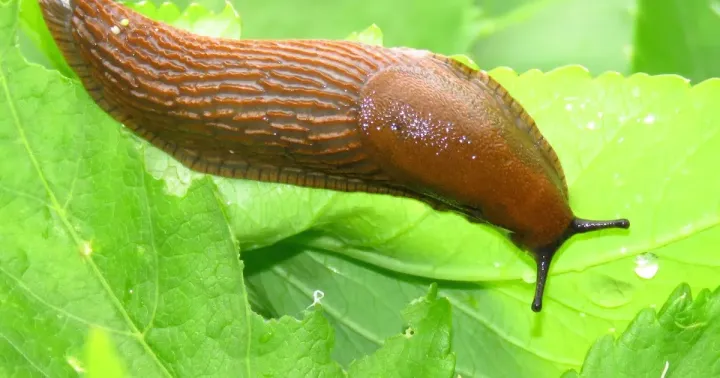
The red slug (Arion rufus) belongs to the family Arionidae, order Stylommatophora. It is a large gastropod mollusc, with adult body lengths typically ranging from 7 to 15 cm. Their coloration can vary significantly from deep reddish-brown to almost jet black, which often makes visual identification challenging.
The body is covered in a thick, sticky mucus layer that prevents dehydration and provides a defense mechanism against many predators. On the head, there are two pairs of tentacles: the upper pair is used for vision, while the lower pair is sensitive to smell and touch.
The breathing pore of the mollusc is located in the anterior right part of the mantle. Unlike some other slug species, the red slug lacks a functional shell, possessing only rudimentary calcareous granules hidden beneath the skin of the mantle.
These pests are hermaphroditic, allowing for rapid population growth even when individual numbers are initially low. The eggs are spherical, translucent, and typically laid in small clusters in damp, sheltered areas protected from direct sunlight.
The life cycle lasts approximately one year, though under favorable climatic conditions, individuals may survive for up to two years. During winter, both slugs and their eggs hibernate in the soil or under debris, where temperatures remain relatively stable.
What it damages
The red slug is a generalist feeder (polyphage) and causes significant damage to a wide range of horticultural crops. Vegetables such as cabbage, lettuce, tomatoes, cucumbers, and potatoes are particularly susceptible to their grazing.
In addition to food crops, the pest actively damages ornamental plants like hostas, delphiniums, and marigolds. In fruit gardens, slugs can consume young strawberry shoots and even damage ripening fruits located near the ground.
Both juvenile and adult stages contribute to the damage. They are capable of completely destroying young seedlings, leading to sparse crop establishment and the need for costly replanting.
The pest poses a high risk during rainy, wet seasons when high humidity facilitates movement and reproduction. Under such conditions, population density can escalate to dozens of individuals per square meter.
Beyond direct tissue consumption, slugs act as vectors for various plant pathogens, including fungal infections and bacteria that thrive in the damaged plant tissues.
Signs of infestation
The primary visual indicator of slug presence is irregular, ragged leaf edges. Slugs consume leaf tissue, often leaving only the tougher veins, which severely reduces the aesthetic value and vitality of the plant.
Silvery, dried mucus trails on leaves, stems, and soil surfaces are a clear sign of slug activity. These trails are particularly noticeable during the morning hours following their nocturnal feeding sessions.
During the day, individual slugs are difficult to spot because they seek refuge in shaded areas under mulch, boards, stones, or dense foliage. To detect them, it is recommended to use traps or inspect potential shelters in the evening.
Fruits lying on the ground often exhibit deep, scooped-out pits and grooves. Such damage renders produce unmarketable and encourages the development of secondary rots that can quickly ruin the entire harvest.
The wilting and collapse of seedlings without apparent root disease often indicate that slugs have girdled the tender stems at the base during the night.
Control measures
Cultural control methods include regular soil cultivation and weed management, which disrupt the slugs' preferred habitats. Creating barriers around beds using sand, wood ash, or lime can also hinder the movement of these molluscs.
Trapping is an effective method: burying containers filled with beer or fermented plant mixtures attracts slugs, which can then be collected and disposed of. Using boards or burlap as artificial shelters allows for easy morning hand-collection.
Biological control involves the use of parasitic nematodes (Phasmarhabditis hermaphrodita), which naturally infect and kill slugs. This method is environmentally safe and does not impact product quality or safety.
Chemical protection involves the application of molluscicides, primarily based on metaldehyde or iron phosphate. Granules should be applied in areas of high activity, taking care to prevent contact with pets or wildlife.
Encouraging natural predators such as hedgehogs, toads, frogs, and ground beetles helps maintain slug populations below the economic threshold of damage.
Taxonomy
- Latin name
- Arion rufus
- Order
- Molluscs
- Family
- Arionidae
- EPPO code
- ARIORU
Discussion
No discussions yet — be the first.