
Gray field slug
Arion circumscriptus
Description
How to identify
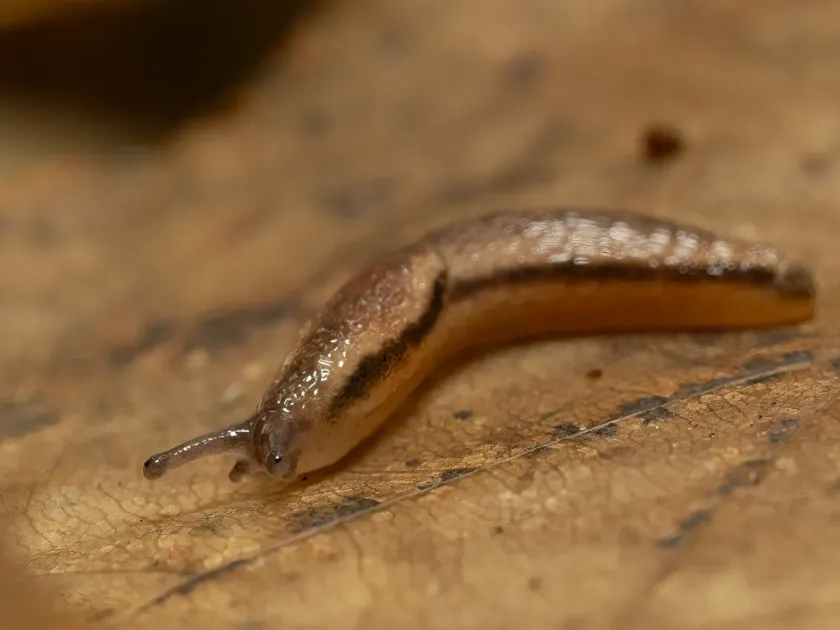
The gray field slug, scientifically known as Arion circumscriptus, belongs to the family Arionidae. It is a medium-sized gastropod, typically measuring between 30 and 40 mm in length when fully mature.
The body displays a grayish or brownish coloration, often marked with darker lateral bands that run along the sides of the mantle. These bands are a key characteristic that assists in distinguishing this species from others.
A distinctive feature of this species is its sole, which is typically white or off-white. This helps field agronomists differentiate it from closely related slugs that may have differently pigmented feet.
Like other members of the Arion genus, these slugs are hermaphrodites. They rely on moist, protected environments to lay their eggs, which are usually deposited in clusters within the soil or under decaying organic matter.
They possess a thick, viscous mucus coating that prevents dehydration and allows for locomotion over dry surfaces. This mucus also serves as a defensive mechanism against potential predators in their environment.
What it damages
Gray field slugs are polyphagous, meaning they feed on a wide range of host plants. Their mouthparts, known as radula, allow them to rasp and consume tender plant tissues with high efficiency, causing significant losses.
Seedlings are the most vulnerable stage; slugs can rapidly decimate crops like cabbage, lettuce, and beans by consuming the stems and leaves, often leading to total crop failure in early development stages.
Root crops are also major targets. Carrots, potatoes, and beets often show deep, irregular cavities caused by slugs feeding on the fleshy parts, which decreases the produce's market value and shelf life.
Small fruits, such as strawberries, are frequently damaged. Slugs target the ripening fruit, which often results in secondary rot infections, making the remaining yield unmarketable for consumers.
In ornamental settings, these slugs feed on high-moisture foliage plants, such as hostas. Their feeding pattern leaves behind unsightly holes and skeletonized leaves, significantly reducing the aesthetic value of the garden.
##season##Slug activity typically begins in the spring, once soil temperatures exceed 10°C. They are most active during periods of high humidity, particularly following rainfall or in overcast conditions that limit evaporation.
These pests are nocturnal. They spend daylight hours concealed beneath soil clods, mulch, stones, or garden debris, where they stay cool and hydrated. Their migration occurs primarily during the night.
The reproduction cycle is closely tied to environmental conditions. During a damp summer, multiple generations can develop rapidly, causing a noticeable spike in the population density in agricultural fields.
As autumn approaches, the slugs continue their feeding activity to prepare for winter. They are resilient and can survive the cold by retreating deep into the soil profile or protected crannies.
Overwintering occurs in various stages, including eggs and adults. This strategy ensures the population is ready to emerge immediately when favorable spring conditions return.
Signs of infestation
The most reliable sign of a gray field slug infestation is the presence of irregular, ragged-edged holes in foliage. In many cases, the slugs consume the leaf tissue entirely, leaving only larger veins.
Shimmering, silvery mucus trails are a hallmark of slug activity. These trails are easily visible on the soil surface, paving stones, or the undersides of leaves during the morning hours.
Deep gouges or pits in vegetables, particularly those touching the ground, indicate recent feeding. Often, these wounds become entry points for soil-borne pathogens, leading to bacterial or fungal decay.
Small, dark, cylindrical fecal pellets found near the base of plants serve as an additional diagnostic sign of the presence of the slug population in that specific area.
Inspecting potential daytime hiding spots is the most effective way to confirm an infestation. Finding clusters of slugs under boards or mulched beds during the day confirms they are present in the vicinity.
Control measures
Cultural control is the first line of defense. This includes removing garden debris, weeds, and tall grass that provide the moist, shady conditions the slugs need to thrive during the day.
Creating physical barriers can effectively protect vulnerable crops. Applying substances like diatomaceous earth, crushed eggshells, or wood ash creates an inhospitable terrain that slugs prefer to avoid.
Biological control methods involve fostering a healthy environment for natural predators, including hedgehogs, toads, frogs, and ground beetles, which can significantly regulate slug numbers naturally.
When infestation levels exceed economic thresholds, molluscicides containing iron phosphate are recommended. These are safer for the environment and pets compared to traditional metaldehyde-based pellets.
- Practicing regular soil cultivation to disturb egg clusters and expose them to drying.
- Setting up simple traps, such as moistened boards, to collect and remove slugs manually.
- Installing drip irrigation to keep the foliage dry, which makes the plant less attractive to gastropods.
Taxonomy
- Latin name
- Arion circumscriptus
- Order
- Molluscs
- Family
- Arionidae
- EPPO code
- ARIOCI
Discussion
No discussions yet — be the first.