
Grey field slug
Arion intermedius
Description
How to identify
Arion intermedius, commonly known as the hedgehog slug or a type of grey field slug, is a small mollusc belonging to the Arionidae family.
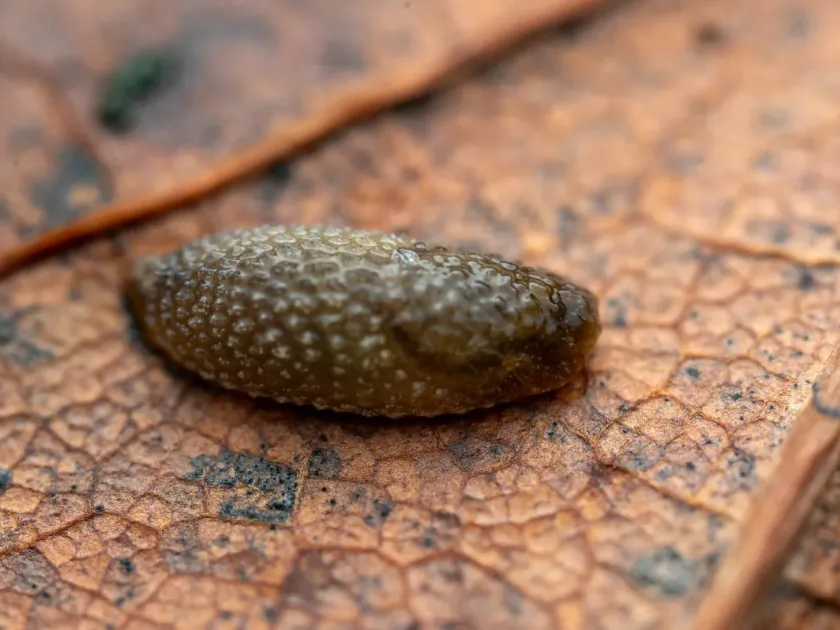
Adults typically measure between 15 and 25 mm in length. Their body colour ranges from yellowish to pale grey, with the head appearing distinctly darker.
A key identification feature is the ability of the slug to contract into a spherical shape when threatened, showing small tubercles on the skin surface.
They produce a characteristic yellowish mucus when irritated, which distinguishes them from many other local slug species found in agricultural fields.
These slugs are hermaphroditic and thrive in damp, shaded environments, including under rotting logs, stones, or deep within dense crop canopies.
What it damages
As polyphagous pests, Arion intermedius feed on a wide variety of plants, including vegetables, fruits, and ornamental flowers.
They cause significant damage by consuming leaves, often creating large, irregular holes that can leave only the main veins of the foliage behind.
Young seedlings are particularly vulnerable and can be completely destroyed overnight, leading to substantial economic losses in market gardens.
Below-ground damage is also common, as these slugs burrow into potatoes, carrots, and other root crops, rendering them unmarketable due to deep cavities.
The damage often serves as an entry point for various plant pathogens, increasing the risk of secondary rot infections in the harvested produce.
When it appears
Activity is highly dependent on environmental humidity and temperature. They are most active during cool, wet weather, especially in spring and autumn.
The eggs are laid in soil crevices and can overwinter, with the juvenile population emerging as soon as temperatures exceed 10°C in the spring.
During hot and dry spells, they retreat deep into the soil profile to avoid desiccation, becoming largely inactive until the next rainy period.
The nocturnal habit of these slugs means they avoid direct sunlight, coming out to feed primarily at night or on heavily overcast, rainy days.
The life cycle is fast enough to allow multiple generations under optimal moist conditions, posing a continuous threat to susceptible crops.
Signs of infestation
The most reliable sign of a slug infestation is the presence of shiny, silvery mucus trails left on soil surfaces, paths, or the leaves of infested plants.
Leaf damage manifests as ragged edges or irregular holes, often accompanied by the presence of slimy residues on the remaining plant tissue.
Root crops may show deep pits or gouges. In severe cases, the entire surface of the vegetable may be scarred or eaten away by feeding activity.
The observation of small, yellowish slugs under mulch, boards, or debris near the base of plants is a definitive indicator of the pest's presence.
Seedling collapse or sudden thinning of crop stands in damp areas is a typical sign that slug activity has reached critical levels.
Control measures
Effective management begins with cultural practices, such as removing debris and weeds that provide refuge and high-humidity microclimates for the slugs.
Cultivation of the soil between rows disrupts the habitat and burrows of the slugs, exposing them and their eggs to predators and desiccation.
Physical barriers, such as crushed eggshells, coarse sand, or copper tape, can be used to deter slugs from climbing onto small vegetable plots.
Chemical control using molluscicide pellets containing ferric phosphate is an environmentally safer option compared to traditional metaldehyde baits.
- Use drip irrigation to keep the surface dry.
- Set up beer or yeast traps to monitor and reduce populations.
- Encourage natural predators like frogs, toads, and ground beetles.
Taxonomy
- Latin name
- Arion intermedius
- Order
- Molluscs
- Family
- Arionidae
- EPPO code
- ARIOIN
Discussion
No discussions yet — be the first.