
Garden slug
Arion hortensis
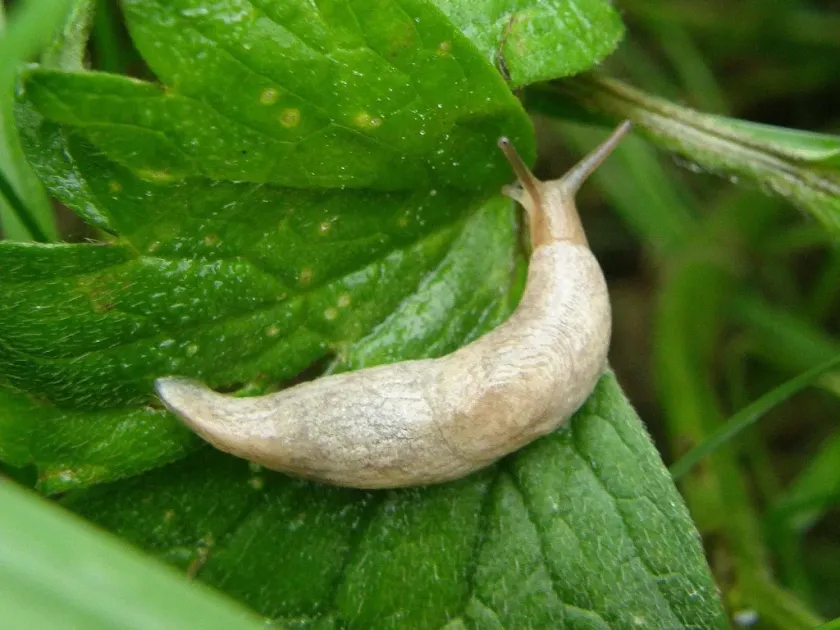
Description
How to identify
The garden slug (Arion hortensis) belongs to the family Arionidae, order Stylommatophora. This small terrestrial mollusk typically grows to a length of 20 to 35 mm when fully mature.
Their bodies range in color from dark gray to black, often showing subtle dark longitudinal bands along the mantle. A diagnostic feature is the bright yellow or orange sole of the foot, which leaves a distinct slime trail.
The slug's body is covered in a protective layer of mucus that prevents dehydration, especially when moving across exposed surfaces. They spend much of their time dwelling in the upper layers of soil.
Breathing organs are located under the edge of the mantle on the anterior part of the body. These slugs are hermaphroditic and can lay eggs in hidden, moist environments, leading to rapid population increases.
They are well-adapted to garden environments where mulch and high soil moisture provide ideal conditions for their survival and reproductive success throughout the growing season.
What it damages
The garden slug is a polyphagous pest that attacks a wide variety of horticultural crops. Their primary targets include lettuce, cabbage, potatoes, tomatoes, cucumbers, and young vegetable seedlings.
They cause severe damage to flowers and ornamental plants, often feeding on budding shoots and young leaves. Strawberries are also a common target, with slugs frequently consuming ripening fruits.
Seedlings are particularly vulnerable, as a few slugs can destroy an entire row of young crops overnight. Root crops like carrots and potatoes are often hollowed out, which ruins their marketability.
By grazing on plant tissues, slugs create open wounds that serve as entry points for various fungal and bacterial pathogens, leading to secondary infections and crop rot.
Because they frequently feed underground on tubers and bulbs, severe damage can go unnoticed until the time of harvest, making them a particularly insidious agricultural pest.
When it appears
Activity begins in early spring as soon as soil temperatures rise above 5–8 degrees Celsius. They thrive in wet, rainy weather conditions throughout the spring and early summer.
During hot or dry summer periods, their surface activity decreases significantly. They typically retreat into cool, dark, and damp refuges such as deep soil cracks or dense vegetation.
Feeding is most intensive at night and during dusk, when the risk of drying out is minimized. They are rarely seen during the heat of the day unless it is overcast and rainy.
Autumn brings a second peak of activity as conditions cool down and soil moisture levels rise again, allowing slugs to feed heavily before their reproductive cycle ends.
The garden slug overwinters primarily in the egg stage, though juvenile individuals can also survive in compost heaps, under leaf litter, or deep within the soil profile.
Signs of infestation
The most obvious sign of an infestation is irregular, ragged holes in the leaves of plants. Often, only the main veins remain, giving the leaves a skeletal appearance.
The presence of a glistening, silvery slime trail on soil, pots, or plant surfaces is a definitive indicator that slugs have been active in the area overnight.
Deep cavities and hollows on the surface of tubers or fruits that touch the ground are classic signs of feeding by Arion hortensis. These marks are distinct from those caused by insects.
Checking the underside of low-growing leaves or searching near the base of stems in the early morning can reveal the slugs themselves, confirming the infestation source.
Dark, elongated fecal pellets left near the feeding site confirm the pest's presence and indicate a need for immediate protective measures to prevent further crop loss.
Control measures
Cultural control involves removing debris and weed cover to eliminate daytime refuges. Regular hoeing and soil cultivation disrupt egg-laying sites and reduce the slug population.
Physical barriers such as crushed eggshells, wood ash, or sharp gravel can be placed around garden beds to deter slugs, as they struggle to crawl over abrasive surfaces.
Trapping techniques, including using damp boards, burlap, or beer-filled containers sunk into the soil, are effective ways to gather and manually dispose of the pests.
Promoting a healthy ecosystem by encouraging predators like hedgehogs, toads, frogs, and ground beetles can provide significant natural control of slug populations.
When infestation levels are high, use commercial molluscicides containing iron phosphate, which are effective at eliminating the slugs while being safer for non-target wildlife than metaldehyde.
Taxonomy
- Latin name
- Arion hortensis
- Order
- Molluscs
- Family
- Arionidae
- EPPO code
- ARIOHO
Discussion
No discussions yet — be the first.