
Spanish slug
Arion lusitanicus
Description
How to identify
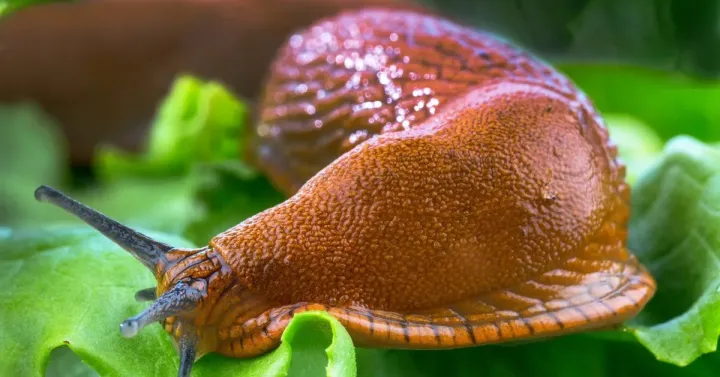
The Spanish slug (Arion vulgaris, often identified as Arion lusitanicus) is a large, terrestrial gastropod mollusk lacking a protective external shell.
Adult specimens typically reach lengths of 7 to 15 centimeters and display a wide range of colors, including yellow, orange, brown, and charcoal black.
The body is coated in a thick, sticky mucus that protects the creature from desiccation and makes it difficult for predators to handle.
They are highly mobile compared to native species and can colonize new areas rapidly due to their high reproductive potential and adaptability.
The species is distinguishable by its size and the lack of a prominent keel on the tail, although coloration is highly variable among individuals.
What it damages
This invasive mollusk is a polyphagous pest capable of causing extensive damage to a vast array of ornamental, vegetable, and fruit crops.
It poses a significant threat to leafy greens like lettuce and cabbage, as well as root vegetables, strawberries, and tender vegetable seedlings.
The feeding activity is destructive, as the slugs consume large amounts of plant tissue, often resulting in total crop failure in heavily infested areas.
Beyond direct feeding, the mucus secretion and fecal contamination degrade the aesthetic and hygienic quality of harvested produce.
In addition to cultivated plants, they also compete with native species and can disrupt local ecosystems by consuming vast amounts of plant biomass.
When it appears
The Spanish slug generally follows an annual life cycle, completing its development from egg to mature reproductive adult within a single season.
They become active in late spring once soil temperatures rise and continue their destructive activities throughout the summer and early autumn.
During hot and dry weather conditions, the slugs seek refuge in damp, shaded environments, including deep soil layers or dense vegetation mats.
The primary reproductive phase occurs in autumn, when eggs are deposited in batches into protected, humid soil sites or under decaying organic matter.
Winter survival is primarily managed through the egg stage, which remains dormant until the arrival of favorable spring conditions for hatching.
Signs of infestation
The presence of large, irregular holes in leaves, often observed in the morning, is a primary indicator of nocturnal slug feeding activity.
Silvery, dried mucus trails left on sidewalks, plant stems, and foliage are distinctive signs that slugs have been active in the immediate vicinity.
Damage to low-lying fruits, such as strawberries, appearing as deep pits or entirely hollowed-out sections, is characteristic of this pest.
Finding groups of slugs during overcast, humid days or at dusk provides confirmation of their population density in the garden area.
Stunted plant growth or missing seedlings are classic indicators that an infestation has reached a level requiring immediate management intervention.
Control measures
Effective control requires an integrated approach that combines manual, cultural, and chemical tactics to maintain slug numbers below damaging levels.
Hand-picking during early morning or evening hours is a simple yet effective method for reducing populations in smaller residential gardens.
Cultural practices, such as removing debris, thinning dense foliage, and keeping the garden area clean, eliminate essential daytime hiding spots.
Barriers made of copper tape, coarse sand, or crushed eggshells can be used to protect high-value plants from slug movement into the root zone.
When necessary, iron phosphate-based molluscicides can be applied as a targeted solution that is safer for domestic animals and the environment.
Taxonomy
- Latin name
- Arion lusitanicus
- Order
- Molluscs
- Family
- Arionidae
- EPPO code
- ARIOLU
Discussion
No discussions yet — be the first.