
Black slug
Arion ater
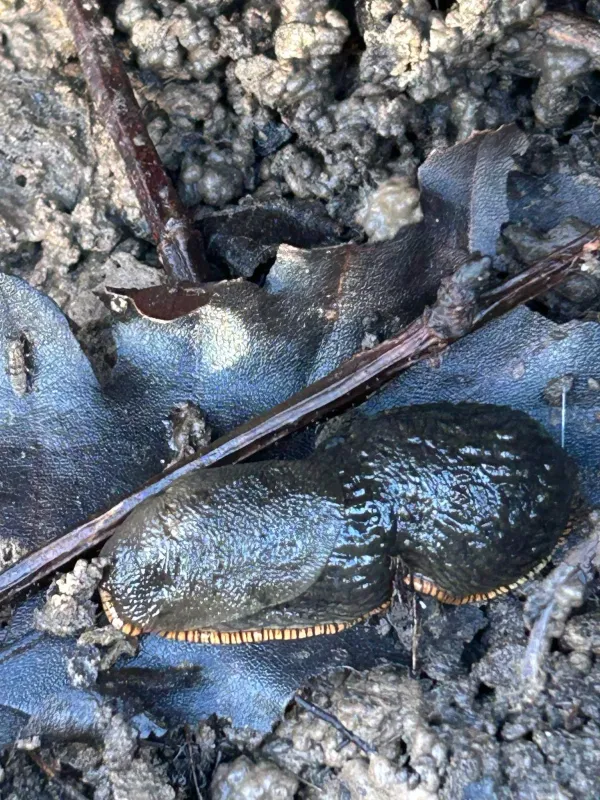
Description
How to identify
The black slug, Arion ater, is a large air-breathing land slug belonging to the family Arionidae. Adults can grow up to 15 centimeters in length and are known for their distinctively dark, often black, appearance.
Their bodies are covered in thick mucus, which helps them retain moisture and move smoothly. They possess a breathing hole located on the anterior right side of the mantle, a key diagnostic feature.
These mollusks are nocturnal, preferring humid and shaded environments. During the day, they shelter under damp debris, rocks, or deep within the soil profile to avoid dehydration.
Being hermaphroditic, they are highly efficient at reproduction. A single population can expand rapidly when environmental conditions, such as high humidity and moderate temperatures, are met.
Juvenile black slugs are often lighter in color than their parents, transitioning to their characteristic dark velvet-like pigmentation as they reach full maturity.
What it damages
The black slug is a polyphagous pest, meaning it consumes a wide variety of plant material. They are particularly destructive in vegetable gardens, ornamental flower beds, and berry patches.
Commonly attacked crops include lettuce, cabbage, strawberries, potatoes, and young legume seedlings. They cause damage by rasping away plant tissues with their specialized tongue, known as a radula.
Leaves often show irregular, large holes or are consumed entirely, leaving behind only the veins. This significantly reduces the photosynthetic area of the plant and hinders growth.
Furthermore, slugs can contaminate fruits and vegetables resting on the ground with their mucus and feces, rendering them unmarketable and susceptible to fungal infections.
In greenhouses, they pose a severe threat to tender seedlings, which can be entirely decimated in a single night if the population is not monitored.
When it appears
Activity generally begins in the spring as soon as soil temperatures warm up. Their primary season of concern extends from late spring through to the autumn harvest.
Humidity is the most important factor in their activity patterns. Rain encourages movement and feeding, while dry, hot summer spells usually drive them to seek refuge underground.
The main breeding period typically occurs in the late summer and autumn. They lay clusters of eggs in moist, protected spots in the soil or under vegetation debris.
These eggs are hardy and can overwinter successfully in the soil, ensuring that a new generation emerges as soon as the weather becomes favorable in the following year.
Migration often occurs from nearby overgrown areas, forest edges, or thick hedges where the slugs find refuge during periods of lower activity or drought.
Signs of infestation
The most obvious sign of an infestation is the presence of slimy, silvery trails left behind on leaves, stems, and soil surfaces as the slug moves.
Look for jagged, irregular holes in the foliage of sensitive crops. Unlike insect damage, which might be more surgical, slug damage often results in messy, eroded tissue margins.
Root crops like carrots or potatoes may exhibit hollowed-out cavities, often followed by secondary rotting caused by bacteria or fungi that entered the feeding site.
Finding the pests themselves during evening inspections or early morning hours after rainfall provides clear confirmation of an ongoing infestation.
Small, translucent, pearly egg clusters discovered during weeding or turning over the soil are a strong indicator of a future population explosion on the plot.
Control measures
Cultural control starts with sanitation: keep the garden clean by removing piles of weeds, rotting wood, and other debris that provide daytime shelter for slugs.
Creating physical barriers around vulnerable beds using abrasive materials like wood ash, crushed eggshells, or lime can deter slugs, as they struggle to cross these textures.
Manual control involves using traps, such as planks or wet cardboard, placed in the garden overnight. These traps attract slugs, allowing for easy collection and disposal each morning.
Biological control methods include encouraging natural predators such as toads, frogs, ground beetles, and hedgehogs, which can significantly regulate slug populations.
For high-pressure infestations, use iron phosphate-based molluscicides. These are generally considered more environmentally friendly and safer for pets and wildlife than traditional metaldehyde baits.
Taxonomy
- Latin name
- Arion ater
- Order
- Molluscs
- Family
- Arionidae
- EPPO code
- ARIOAT
Discussion
No discussions yet — be the first.