
Procloeon bifidum
Procloeon bifidum
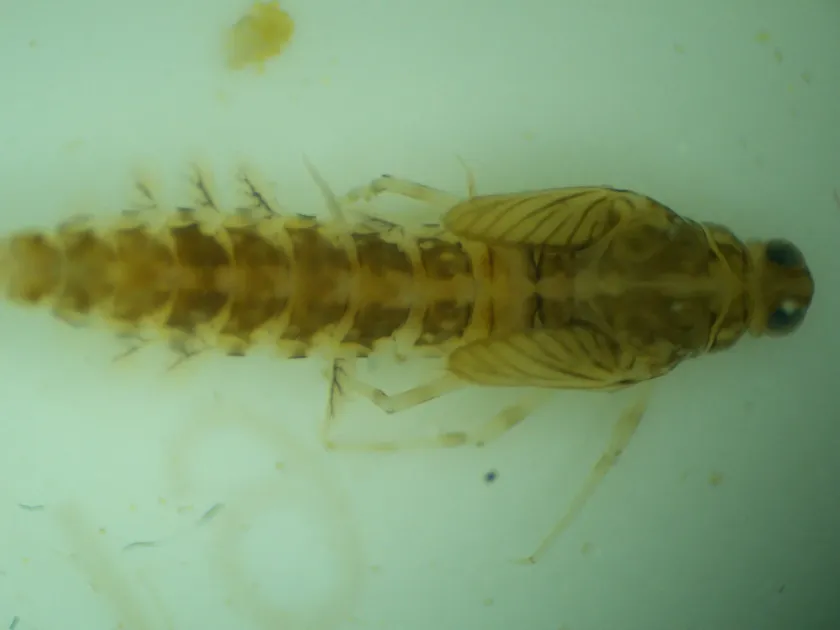
Description
How to identify
Procloeon bifidum is a species of mayfly belonging to the family Baetidae. As an adult, it is characterized by delicate, transparent wings and a slender, fragile body structure.
The lifecycle consists of three distinct phases: egg, aquatic nymph, and the short-lived aerial adult. Adults are easily identified by their two long caudal filaments and their habit of swarming near water sources.
Nymphs are strictly aquatic and possess streamlined bodies adapted for life in flowing or stagnant water. They have visible abdominal gills that facilitate oxygen exchange in various water conditions.
Identification at the larval stage is usually performed by entomologists examining mouthparts and gill structure, which are distinct for this specific species within the Ephemeroptera order.
Adult mayflies do not feed, as their mouthparts are vestigial. Their primary biological function is reproduction, which occurs rapidly after their emergence from the water.
What it damages
The damage caused by Procloeon bifidum is mainly logistical and qualitative. It is primarily considered a nuisance in agricultural water management rather than a direct crop devourer.
Mass emergences of adults can result in the clogging of irrigation filters and sprinklers, leading to maintenance issues and uneven water distribution across crop fields.
In high-density aquatic environments, larval activity can interfere with the nutrient balance of the water, indirectly affecting the health of hydroponic or wetland-grown crops.
The accumulation of shed nymphal skins and dead adult bodies can contribute to organic matter buildup, potentially fostering harmful bacterial growth in irrigation tanks.
In rare instances, swarms of adults landing on harvested crops can degrade the aesthetic and sanitary quality of the produce, leading to potential rejection during quality control.
When it appears
The activity of these insects is highly seasonal, primarily concentrated during the warmer months when water temperatures allow for rapid larval development.
Adult emergence cycles typically peak from late spring through early autumn, with swarming events occurring most frequently at dawn or dusk when wind speed is low.
Multiple generations can occur within a single growing season, allowing the population to recover quickly if environmental conditions remain favorable.
During the cooler months, the population is largely dormant as nymphs within the sediment or as eggs, awaiting the return of warmer water temperatures to continue the cycle.
Monitoring seasonal temperature fluctuations provides a reliable indicator for the onset of nymphal development and potential peak swarming periods.
Control measures
Management of Procloeon bifidum focuses on environmental manipulation within water delivery systems rather than chemical pesticides, which are generally ineffective or prohibited.
Mechanical maintenance of irrigation canals, including the removal of sediment and excessive aquatic vegetation, significantly limits the available habitat for larvae.
Biological control, such as encouraging native fish populations to inhabit irrigation ponds, is highly effective at keeping larval numbers below nuisance thresholds.
Proper water circulation and preventing stagnation are crucial steps in discouraging the species from colonizing artificial water bodies used in farming operations.
- Regular mechanical cleaning of irrigation pipes
- Introduction of insectivorous fish species
- Optimization of water flow in irrigation tanks
- Use of fine-mesh filtration systems
Taxonomy
- Latin name
- Procloeon bifidum
- Family
- Baetidae
- EPPO code
- PCLOBI
Discussion
No discussions yet — be the first.