
Centroptilum
Centroptilum
Description
How to identify
Centroptilum is a genus of mayflies belonging to the family Baetidae within the order Ephemeroptera. These insects are characterized by their delicate, short-lived adult phase.
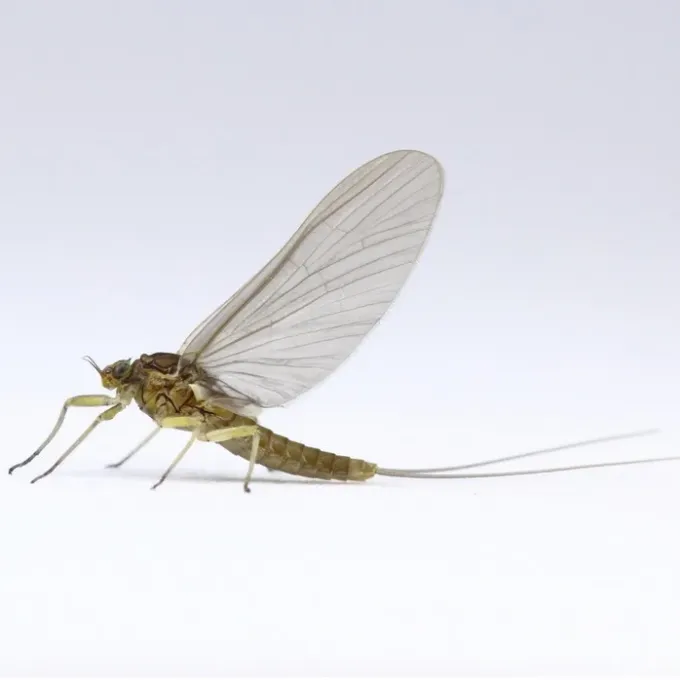
Adults possess thin, slender bodies, long caudal filaments, and transparent, fragile wings. Their morphology is highly adapted for rapid flight and aerial mating displays.
Nymphs are strictly aquatic, living in freshwater streams and irrigation canals. They feature feathery gills along their abdomen, which are used for breathing dissolved oxygen.
Identification of specific species requires detailed inspection of wing venation patterns and the arrangement of mouthparts in the larval stages.
Because of their specific environmental requirements, these mayflies are widely recognized as bioindicators of water quality and ecosystem health.
What it damages
Centroptilum species are not phytophagous pests; they do not feed on crops, vegetables, or fruits. Consequently, they cause no direct tissue damage to cultivated plants.
The primary concern for agriculture lies in the physical interference with irrigation infrastructure. Mass emergence events can clog fine mesh filters in drip irrigation systems.
Accumulation of deceased insects within pump intake pipes and pressure regulators can lead to temporary malfunctions or loss of hydraulic pressure.
These insects pose no risk as vectors for crop diseases, as their feeding habits remain restricted to algae, detritus, and microorganisms found in water.
In most agronomic scenarios, their presence is considered neutral, assuming the irrigation systems are properly equipped with secondary filtration.
When it appears
Adult emergence typically occurs during the warmer months, ranging from late spring (May) through late summer (August), peaking during calm evenings.
The life cycle is temperature-dependent; higher water temperatures generally accelerate the development of nymphs, leading to faster successions of generations.
Nymphs remain active throughout the cooler seasons, staying deep within the substrate of water bodies until the conditions for metamorphosis are met.
The emergence patterns are often synchronized across populations, leading to high-density swarms that may cause logistical concerns near irrigation reservoirs.
Tracking the seasonal peak allows farm managers to schedule maintenance for their water delivery systems and preemptively clean filtration units.
Control measures
Chemical control is never advised for Centroptilum, as it is unnecessary and ecologically damaging to aquatic biodiversity.
The standard strategy for mitigation involves the installation of industrial-grade self-cleaning filters at the intake points of irrigation water sources.
Maintaining clean water reservoirs and preventing excessive nutrient runoff reduces the likelihood of massive population explosions of aquatic insects.
Simple physical barriers, such as fine-mesh screens over ventilation or open water access points, are sufficient to prevent the entry of swarms into pump rooms.
Routine inspections of hydraulic equipment during the peak flight season ensure that any debris accumulation is cleared before it impacts system efficiency.
Taxonomy
- Latin name
- Centroptilum
- Family
- Baetidae
- EPPO code
- KPTLSP
Discussion
No discussions yet — be the first.