
Baetis rhodani
Baetis rhodani
Description
How to identify
Baetis rhodani is a species of mayfly belonging to the order Ephemeroptera and the family Baetidae, common in freshwater streams.
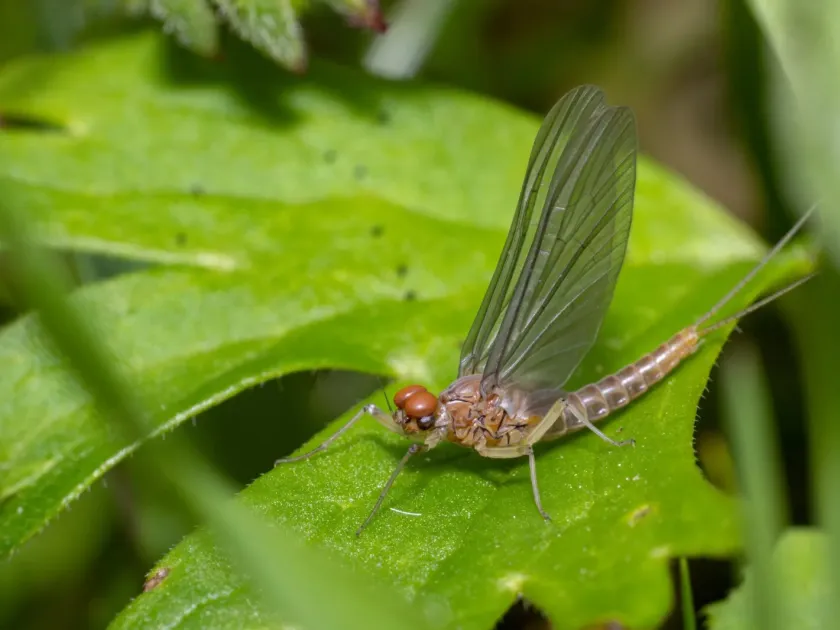
The adult form is characterized by a slender body, transparent wings with prominent venation, and long caudal filaments used for flight stability.
The nymphs, or naiads, are well-adapted to flowing water, possessing a streamlined body shape and specialized gills for efficient oxygen intake.
The coloration of the nymphs typically ranges from light brown to olive, providing excellent camouflage against rocky stream beds.
Unlike other insects, Baetis rhodani undergoes a subimago stage, where the insect emerges from the water before its final molt into a sexually mature adult.
What it damages
Baetis rhodani does not feed on agricultural crops and is not considered a traditional plant pest in terrestrial farming environments.
However, within agricultural infrastructure, large populations of nymphs can cause blockages in irrigation water filters and intake valves.
In aquaculture, high densities of nymphs can compete for food resources with juvenile fish, potentially impacting stock growth rates.
The primary nuisance is the physical accumulation of exuviae (cast-off skins) and nymphal biomass in technical water management systems.
Their impact is predominantly related to the maintenance of hydraulic equipment situated in or near irrigation channels.
When it appears
This species exhibits a flexible life cycle, often producing multiple generations per year depending on the surrounding temperature.
Emergence peaks are typically observed during the spring and autumn months, corresponding with optimal climatic conditions for adult activity.
Unlike many other insects, the nymphs maintain active development throughout the winter if the water remains oxygenated and flowing.
Developmental speed is highly dependent on water temperature and the presence of dissolved oxygen within the aquatic habitat.
Synchronized emergence often leads to large swarms of adults, which are essential for breeding and population dispersal.
Signs of infestation
The most visible indicator of this species is the aerial swarming of adults over water surfaces, commonly occurring at dawn or dusk.
Nymphal presence is confirmed by inspecting the submerged surfaces of concrete structures or stones where they reside in clusters.
The discovery of exuviae floating on the surface of canals is a definitive sign of an active metamorphosis period in the vicinity.
Increased fish activity near the water surface can signal that the insects are emerging, providing a temporary food source for predators.
Observing mature insects resting on riparian vegetation is a standard method for identifying the presence of Baetis rhodani.
Control measures
Chemical control is generally avoided because Baetis rhodani serves as a vital bioindicator of water quality and ecosystem health.
The most effective management strategy is the installation of fine-mesh filtration screens at the entrance of irrigation pumps to prevent clogging.
Regular mechanical cleaning of water channels to remove silt and excess periphyton reduces the habitat suitability for nymphal colonization.
Maintaining proper water flow velocity prevents the creation of stagnant zones where these insects tend to accumulate in high numbers.
Proactive maintenance and inspection of water intake systems ensure that nymphal populations do not interfere with agricultural water supply.
Taxonomy
- Latin name
- Baetis rhodani
- Family
- Baetidae
- EPPO code
- BAETRH
Discussion
No discussions yet — be the first.