
Centroptilum pennulatum
Centroptilum pennulatum
Description
How to identify
Centroptilum pennulatum is a member of the Baetidae family, which falls under the Ephemeroptera (mayfly) order.
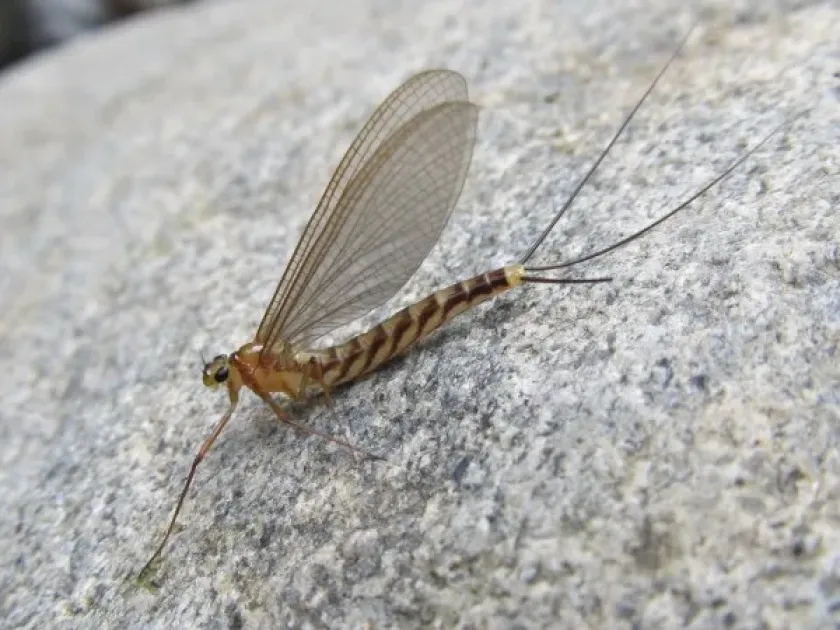
Adult specimens are characterized by their fragile bodies, delicate wings with intricate venation, and long caudal filaments.
The larval stage, which inhabits freshwater environments, possesses a streamlined body shape optimized for life in running water.
Identification is typically performed by specialists examining the morphology of gills and mouthparts under magnification.
They are known for their rapid movement in the water column and their ability to thrive in oxygen-rich aquatic habitats.
What it damages
This species is not classified as a plant pest as it does not consume agricultural crops or ornamental plants.
Potential economic impact is limited to the management of irrigation canals where mass populations may cause biofouling.
Accumulated exuviae and larval activity can lead to the obstruction of fine-mesh filters in agricultural water supply systems.
While they do not harm crops, their presence in high densities can signal high organic load in irrigation water that might require attention.
In broader ecological terms, they serve as a critical food source for fish, thereby playing a beneficial role in the surrounding ecosystem.
When it appears
The life cycle of Centroptilum pennulatum is strictly seasonal, depending on water temperature and oxygen availability.
The emergence of winged adults generally peaks during the warmer spring and summer months across various temperate regions.
Larvae develop throughout the season, with multiple generations possible if the environmental conditions remain optimal and stable.
As autumn approaches, the development cycle slows down significantly as water temperatures drop and the metabolic rates of the larvae decrease.
Adults exhibit swarming behavior, which is a key phase for mating and ensuring the successful deposition of eggs in suitable water bodies.
Signs of infestation
Signs of their presence include evening swarms of adult mayflies hovering over ponds, irrigation ditches, and slow-moving streams.
The observation of discarded larval skins on plants or debris near the water edge indicates a recent emergence event.
In irrigation systems, a reduced flow rate or clogged screens may indicate the presence of high density biological activity.
The species serves as a biological indicator, with its abundance often reflecting the purity and dissolved oxygen content of the water.
Their appearance on light-colored surfaces near agricultural fields is a common indicator that the population has reached maturity.
Control measures
Targeted control for Centroptilum pennulatum is generally unnecessary as they are considered part of the aquatic ecosystem rather than pests.
To prevent biofouling in irrigation equipment, regular mechanical cleaning of the channels and water transport systems is recommended.
Reducing the inflow of nutrient-rich runoff into irrigation canals helps limit the resources available for mass larval development.
Chemical intervention is strongly discouraged as it causes significant collateral damage to other aquatic species and local biodiversity.
The most effective strategy involves maintaining proper water circulation to prevent stagnant conditions that favor rapid population growth.
Taxonomy
- Latin name
- Centroptilum pennulatum
- Family
- Baetidae
- EPPO code
- KPTLPE
Discussion
No discussions yet — be the first.