
Mayfly
Cloeon
Description
How to identify
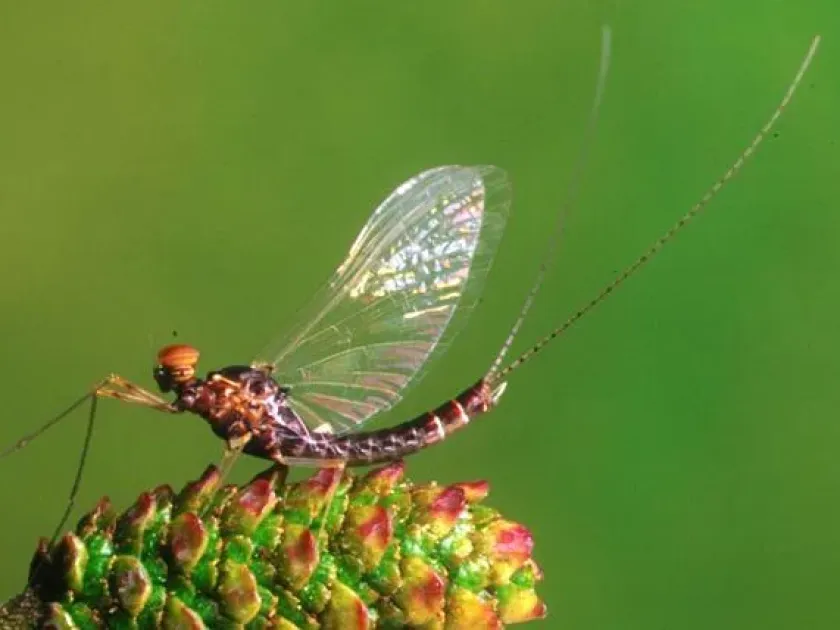
The genus Cloeon belongs to the order Ephemeroptera (mayflies) and the family Baetidae. Adults are characterized by delicate, transparent wings held vertically at rest and long caudal filaments.
The larval stage is strictly aquatic. These nymphs possess streamlined bodies and external gills along the abdomen, allowing them to thrive in stagnant or slow-moving freshwater environments.
Mayflies undergo incomplete metamorphosis. The lifecycle includes the egg, nymph, subimago, and the short-lived adult stage, which lacks functional mouthparts and does not consume food.
The identification of these insects is often based on the observation of massive swarms during mating flights, which occur most frequently near ponds, irrigation canals, and slow rivers.
Cloeon species, such as Cloeon dipterum, are highly adaptable to various water quality conditions, making them common inhabitants of agricultural water reservoirs.
What it damages
Cloeon species are not agricultural pests. They cause no direct damage to crops, vegetables, or soil health, as they are not phytophagous in their adult stage.
In the aquatic stage, larvae function as detritivores or scrapers, feeding on algae and decaying organic matter on the bottom of water bodies, which helps maintain water quality.
The only potential nuisance occurs when adults emerge in massive numbers and clog irrigation intake screens or filter systems, potentially affecting water distribution efficiency.
In aquaculture, these larvae are highly valued as a high-protein food source for fish populations, supporting the biodiversity of the ecosystem around the farm.
Because they do not feed on plant tissues, there is no need for economic threshold monitoring or pest control interventions regarding these insects.
When it appears
The flight period for adults typically spans from late spring through early autumn, depending on local climate conditions and water temperatures.
Larval development takes place underwater year-round. Growth rates are heavily dependent on water temperature, with development occurring more rapidly in warmer seasons.
Peak emergence activity is usually concentrated during the dusk or early morning hours, when the air is humid and calm, protecting the insects from desiccation.
Multiple generations can occur throughout the year, especially in temperate regions where summer conditions allow for a short and intense metamorphic cycle.
Management staff should be aware of these emergence peaks to plan maintenance and filter cleaning for irrigation systems before the flight season begins.
Control measures
No chemical control measures are recommended or necessary for Cloeon. Using insecticides would be counterproductive, causing harm to the aquatic food web and the environment.
To mitigate mechanical interference with agricultural equipment, regular cleaning of irrigation filters and intake screens is the most effective approach during flight periods.
Promoting a balanced ecosystem around agricultural plots is recommended, as mayflies are excellent bioindicators of water health and the absence of toxic pollution.
Infrastructure maintenance, such as ensuring proper water flow in irrigation canals, can help reduce the accumulation of silt and debris, which indirectly manages local nymph populations.
If insects become a disturbance to personnel, light-trap management or physical barriers away from critical infrastructure can be employed to divert the swarm.
Taxonomy
- Latin name
- Cloeon
- Family
- Baetidae
- EPPO code
- CLOESP
Discussion
No discussions yet — be the first.