
Black crappie
Pomoxis nigromaculatus
Description
How to identify
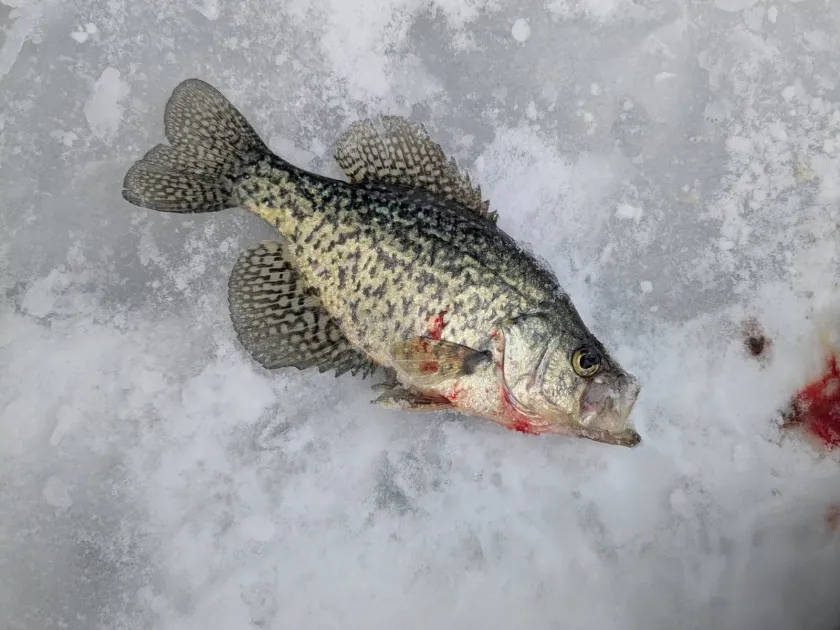
The Black crappie (Pomoxis nigromaculatus) is a species of freshwater fish belonging to the family Centrarchidae, the same family as sunfish and bass. It is an aquatic organism and should not be confused with any agricultural pests.
Morphologically, it is recognized by its deep, slab-sided body and a distinctive pattern of dark, irregular blotches over a silvery-green base color. They typically inhabit clear, slow-moving waters with abundant aquatic vegetation.
Their life cycle includes spring spawning where the male prepares a nest in the substrate. They are prolific breeders, often leading to rapid population expansion if conditions in the water body are ideal.
As a predatory fish, their diet consists primarily of zooplankton, small crustaceans, and the fry of other fish species, which places them in the aquatic food chain rather than the agricultural sector.
While they are highly valued in North American sport fishing, their presence in non-native waters can occasionally cause ecological shifts by outcompeting native fish populations for limited food resources.
What it damages
The Black crappie causes zero damage to agricultural crops, including vegetables, grains, or orchard trees. There is no biological or ecological basis to classify this fish as a pest for terrestrial agriculture.
The only context in which they are considered a nuisance is within commercial aquaculture, where they may enter ponds and compete with commercially reared species for feed or predate upon the young fry.
They do not have the physiological capability to consume plant tissues, stems, or roots. Their interaction with plants is purely spatial, as they use aquatic plants for refuge and hunting cover.
There are no known instances where Black crappie populations have adversely affected agricultural yields, soil health, or plant physiological processes in any farming environment.
In conclusion, the Black crappie remains strictly an aquatic subject of interest for ichthyologists and anglers, with no classification as a plant pest in any agricultural handbook.
Control measures
Control measures are exclusively limited to fishery management practices. If a water body requires population regulation, netting and trapping are the primary methods used to reduce the number of individuals.
Prevention of unintended introduction into fish-rearing ponds is best achieved through the installation of fine-mesh screening on water intake structures to block the passage of eggs and larvae.
In controlled aquaculture environments, complete draining of ponds followed by biological remediation is the most effective way to eliminate undesired fish species from the water column.
Managing the population balance is crucial in sport fisheries to ensure the sustainability of the crappie population without causing negative impacts on other endemic fish species sharing the same habitat.
Best practices for water management emphasize strictly avoiding the transfer of any life stage of this fish to unconnected water bodies to protect local ecological integrity.
Taxonomy
- Latin name
- Pomoxis nigromaculatus
- Family
- Centrarchidae
- EPPO code
- POMONI
Discussion
No discussions yet — be the first.