
Green sunfish
Lepomis cyanellus
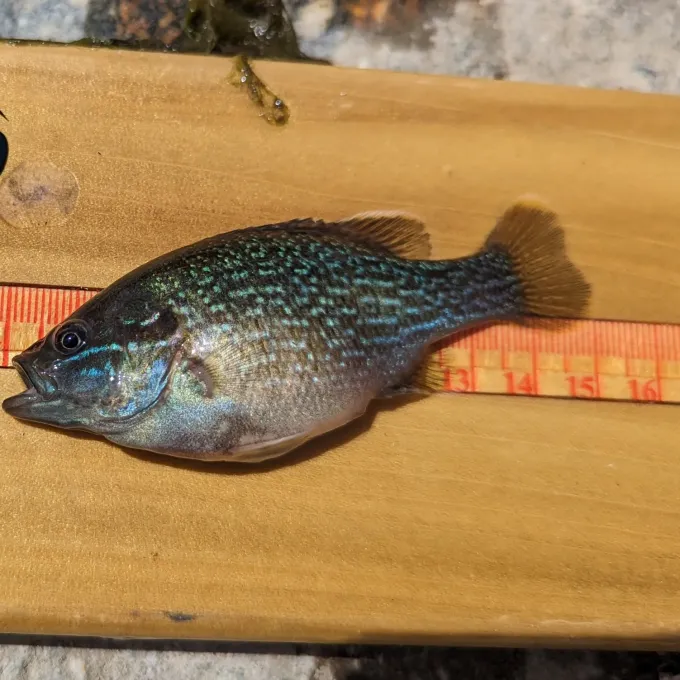
Description
How to identify
The green sunfish (Lepomis cyanellus) is a freshwater fish species belonging to the Centrachidae family within the order Perciformes.
It possesses a stout, deep body with a large, aggressive mouth that allows it to feed on a wide variety of prey, including small fish and invertebrates.
The coloration of the body is typically brownish-green with metallic blue or green flecks, and it often features characteristic blue streaks on the cheeks.
Adults exhibit a distinct black opercular spot, which is clearly outlined by a pale margin, providing a reliable diagnostic feature for identification.
They are highly adaptable creatures, capable of thriving in various conditions, ranging from muddy, slow-moving streams to clear, vegetated pond environments.
What it damages
In aquaculture, the green sunfish is classified as a significant nuisance due to its invasive nature and competitive behavior against native stocks.
It causes substantial economic damage by consuming the eggs and fry of valuable commercial fish, thereby drastically reducing the harvest yield in ponds.
As a highly aggressive competitor, it disrupts the ecosystem balance, displacing native fish species and dominating the available resources in the water body.
If allowed to enter irrigation systems, it can become an obstructive factor for water intake infrastructure, leading to maintenance issues and clogged systems.
The species is known for its ability to overpopulate rapidly, which creates intense competition for food and space, often resulting in stunted growth of other aquatic species.
When it appears
The green sunfish is most active during the spring and summer months when water temperatures are conducive to metabolic activity and reproduction.
Spawning occurs throughout the summer, with males meticulously preparing and defending nests, which increases their aggressive interaction with other fish.
During the warm season, the fish exhibits a high feeding rate, making it a constant threat to the survival of young fry and small juvenile fish in the ponds.
As autumn approaches, activity patterns shift towards preparing for winter, though feeding continues until temperatures drop significantly.
During the winter, the fish remains in a state of low activity, yet it demonstrates high resilience by surviving in conditions that are often lethal to other species.
Control measures
Strict biosecurity measures during the stocking process are essential to prevent the accidental introduction of green sunfish eggs or juveniles into ponds.
Pond drainage and subsequent treatment of the basin with lime remain the most effective methods for eradicating an established population from an aquaculture site.
Installing fine-mesh filtration screens on water inlets and irrigation channels can prevent the migration of the species from nearby natural water sources.
Manual removal using specialized nets, traps, or electrofishing gear is necessary to mitigate the impact in systems that cannot be easily drained or treated.
Biological control, achieved by introducing larger predatory fish such as northern pike, can help to suppress the population growth of this invasive species.
Taxonomy
- Latin name
- Lepomis cyanellus
- Family
- Centrarchidae
- EPPO code
- LEPMCY
Discussion
No discussions yet — be the first.