
Bluegill
Lepomis macrochirus
Description
How to identify
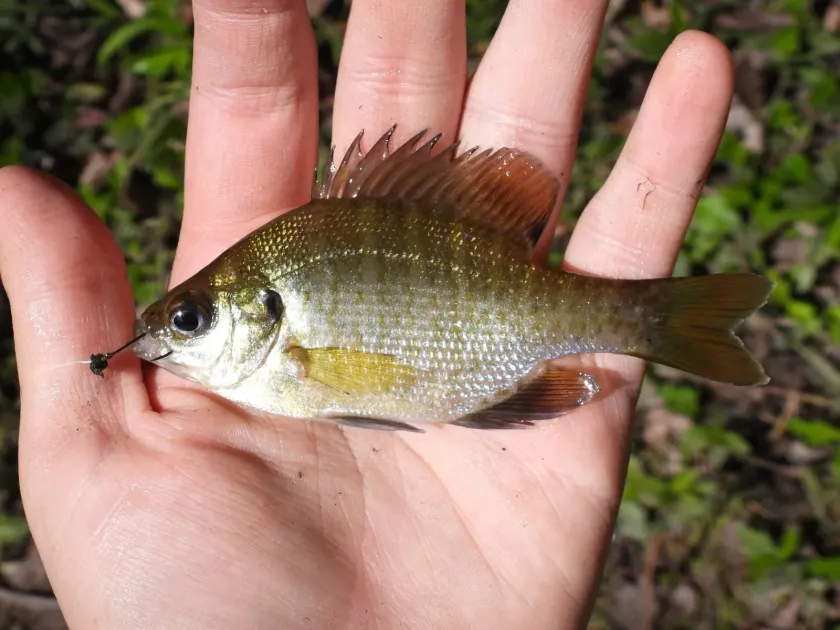
The bluegill (Lepomis macrochirus) is a member of the sunfish family (Centrarchidae) within the order Perciformes. It is a small fish with a deep, compressed body, typically reaching 15–25 cm in length.
The coloration ranges from olive-green to golden-yellow, often featuring dark vertical bars on the sides. A distinct characteristic is the dark, nearly black spot on the posterior edge of the gill cover.
During the spawning season, males exhibit more vibrant colors, developing orange and blue hues, which distinguishes them from other freshwater species.
This species is considered an aggressive invasive object in many regions worldwide where it has been introduced, successfully outcompeting local fish species for ecological niches.
Due to its high adaptability to various temperatures and water quality conditions, the bluegill effectively colonizes still and slow-moving water bodies.
What it damages
In aquaculture environments, the bluegill acts as a dangerous food competitor for valuable commercial fish species such as carp or crucian carp.
It actively consumes zooplankton, insect larvae, and small invertebrates, which are the essential food base for the fingerlings of the targeted fish species.
Due to intense reproduction rates, the bluegill population quickly reaches critical levels, leading to the depletion of food resources and stunted growth in farmed fish.
Furthermore, the bluegill feeds on the eggs and fry of other fish, causing direct damage to valuable populations and reducing overall pond productivity.
The presence of this pest forces owners to increase expenditures on supplemental feeding, which significantly reduces the profitability of the fish farm.
When it appears
Bluegill activity begins in early spring when water temperatures reach 12–15 degrees Celsius, prompting the fish to emerge from winter dormancy.
The spawning period is extended, lasting from late spring to mid-summer, during which males aggressively guard their nests and display strong territorial behavior.
Summer is the peak feeding season; their high metabolic rate requires a constant energy intake, making them most voracious during warmer months.
In autumn, activity gradually decreases as the fish move to deeper water layers, though they continue to feed until temperatures drop significantly.
During winter, bluegills are less active but remain capable of surviving in various pond environments, posing a threat to the farm in the following season.
Signs of infestation
The first sign of this pest's presence is a sharp decline in the growth rates of the main fish stock, despite adequate feeding schedules.
Visually, one can detect characteristic "nests"—depressions in the substrate in shallow waters that males clear of silt and vegetation to deposit eggs.
A significant reduction in the abundance of natural zooplankton and insect larvae in water samples taken from different areas of the pond is observed.
During trial netting, a large number of small to medium-sized fish with the characteristic black spot on the gill cover are discovered.
An increase in the population of small "rough" fish with no commercial value is a direct signal to initiate sanitary pond cleaning measures.
Control measures
The primary control method involves complete draining and liming of ponds after the harvest to destroy the bluegill's eggs and fry.
An essential aspect is using high-quality seed stock that undergoes quarantine testing to ensure it is free from unwanted fish species.
- Utilizing selective fishing gear to harvest bluegill individuals.
- Biological control: introducing predator fish (e.g., northern pike) that prey on bluegill fry.
- Mechanical removal of excess vegetation in ponds where bluegills seek shelter and spawn.
In cases of critical pond infestation, ichthyocidal agents regulated by legislation are applied to prevent further damage to the ecosystem.
Regular monitoring of the fish community composition allows for the early detection of the pest and the implementation of preventive measures before widespread infestation.
Taxonomy
- Latin name
- Lepomis macrochirus
- Family
- Centrarchidae
- EPPO code
- LEPMMA
Discussion
No discussions yet — be the first.