
Smallmouth bass
Micropterus dolomieu
Description
How to identify
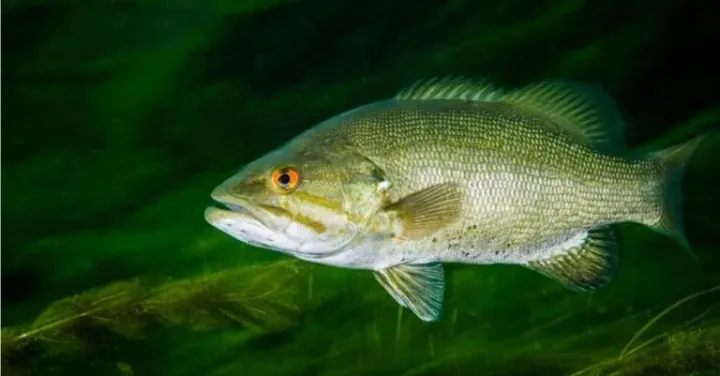
The Smallmouth bass (Micropterus dolomieu) is a predatory fish species belonging to the family Centrarchidae. It is widely recognized in ecological studies as a significant invasive species outside its native range.
The fish typically possesses a compact, muscular body with a brownish or olive hue and vertical dark bars on its sides. Unlike its relative, the largemouth bass, its jaw does not extend past the eye, which is a key diagnostic feature for identification.
This species thrives in cool, clear, and flowing water environments. Its high adaptability allows it to establish self-sustaining populations in various artificial water bodies, including irrigation reservoirs and farm ponds.
Its life cycle involves complex reproductive behavior where males construct and guard nests on the substrate. This protective strategy leads to high recruitment rates and rapid colonization of new water systems.
While primarily a subject of recreational fishing, its presence in agricultural water infrastructure is considered detrimental to the ecosystem balance and water quality management.
What it damages
Smallmouth bass can cause significant disruption to agricultural water management systems by altering the aquatic food web. By preying on indigenous species that control algae, they contribute to the eutrophication of water bodies.
Excessive algae growth, caused by the reduction of grazing fish populations, leads to the clogging of irrigation pipes and filtration systems, increasing maintenance costs for farmers and growers.
In aquaculture-integrated farms, the presence of these predators leads to reduced yields of primary stock due to competition and direct predation, significantly impacting the economic sustainability of the operation.
The species also acts as a vector for various aquatic pathogens, which can threaten the health of commercially valuable fish and reduce the overall quality of water utilized for irrigation purposes.
Ultimately, the displacement of local aquatic species reduces the resilience of the ecosystem to environmental stressors, complicating the management of water resources in agricultural landscapes.
Control measures
Management of this species requires strict prevention protocols to stop its introduction into closed or managed water systems. Importing fish from unknown or non-certified sources should be prohibited to prevent accidental stocking.
Implementing physical barriers, such as specialized screens at water intake points and sluice gates, is essential to block the movement of both juveniles and adult fish from natural watercourses into agricultural channels.
Regular monitoring of fish populations within ponds is necessary to identify early signs of colonization. If an invasion is detected, targeted harvesting and biological control measures should be initiated promptly.
- Complete drainage and drying of ponds for seasonal disinfection.
- Installation of physical exclusion devices in hydraulic structures.
- Promotion of recreational angling to reduce the density of the established population.
Coordination with local environmental agencies is crucial to implement large-scale containment strategies and to prevent further spread across interconnected irrigation networks.
Taxonomy
- Latin name
- Micropterus dolomieu
- Family
- Centrarchidae
- EPPO code
- MIOPDO
Discussion
No discussions yet — be the first.