
Largemouth bass
Micropterus salmoides
Description
How to identify
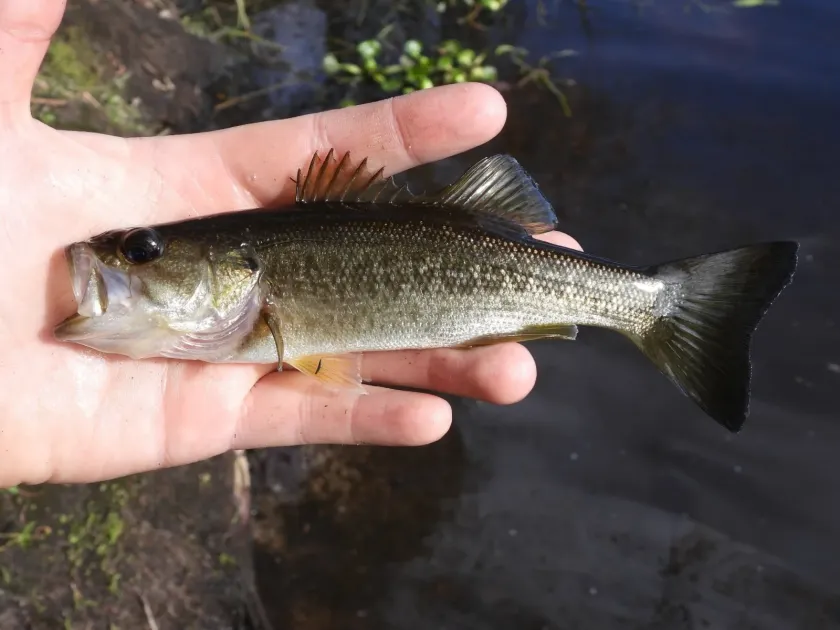
The Largemouth bass (Micropterus salmoides) is a freshwater game fish of the Perciformes order and Centrarchidae family. It is characterized by its large jaw, extending beyond the rear margin of the eye, and a prominent dark lateral stripe.
This species is highly predatory and resilient, adapted to various aquatic environments. Its rapid growth rate and aggressive territorial behavior make it a dominant species in many water systems.
Spawning occurs during the spring, with males meticulously guarding nests. This reproductive strategy ensures a high survival rate for the offspring, enabling rapid colonization of new habitats.
Its ability to thrive in diverse water conditions—from clear lakes to stagnant ponds—makes it an persistent challenge for agricultural water management.
Identifying the presence of this fish is critical for maintaining the stability of controlled aquatic agricultural systems, such as large-scale aquaponics.
What it damages
The primary impact of Largemouth bass in agriculture involves the disruption of aquaponic nutrient cycles by consuming the fish stocks that provide essential biological waste for plant fertilization.
By eliminating beneficial native fish that consume insect larvae, this predator inadvertently triggers outbreaks of crop-damaging insects in surrounding fields.
The physical presence of large bass often leads to the erosion of pond banks and the disturbance of submerged plant roots, causing significant stress to the crops.
Waste products from these large predators can alter water chemistry, increasing nitrogen loads to levels that may be unsuitable for sensitive greenhouse crops.
Furthermore, the predatory nature of the species simplifies the ecosystem, eliminating the biodiversity required to maintain a natural balance against pathogens.
Control measures
To prevent infestation, install precise mesh screens on water intake pipes to filter out eggs and juveniles, which are the most common entry points for the species.
Periodic population monitoring using professional electrofishing or netting is essential to detect early colonizers before they reach breeding age and establish a permanent colony.
Physical containment systems, such as double-gated drainage points and concrete-lined channels, are highly effective in limiting the movement of the invasive fish.
If colonization is detected, complete drainage and total sanitization of the infested water body are recommended, as the species is notoriously difficult to eradicate.
Strategic management of water levels and oxygenation levels can sometimes be used to create unfavorable conditions for bass, thereby favoring the health of cultivated crops.
Taxonomy
- Latin name
- Micropterus salmoides
- Family
- Centrarchidae
- EPPO code
- MIOPSA
Discussion
No discussions yet — be the first.