
White crappie
Pomoxis annularis
Description
How to identify
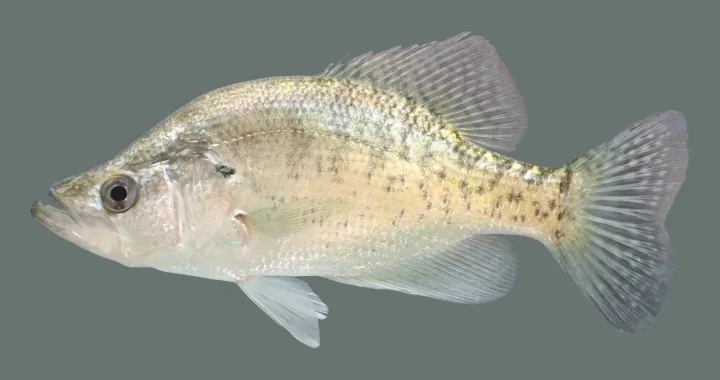
The white crappie (Pomoxis annularis) is a species of freshwater fish belonging to the Centrarchidae family and the order Perciformes.
It is characterized by a deep, laterally compressed body with a silver-olive coloration and dark spots, commonly found in slow-moving water bodies of North America.
This species is strictly an aquatic organism and acts as a predator, feeding on small fish, insects, and crustaceans.
The white crappie is not classified as a plant pest because it does not consume, damage, or parasitize any agricultural crops, horticultural plants, or forestry trees.
In the context of agronomy, it is considered an element of aquatic fauna rather than an organism of economic threat to crop production.
What it damages
The white crappie causes zero damage to terrestrial crops, as its biological activities are confined entirely to aquatic environments.
The species lacks the morphology and dietary requirements to interact with or harm plant tissues, whether in field crops, orchards, or greenhouses.
There is no mechanism through which this fish could influence the yield or health of agricultural plants, as it is a carnivore.
Any perceived damage to vegetation near water bodies should be attributed to actual plant pests such as insects, rodents, or phytopathogens.
From an agricultural management perspective, the presence of this fish in irrigation water has no direct impact on plant development.
When it appears
The activity of the white crappie is dictated by water temperature and the seasonal rhythms of aquatic ecosystem life cycles.
Spawning typically occurs in the spring, which aligns with the warming of water, while mid-summer often sees the fish retreat to deeper, cooler strata.
Winter activity is minimal as the fish enters a state of low metabolic rate due to the cold water temperatures characteristic of their native range.
These seasonal changes are entirely unrelated to the vegetative cycles of agricultural crops or the timing of pest infestations on land.
Agro-climatological calendars and fish activity calendars operate on independent biological principles that do not intersect in terms of crop protection.
Signs of infestation
As the white crappie is not a plant pest, there are no symptoms or signs of plant damage associated with its presence.
Plant distress or physical damage observed in agricultural fields or near pond irrigation sources must be investigated as separate agronomic issues.
The absence of interaction between this predator and terrestrial flora confirms that no plant diagnostic signs can be attributed to the species.
Field monitoring should focus on traditional threats such as aphids, mites, or fungal infections, ignoring non-pest aquatic species.
Diagnostic protocols for crop health do not include any markers related to the activity of freshwater fish like the white crappie.
Control measures
No agricultural pest control strategies are needed for the white crappie, as it does not constitute a threat to any crop cultivation.
If physical access to irrigation systems needs to be managed, standard screening or filtration equipment is used for debris management, not as pest control.
Effective agricultural management requires focusing resources on documented threats rather than harmless aquatic species.
The use of chemical agents in irrigation to manage fish populations is discouraged and unnecessary from a crop protection standpoint.
Maintaining a healthy irrigation system includes general water management practices that naturally accommodate the presence of harmless aquatic life.
Taxonomy
- Latin name
- Pomoxis annularis
- Family
- Centrarchidae
- EPPO code
- POMOAN
Discussion
No discussions yet — be the first.