
Giant apple snail
Pomacea maculata
Description
How to identify
The Giant apple snail (Pomacea maculata) is a large freshwater mollusk from the Ampullariidae family. Adults can grow significantly in size, often exceeding 8-10 centimeters in shell diameter.
The shell is robust with a well-defined whorl, typically ranging in color from brownish to olive with dark bands. This coloration serves as effective camouflage in murky water.
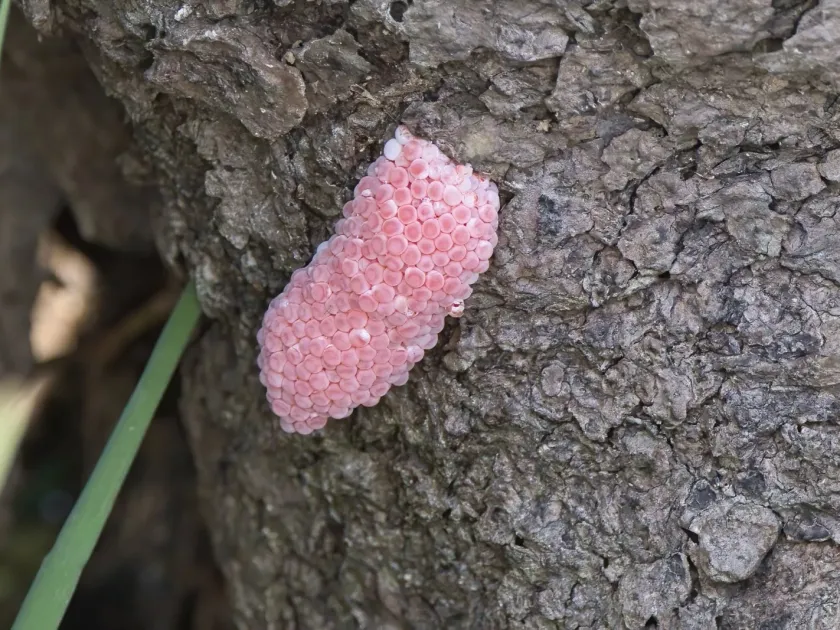
The most distinctive identification feature is the bright pink egg clusters deposited by females. These clusters are glued to plant stems, stakes, or any solid vertical surface above the water line.
Unlike many other snail species, they possess a specialized respiratory siphon. This organ allows them to breathe atmospheric air while remaining submerged, granting them a survival advantage.
This species is highly invasive and versatile, capable of thriving in diverse freshwater environments including irrigation canals and agricultural fields.
What it damages
The Giant apple snail is a notorious pest of rice crops. It primarily targets young seedlings, which can be completely consumed by the snails within a short period, causing severe thinning.
Besides rice, they cause economic damage to other crops such as taro, lotus, and various aquatic vegetables. Their voracious appetite allows them to devastate large cultivation areas quickly.
Young snails are particularly aggressive feeders. Immediately after hatching, they concentrate on the most delicate parts of the plants, leading to high mortality rates in newly transplanted crops.
They do not only feed on leaves but also attack roots and stems. This physical damage often leads to plant collapse or increased susceptibility to secondary infections and fungal rot.
In many regions, this snail is classified as a high-threat invasive species, necessitating massive resource allocation for containment and population management.
When it appears
The activity level of these snails is closely tied to ambient temperature. They flourish in warm conditions, with optimal development occurring between 20 and 30 degrees Celsius.
The most critical period for crops coincides with the beginning of the irrigation season when snail hatchlings emerge and seek food among the newly planted seedlings.
Reproduction occurs continuously throughout the warm season. Multiple egg-laying cycles ensure that the snail population remains high, making management efforts challenging.
During cold weather or when water levels drop, the snails enter a state of dormancy, burying themselves in the mud to survive until environmental conditions improve.
The peak of their damage usually occurs during the summer months when irrigation water is consistently present and temperatures are high enough to support rapid growth.
Signs of infestation
The presence of bright pink egg clusters on stalks and posts is the primary warning sign of an infestation. These clusters indicate active breeding colonies nearby.
Unexpected thinning or patchy rice stands, especially along the edges of fields near irrigation canals, are clear indicators of heavy snail activity.
Examining the plants often reveals shredded leaves or stems where only the central vein remains, which is typical of the snail's feeding behavior on succulent tissues.
Snail presence can also be confirmed by observing the mollusks themselves, particularly during early morning or evening hours when they are most active near the water surface.
Floating fragments of vegetation on the water surface around the base of plants are common consequences of the snail's destructive feeding process.
Control measures
Physical collection and destruction of egg clusters is the most effective and eco-friendly control method. Regular monitoring and removal significantly reduce the next generation's numbers.
Water management is crucial. Temporary drainage of rice paddies can expose young snails to dry conditions, preventing them from feeding and potentially causing mortality.
Biological control involves utilizing natural predators such as certain species of waterfowl or fish that consume juvenile snails, helping to balance the population naturally.
Molluscicides are used as a last resort in professional agricultural settings, but they must be applied carefully to avoid environmental impact and harm to other aquatic fauna.
- Installing mesh screens at irrigation inlets to filter out adult snails.
- Using food-based or light traps in the evening to collect snails.
- Keeping irrigation canals clear of weeds to remove hiding spots.
- Plowing the soil after harvest to disrupt the snail's wintering sites.
Taxonomy
- Latin name
- Pomacea maculata
- Order
- Molluscs
- Family
- Ampullariidae
- EPPO code
- POMAIN
Discussion
No discussions yet — be the first.