
Pila globosa
Pila globosa
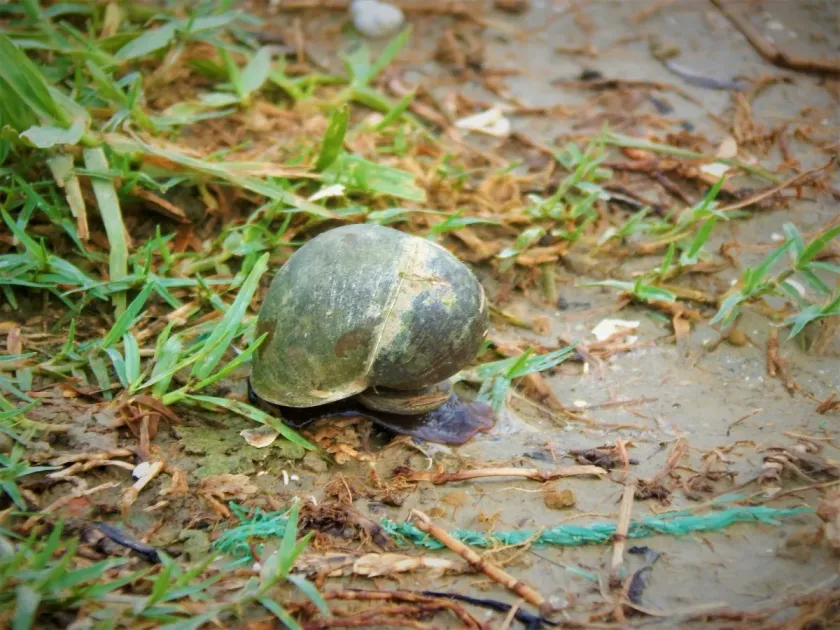
Description
How to identify
Pila globosa is a large freshwater gastropod mollusk belonging to the family Ampullariidae. Its shell is typically globular, smooth, and robust, often appearing in olive or brown shades, making it distinguishable in aquatic environments.
This species is uniquely adapted with a lung-like mantle cavity alongside gills, allowing it to survive in low-oxygen waters or even during temporary droughts. This physiological flexibility makes it a resilient pest in wetland ecosystems.
Taxonomically, it falls under the class Gastropoda. Its life cycle is strongly influenced by the availability of water, and it thrives in the warm, stagnant environments typically found in irrigation ditches and paddy fields during the rice-growing season.
Reproduction involves laying eggs above the water line, often attached to stalks of aquatic plants. This strategy protects the offspring from aquatic predators and ensures successful development in humid environments.
Adult snails are highly mobile and can migrate across fields using irrigation currents or by crawling across damp surfaces. This motility allows them to quickly colonize new areas, increasing the threat to agricultural productivity.
What it damages
The primary agricultural threat posed by Pila globosa is to rice crops (Oryza sativa). The snail feeds voraciously on young seedlings and succulent shoots, which are easily accessible in flooded paddy conditions.
Using its radula, the snail scrapes off the tender plant tissues. This mechanical damage severely weakens the seedlings, often resulting in complete plant mortality, especially during the crucial early stage of establishment.
Beyond direct herbivory, these snails can physically dislodge young rice plants from the mud while moving. This disruption creates gaps in the field, leading to poor crop uniformity and necessitating costly replanting efforts.
Pest activity often leaves plants susceptible to pathogens. The wounds created by snail feeding provide easy entry points for bacteria and fungi, which further degrade the overall health of the crop and reduce final yield potential.
Economic losses are particularly high in regions where rice is the staple crop. Without systematic management, large populations can wipe out significant portions of a harvest within a single growing season.
Signs of infestation
The most visible sign of an infestation is the presence of serrated or stripped leaf margins on rice plants. Close inspection of the stems near the water line often reveals the slimy, mucus trails left by the snails during their nocturnal or early morning activity.
Because of their size, Pila globosa are relatively easy to spot in clear water. Farmers can often see the dark, globular shells moving along the bottom or near the edges of irrigation channels.
Egg clusters deposited on emergent parts of weeds or rice stems serve as a primary indicator of population growth. These clusters are often bright or distinct in color, making them easy to identify for monitoring purposes.
Dead or uprooted seedlings floating on the water surface in areas with high snail density are a clear sign of ongoing damage. In areas with high populations, the water may also appear turbid due to the disruption of the bottom sediment.
The observation of empty, bleached shells at the edges of the field is another indicator of a recent snail presence. These shells often accumulate as a result of mortality or predation, signalling that a colony is or was nearby.
Control measures
Effective management of Pila globosa requires a multi-faceted approach. Water level management is the most effective cultural control; draining fields at specific intervals can disrupt the snail's life cycle and force them into dormancy.
Biological control methods involve introducing or preserving natural predators such as certain fish species, waterfowl, or crabs that prey on young snails. This helps maintain the population below the economic threshold without chemicals.
Chemical control using molluscicides should be treated as a last resort due to environmental regulations and the potential impact on non-target aquatic species. Application must be precise and strictly follow regional agricultural standards.
Mechanical control, such as clearing weeds from irrigation ditches, is vital because these plants provide both food and egg-laying sites. Removing this vegetation significantly restricts the snails' ability to spread.
- Manual collection and removal of snails from fields.
- Installation of fine-mesh screens at water inlets to block migration.
- Application of deterrents or organic additives to the water.
- Regular field monitoring to detect egg clusters before hatching occurs.
Taxonomy
- Latin name
- Pila globosa
- Order
- Molluscs
- Family
- Ampullariidae
- EPPO code
- PILAGL
Discussion
No discussions yet — be the first.