
Golden apple snail
Pomacea canaliculata
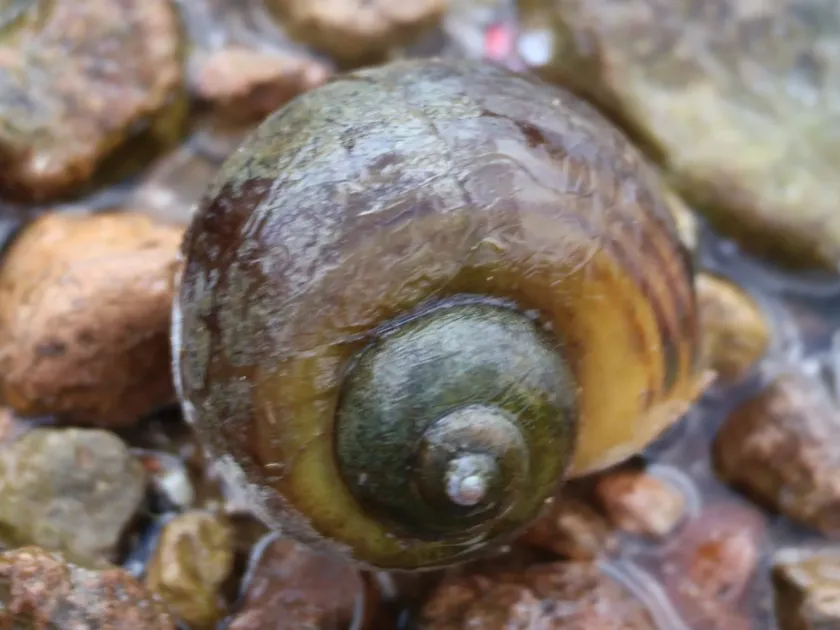
Description
How to identify
The golden apple snail, scientifically known as Pomacea canaliculata, is a large freshwater mollusk native to South America. It belongs to the Ampullariidae family and is widely recognized as a serious agricultural pest worldwide.
These snails are characterized by a globular, spiraled shell that typically ranges in color from yellowish-brown to dark olive. The body of the snail can be quite large, with some specimens reaching up to 8 centimeters in size.
They possess a dual respiratory system, utilizing both gills for underwater breathing and a lung-like organ for surface respiration. This physiological adaptation allows them to thrive in stagnant or hypoxic water conditions.
One of the most distinct diagnostic features of this species is its bright pink egg masses. Females deposit these clusters on stalks of rice, reeds, or other firm surfaces above the water line, making them highly visible.
The snails demonstrate rapid growth and high reproductive rates, which facilitates their quick expansion in newly colonized areas. Their ability to tolerate extreme environmental conditions makes them exceptionally difficult to eradicate.
What it damages
The primary target of the golden apple snail is the rice plant. They exhibit a strong preference for young, succulent seedlings, often consuming entire plants shortly after transplantation, which leads to significant yield loss.
Beyond rice, these pests are known to attack various aquatic crops, including taro, lotus, and water spinach. Their polyphagous feeding habits allow them to maintain large populations across diverse habitats.
Damage is characterized by the rasping of stems and leaves. By cutting the plants at the base, the snails can cause entire patches of a rice paddy to be destroyed, forcing farmers to conduct expensive replanting operations.
The snail's feeding activity often results in uneven crop stands, which complicates field management and lowers the overall grain quality. Furthermore, the presence of these snails increases the cost of chemical inputs significantly.
Economic impacts are severe in rice-producing regions, where infestations can reduce crop yields by up to 50% if left unmanaged. Their rapid spread across irrigation channels poses a constant threat to sustainable production.
When it appears
Golden apple snail activity is strictly regulated by water temperature. They are most active between 20°C and 28°C, which aligns perfectly with the main growing season of rice crops in tropical and subtropical regions.
During colder months or dry seasons, the snails enter an estivation phase. They bury themselves deep into the mud of canals or fields and wait for the reintroduction of water or more favorable temperatures to resume activity.
The most critical period for control is the early growth stage of the rice crop. As soon as irrigation occurs, the snails awaken and begin their search for food, prioritizing young seedlings over mature plants.
Their life cycle is relatively short, allowing for several generations within a single year. This continuous cycle ensures that the threat remains persistent from the beginning to the end of the agricultural cycle.
Monitoring for the pink egg masses is essential throughout the entire season. Frequent checks allow farmers to intervene before the eggs hatch and a new wave of juvenile snails begins to feed on the tender crops.
Control measures
Hand-picking is the most effective and eco-friendly method for managing snail populations in smaller fields. Farmers can easily collect and destroy the highly visible pink egg masses, significantly reducing the next generation.
Cultural control measures include field drying, which exposes the snails to desiccation. Proper land leveling helps prevent standing water from accumulating in patches, where snails would otherwise gather and survive.
Physical barriers like wire screens or mesh placed on water inlets can prevent the movement of adult snails from irrigation canals into the main growing areas. This is a vital step in preventing field-to-field spread.
Chemical control involves the use of molluscicides; however, these must be applied with extreme caution. Care should be taken to minimize impacts on non-target species such as fish, crabs, and other aquatic life.
Biological control methods, such as introducing domestic ducks into the rice paddies, have proven successful. Ducks forage on small and juvenile snails, providing a natural, sustainable way to keep populations below threshold levels.
Taxonomy
- Latin name
- Pomacea canaliculata
- Order
- Molluscs
- Family
- Ampullariidae
- EPPO code
- POMACA
Discussion
No discussions yet — be the first.