
Golden apple snail
Ampullarium canaliculatus
Description
How to identify
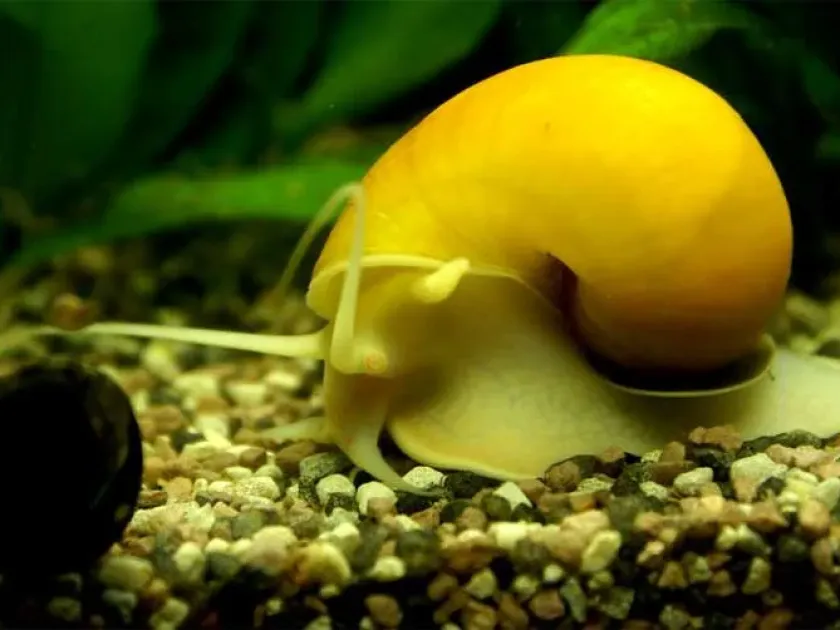
The Golden apple snail (Pomacea canaliculata) belongs to the family Ampullariidae and the order Architaenioglossa. It is a large freshwater mollusc with a globose shell that is typically olive-brown or yellowish.
The most distinct identification feature is the clusters of bright pink, spherical eggs laid on stalks of plants or hard surfaces above the water line. These clusters are highly visible in the environment.
This species is highly adaptive, capable of surviving harsh conditions such as drought by burying itself in the soil and entering a dormant state for extended periods.
The snail's metabolic activity is temperature-dependent, showing optimal growth and reproductive rates between 20 and 30 degrees Celsius. It becomes inactive at temperatures below 10 degrees.
They are characterized by high reproductive potential, with females capable of laying hundreds of eggs in multiple clutches throughout a single growing season.
What it damages
Rice (Oryza sativa) is the primary crop affected, specifically in the seedling and early establishment stages. The snails consume young shoots, often leading to total crop failure in heavily infested areas.
In addition to rice, this pest causes significant damage to other aquatic plants, including water spinach and taro, making it a threat to diverse agricultural systems.
The snails feed on both the green foliage and the roots of young plants, causing them to detach from the substrate and float to the surface, where they die.
The rapid consumption rate of these snails means that an established population can destroy an entire field of seedlings in just a few days if left unchecked.
Economic damage is severe, as farmers are forced to replant crops multiple times, significantly increasing production costs and decreasing final yields.
Signs of infestation
The primary diagnostic sign is the presence of bright pink egg masses attached to plant stems, irrigation pipes, or any vertical surface protruding from the water.
Seedlings being clipped at the base and floating on the water surface is a classic sign of snail activity in young rice fields.
Snails are most visible during the early morning and late evening when they surface to feed or lay eggs in the shallow margins of the field.
Large, circular patches of missing vegetation, or "gaps" in the crop stand, are strong indicators that a snail infestation is spreading across the field.
Visible trails of mucus and disturbed soil in areas where water levels have receded indicate that snails are active in the vicinity.
Control measures
Effective management begins with land preparation, including drying fields and deep plowing to expose snails and eggs to desiccation and predation.
Installing fine mesh screens at irrigation water inlets is a crucial physical barrier that prevents snails from entering the rice field from secondary channels.
Manual collection of egg masses and adult snails is a sustainable and effective strategy for small-scale operations to keep populations at manageable levels.
- Application of targeted molluscicides according to local agricultural regulations.
- Biological control using natural predators, such as ducks or specific predatory fish species.
- Water level management to prevent snails from easily accessing young seedlings.
An integrated pest management approach, utilizing multiple control strategies simultaneously, is essential to minimize crop losses and mitigate the impact of this invasive species.
Taxonomy
- Latin name
- Ampullarium canaliculatus
- Order
- Molluscs
- Family
- Ampullariidae
- EPPO code
- AMPUCA
Discussion
No discussions yet — be the first.