
Golden apple snail
Ampullarium
Description
How to identify
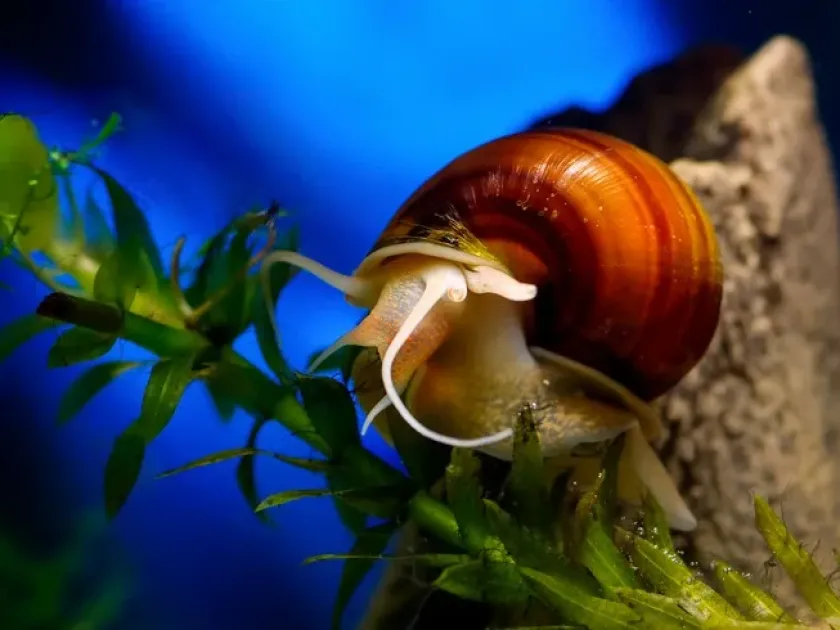
The golden apple snail (Pomacea canaliculata), part of the Ampullariidae family, is an invasive freshwater mollusk that has become a major agricultural pest worldwide.
Adult snails are easily recognizable by their large, globular, golden-brown to dark-brown shells and a muscular foot adapted for movement in aquatic environments.
They possess a dual respiratory system comprising both gills and lungs, which grants them the remarkable ability to survive in low-oxygen water or even on land during dry periods.
The most distinctive biological feature is their reproductive strategy: females deposit large clusters of bright pink, spherical eggs above the water line on stems or solid structures.
This species is highly adaptable, allowing it to colonize diverse aquatic habitats, ranging from stagnant ponds and irrigation canals to large-scale rice paddy fields.
What it damages
The golden apple snail is notorious for causing severe economic losses in rice production by feeding on young, succulent plant tissues.
The snails use their sharp, rasp-like radula to cut through the stems of newly transplanted rice seedlings, often causing total destruction of the crop.
Beyond rice, they target various other crops, including taro, lotus, and other aquatic vegetables, leading to significant reductions in agricultural productivity.
Even small populations can decimate a field rapidly because of the snail's voracious appetite and the speed at which they move across submerged fields.
Heavy infestations not only destroy existing crops but also necessitate costly replanting efforts and impede the establishment of uniform, healthy rice stands.
When it appears
Snail activity is heavily dependent on ambient and water temperatures, with peak metabolic and feeding rates occurring during warm months above 20–25°C.
The lifecycle and feeding intensity are synchronized with the flooding and irrigation schedules of rice fields, facilitating widespread colonization during the main growing season.
During unfavorable conditions, such as the dry season or extreme cold, snails enter a dormant state, burying themselves in the substrate to survive until conditions improve.
Seasonal floods serve as a primary dispersal mechanism, allowing the snails to migrate into new, previously uninfested paddies and irrigation infrastructure.
Monitoring efforts should be most intense during the initial planting stages when young seedlings are most susceptible to irreversible feeding damage.
Signs of infestation
The presence of bright pink egg masses on stalks, stems, or field markers is the most conspicuous sign of an ongoing infestation.
Visible gaps in the rice stand and the presence of floating plant debris in the water serve as clear indicators of snail feeding activity.
At low water levels, empty shells and slime trails on the soil surface become apparent, signaling a high density of the mollusk population.
Uneven or patchy plant growth in fields, where healthy sections are abruptly interrupted by barren areas, suggests active grazing by the snails.
During the early morning, snails may be observed congregating in submerged areas, actively grazing on the tender tissues of rice seedlings.
Control measures
Managing this pest requires an integrated approach that combines cultural practices with physical and chemical control methods.
- Maintaining precise water levels to limit snail mobility and reproductive opportunities.
- Manual collection and destruction of egg masses to reduce the subsequent generation of snails.
- Installing physical barriers or mesh screens in irrigation inlets to prevent the influx of snails from other sources.
- Employing biological control, such as ducks or specific fish species, which can consume young snails effectively.
- Strategic application of approved molluscicides, ensuring they are used according to safety guidelines to protect the local water environment.
Taxonomy
- Latin name
- Ampullarium
- Order
- Molluscs
- Family
- Ampullariidae
- EPPO code
- AMPUSP
Discussion
No discussions yet — be the first.