
Golden Apple Snail
Pomacea
Description
How to identify
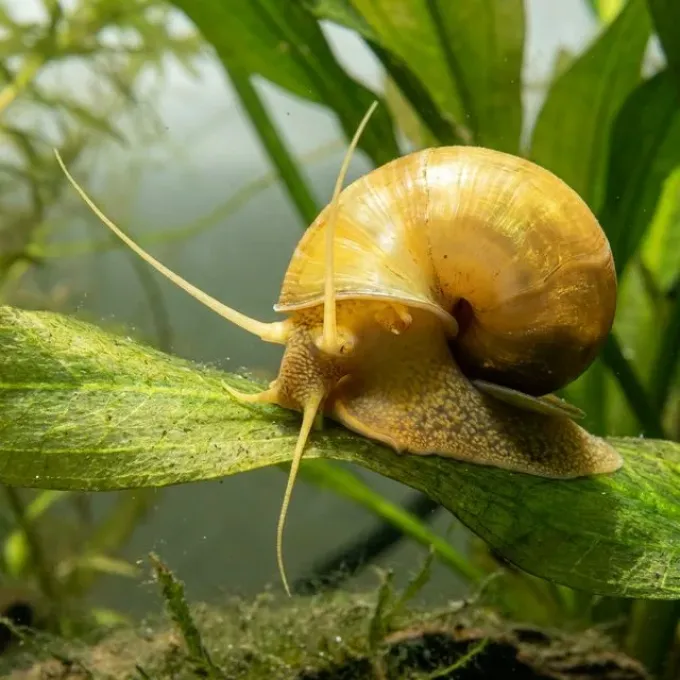
The Golden Apple Snail (Pomacea canaliculata) belongs to the Ampullariidae family. It is a large, freshwater mollusk characterized by a globular shell, typically ranging from yellow to dark brown.
These snails possess both gills and a primitive lung, allowing them to survive in oxygen-poor waters and even periods of drought by burying themselves in the mud.
They exhibit strong sexual dimorphism. The most identifiable feature is their bright pink or reddish egg clutches deposited on vegetation and solid surfaces above the water line.
Females are highly prolific, capable of laying hundreds of eggs in a single clutch. The life cycle is rapid, with individuals reaching sexual maturity in as little as two months.
As an invasive species, they have successfully spread across various continents, significantly altering aquatic ecosystems and agricultural landscapes.
What it damages
The Golden Apple Snail is a devastating pest primarily for rice production. They consume young seedlings with high intensity, often destroying entire fields shortly after planting.
Beyond rice, they target a wide range of aquatic crops, including taro, lotus, and water spinach, causing substantial economic losses for farmers.
The damage is caused by the snail's radula, which cuts through stems and leaves, leading to plant mortality and thinning of the crop stand.
Indirect damage occurs as the snail introduces or exacerbates plant infections through the wounds created during feeding, leading to further decay.
High population densities can leave a rice field completely barren, necessitating expensive replanting and significant investment in pest control measures.
When it appears
Activity levels are highly dependent on ambient and water temperatures. The optimum temperature range for active growth and breeding is between +20°C and +30°C.
In temperate climates, these snails enter a dormant state during colder months, burying themselves in the soil to survive the winter season.
The primary period of damage usually coincides with the early vegetative stage of rice, as the snails emerge to feed on nutrient-rich, soft plant tissues.
Egg-laying activity is most intense during the warmer months, ensuring that generations of snails are available throughout the crop development cycle.
In tropical environments, they remain active year-round, posing a persistent threat to agricultural productivity in irrigation-dependent zones.
Signs of infestation
The presence of distinct, bright pink egg clusters on stalks, posts, or other structures above the water is the most reliable indicator of an infestation.
Observation of missing leaves or completely severed stems floating in the water suggests the presence of feeding snails within the field.
A sudden decline in crop density shortly after field flooding indicates that snails have begun consuming newly established seedlings.
Active specimens can often be spotted moving along the bottom or near the water surface during the early morning or late evening hours.
Increased mortality of seedlings, often accompanied by necrotic lesions near the base of the stems, provides clear visual evidence of snail-related damage.
Control measures
Mechanical removal and destruction of egg clutches is a highly effective manual method for preventing population explosions in controlled agricultural environments.
Implementing water management strategies, such as precise drainage and leveling of fields, can effectively limit snail mobility and reproductive success.
- Application of molluscicides containing metaldehyde during critical growth stages.
- Introduction of biological control agents, such as ducks or specific predatory fish species.
- Use of physical barriers like wire or nylon mesh on irrigation inlets to prevent snail entry.
Good agricultural practices, including the use of older, hardier seedlings, can minimize the vulnerability of the crop to snail herbivory.
An integrated pest management (IPM) approach combining monitoring, physical barriers, and targeted chemical applications is essential for crop protection.
Taxonomy
- Latin name
- Pomacea
- Order
- Molluscs
- Family
- Ampullariidae
- EPPO code
- POMASP
Discussion
No discussions yet — be the first.