
Amanda's Blue
Polyommatus amanda
Description
How to identify
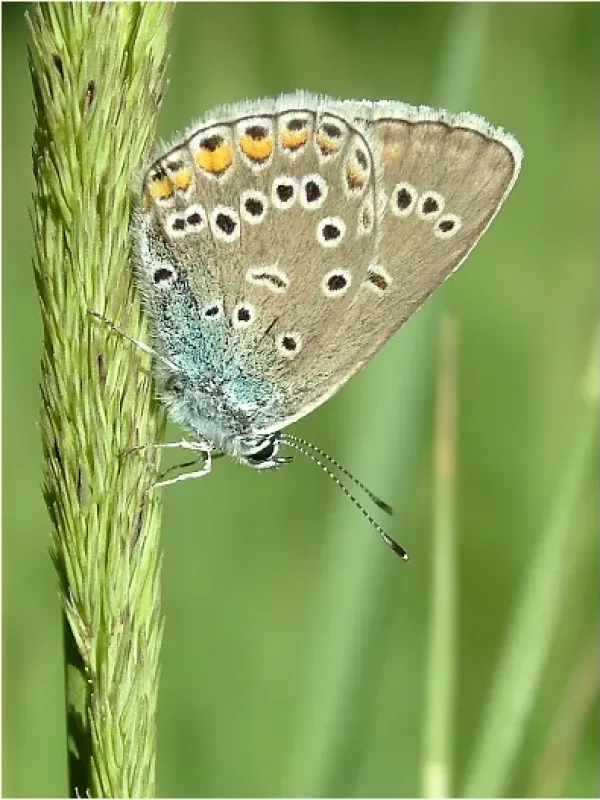
Amanda's Blue (Polyommatus amanda) belongs to the order Lepidoptera, family Lycaenidae. The adult butterfly has a wingspan of up to 35 mm, with males displaying a brilliant blue upper wing surface bordered by dark margins.
The larvae are typical of the Lycaenidae family, resembling woodlice in shape, covered in fine hairs and colored bright green to blend seamlessly into the host plant foliage.
This species is common in meadow and steppe ecosystems, preferring sunny areas where its host plants are abundant.
The insect undergoes complete metamorphosis, passing through the egg, larva (caterpillar), pupa, and adult stages.
The overwintering stage is the early-instar caterpillar, which hides in the root zone of host plants or within plant debris during colder months.
What it damages
The primary host plants for the larvae include various species from the Fabaceae family, particularly cultivated and wild vetch, as well as several varieties of alfalfa.
Damage is primarily caused by the larvae, which feed on the plant's vegetative and reproductive organs, negatively affecting growth and overall biomass.
Feeding damage manifests as skeletonized leaves and chewed young shoots, which weakens the plant and increases its susceptibility to secondary infections.
In cases of high infestation, the larvae can significantly reduce crop yields in seed fields by destroying flower buds and developing pods.
The economic impact of this pest tends to rise during warm, favorable growing seasons that promote rapid multiplication on agricultural lands.
When it appears
The life cycle of the species is typically univoltine, with adults usually appearing during the summer months, specifically between June and July.
The emergence of adults from pupae is closely correlated with temperature, which dictates the onset of the egg-laying period.
Females lay eggs singly on the underside of leaves or on stems, carefully selecting the most nutrient-rich parts for the future larvae.
The active feeding period for caterpillars occurs throughout the second half of the summer before they transition to the overwintering state.
Spring activity resumes once the soil warms up and host plants begin their seasonal growth, allowing larvae to continue feeding.
Signs of infestation
The first signs of infestation are small holes or "windows" on the leaves of legumes, created by the feeding of young larvae.
The presence of frass (excrement) on the leaf surface near damaged areas is a reliable indicator of active larval feeding on the plant.
Stunted growth of lateral shoots and deformed flower buds often indicate that larvae are feeding within the plant tissue or floral structures.
Visual inspection during the morning hours often reveals the presence of larvae on the underside of leaves, where they seek shelter during the day.
The presence of ants on the plant can also serve as an indirect indicator, as many Lycaenidae species maintain symbiotic relationships with ants.
Control measures
Implementing a proper crop rotation system is the most effective agronomic method to disrupt the life cycle of the pest in legume fields.
Regular maintenance of field margins and weed control reduces the alternative food sources that support the pest population between seasons.
Biological control using formulations based on Bacillus thuringiensis is an effective way to manage larvae while preserving beneficial insect populations.
Chemical intervention with systemic or contact-stomach insecticides is recommended if pest density exceeds economic damage thresholds.
Deep autumn plowing of the soil is a highly effective mechanical method to destroy overwintering sites, significantly reducing pest pressure in the following year.
Taxonomy
- Latin name
- Polyommatus amanda
- Order
- Lepidoptera (butterflies)
- Family
- Lycaenidae
- EPPO code
- PQLYAM
Discussion
No discussions yet — be the first.