
Blue butterfly (Polyommatus)
Polyommatus
Description
How to identify
The genus Polyommatus comprises various species of butterflies within the family Lycaenidae, commonly known as blue butterflies. While admired for their appearance, their larvae can act as agricultural pests on specific legumes.
The larvae, or caterpillars, are typically slug-like in shape and green in color, blending seamlessly with the host plants. They are covered in fine, microscopic setae that make them difficult to spot during routine field scouting.
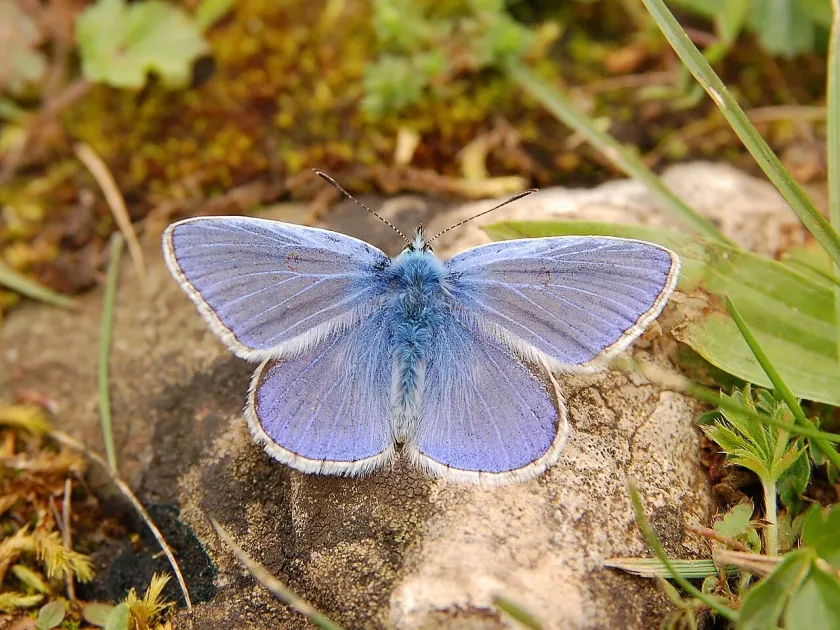
The life cycle involves complete metamorphosis, moving from eggs laid on host plants to larvae, pupae, and adult butterflies. Adults are distinguished by their bright blue, violet, or brown wing patterns depending on the species.
A fascinating aspect of their biology is the mutualistic relationship with ants. The larvae possess specialized glands that secrete a sugar-rich substance, which attracts ants that, in turn, provide protection against parasitoids.
Identification in the field requires close inspection of the foliage and reproductive structures of host plants, particularly during the early summer months when larvae are most active.
What it damages
Larval feeding can cause significant damage to the vegetative and reproductive parts of legumes, including alfalfa and clover. They chew through leaves, buds, and flowers, significantly impacting plant vitality.
By consuming buds and blossoms, the caterpillars directly reduce the seed yield of crops. This is particularly problematic for seed production fields where reproductive integrity is essential for harvest.
Heavy infestations lead to stunted growth and weakened plant immunity, making the crop more susceptible to environmental stress and secondary fungal pathogens that thrive in damaged tissue.
In severe cases, larvae can cause defoliation, stripping the plant of its photosynthetic capacity. This limits the plant's ability to store energy for subsequent growth cycles or winter dormancy.
The economic threshold depends on the crop type and the population density of the larvae, with early intervention being crucial to prevent extensive damage to the yield potential.
When it appears
Adult emergence typically begins in late spring. The timing of each generation is highly dependent on ambient temperatures and the availability of preferred host plants for oviposition.
Depending on the latitude and climate, Polyommatus species can produce multiple generations per season. Peak larval activity usually aligns with the primary blooming period of the host crops.
Overwintering occurs at the pupal stage, buried in soil or hidden under plant debris. This makes the timing of post-harvest field management a key component in population control.
Environmental factors such as high humidity and rainfall can influence survival rates. Conversely, dry seasons might lead to faster developmental cycles but potentially lower host plant quality.
Monitoring efforts should intensify during the vegetative and flowering stages of the crop to detect early egg-laying activity before the larvae reach maturity.
Signs of infestation
Early symptoms of an infestation include small, irregular holes in the leaves. As the larvae grow, the damage becomes more pronounced, often leading to ragged leaf margins and missing buds.
The presence of ants on plants, without the typical signs of aphids, is often a strong indicator that larvae are present and being tended by the ants for their secretions.
Frass (larval excrement) found on the leaves or at the base of the plant provides definitive evidence of caterpillar activity. Wilting of flower stalks may also indicate internal larval feeding.
- Ragged or skeletonized foliage.
- Damaged or hollowed-out floral buds.
- Increased ant activity on the stems.
- Premature flower drop.
Using a sweep net or visual scouting of 20–30 random plants per hectare can help determine the density of larvae and justify the need for mitigation strategies.
Control measures
Effective management begins with good agricultural practices, such as removing weed hosts from field margins and practicing deep tillage to disturb overwintering pupae.
Biological control agents, including native parasitoid wasps, play a vital role in keeping populations in check. Encouraging biodiversity around the fields supports these natural enemies.
Microbial insecticides, particularly those containing Bacillus thuringiensis, are highly effective against young larvae while posing minimal risk to beneficial insects and the environment.
If chemical control is necessary, select products with low residual activity to protect pollinators. Applications should be timed to target the larvae during their most vulnerable developmental stages.
Crop rotation and selecting resistant varieties can reduce the long-term risk of infestation, ensuring that fields are less attractive to egg-laying adults throughout the season.
Taxonomy
- Latin name
- Polyommatus
- Order
- Lepidoptera (butterflies)
- Family
- Lycaenidae
- EPPO code
- PQLYSP
Discussion
No discussions yet — be the first.