
Eastern comma
Polygonia comma
Description
How to identify
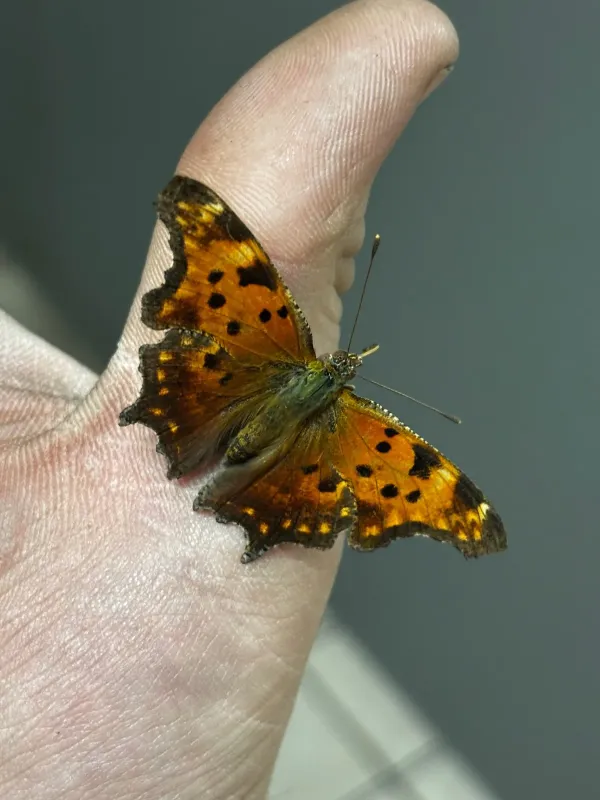
The Eastern comma is a butterfly belonging to the Nymphalidae family, identified by a distinctive silvery-white, comma-shaped mark on the underside of its hindwing. The adults typically feature ragged, orange-brown wings with dark markings, providing excellent camouflage when resting against tree bark or dry leaves.
The larvae, or caterpillars, of this species are notable for their branched spines that cover the body. Their appearance is mottled, usually in shades of black, yellow, or brown, which serves to blend them into the leaf environment of their host plants effectively.
Pupae are angular and mimic the appearance of dead vegetation or twigs, hanging upside down by the cremaster. This stage is particularly difficult to spot, as they rely entirely on crypsis to avoid predation by birds or parasitic wasps.
Adults are known for their fast, erratic flight patterns and are commonly found in gardens, woodlands, and near riparian zones. They are sensitive to light and temperature, often basking in sunny spots to warm up before taking flight to forage or search for oviposition sites.
The life cycle involves complete metamorphosis, and the number of generations per year can vary based on local climatic conditions. Warmer regions often see two full generations, leading to increased population density in mid-to-late summer.
What it damages
The primary agricultural interest in the Eastern comma as a pest lies in its feeding habits on hops. While not always a major economic pest, high populations can cause visible damage to commercial or home-grown hop yards.
Larvae feed primarily on the foliage of the host plants, consuming leaf tissue from the margins inward. In significant infestations, the caterpillars can cause extensive defoliation, leaving only the primary veins of the leaves intact, which is known as skeletonization.
Beyond hops, the larvae also utilize nettles and other members of the Cannabaceae family as host plants. This versatility allows them to persist in areas where hops are grown, as they can readily transition between cultivated crops and wild host populations.
The reduction of leaf area directly impacts the plant's photosynthetic capacity, which is essential for the development of healthy hop cones. Persistent herbivory by multiple generations can weaken the plant, making it less productive and more susceptible to secondary environmental stresses.
Although the damage is rarely fatal to established perennial plants, it can significantly lower the quality of the harvested product. For commercial hop producers, cosmetic damage or loss of plant vigor is a concern that requires proactive monitoring.
Signs of infestation
The first signs of infestation are ragged leaf edges and small holes in the foliage, typically appearing on the upper sections of the vines. Careful inspection will often reveal the presence of caterpillars resting on the underside of the leaves during the day.
Frass (larval droppings) left on the leaves below the feeding site is a clear indicator of active caterpillar presence. Finding small clusters of larvae or solitary caterpillars on the leaves confirms the active development of the population.
Skeletonized leaves serve as a sign that the larvae have matured and are feeding heavily. When significant parts of the canopy show this pattern, it indicates that the population density has reached a level that warrants intervention.
The presence of pupae on the vines or nearby structures marks the end of the larval stage and suggests that the generation is completing its cycle. This stage allows for the potential collection and removal of the pest from the area.
Observing adult butterflies in the vicinity during the egg-laying season is a reliable predictor of future larval activity. Tracking these sightings helps in planning preventative measures to protect the crop before eggs hatch.
Control measures
Hand-picking caterpillars is an effective control strategy for small-scale operations or gardens. Regular scouting allows for the removal of larvae before they cause widespread damage to the hop vines.
Biological insecticides, specifically those containing Bacillus thuringiensis (Bt), are highly effective against these larvae. These products are environmentally friendly and target only the caterpillars, leaving beneficial insects and pollinators unharmed.
If chemical intervention is deemed necessary during severe outbreaks, insecticides should be applied carefully, adhering to strict pre-harvest intervals. This ensures the safety of the harvested hop cones and minimizes environmental impact.
Cultural practices, such as removing wild host plants like nettles from the immediate surroundings, can help reduce the attractiveness of the area to butterflies. Managing the site to be less welcoming to the pest is a key long-term strategy.
- Monitor hop vines weekly from late spring through summer.
- Remove wild nettle patches near the hop yard.
- Use biological controls like Bt for young larval populations.
Taxonomy
- Latin name
- Polygonia comma
- Order
- Lepidoptera (butterflies)
- Family
- Nymphalidae
- EPPO code
- POLACO
Discussion
No discussions yet — be the first.