
Comma
Polygonia c-album
Description
How to identify
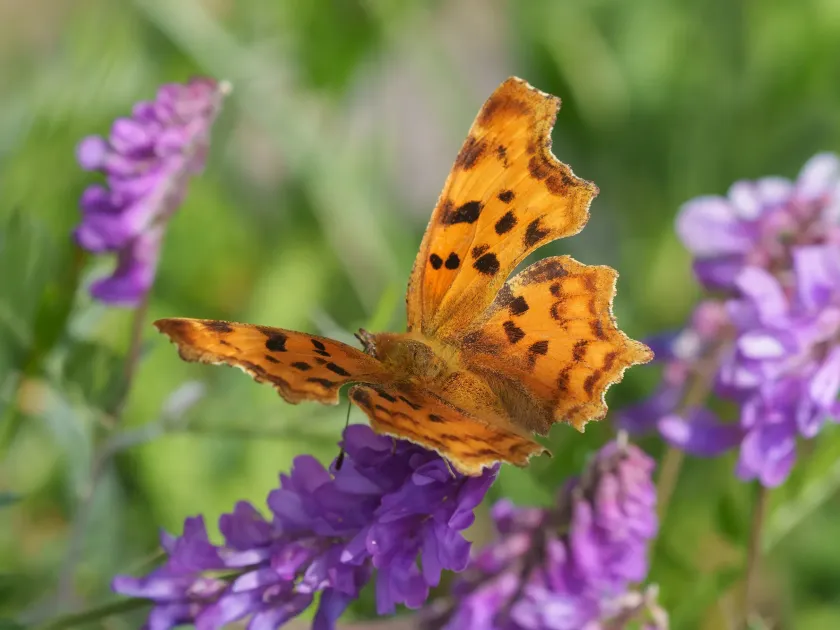
The Comma butterfly (Polygonia c-album) is a member of the Nymphalidae family. It is easily recognized by the jagged, irregular shape of its wing edges, which provides excellent camouflage.
The wings have a vibrant orange-brown color with dark spots on the upper side. When the wings are closed, they resemble a withered dead leaf, hiding the insect from predators.
The name "Comma" comes from a small, silvery-white mark on the underside of the hindwings that resembles the punctuation mark. This is the most reliable identification feature for the species.
Larvae (caterpillars) are brown with white markings and numerous branching spines along their bodies. Their appearance often mimics bird droppings in the early stages, aiding in protection.
Pupae are angular, suspended by the cremaster, and often feature metallic silver or gold spots, which help them blend into their surroundings in natural habitats.
What it damages
As a polyphagous insect, the Comma caterpillar feeds on a variety of plants, though it has specific preferences for plants in the Ulmaceae, Urticaceae, and Cannabaceae families.
In garden environments, it may target hops, raspberries, currants, and various deciduous trees. Damage involves the consumption of leaf tissue, ranging from ragged edges to skeletonization.
While Comma butterflies rarely reach pest status, their caterpillars can cause significant defoliation in small gardens or on young nursery stock during outbreak years.
The reduction of leaf surface area hampers the plant's ability to photosynthesize, which can affect the vigor of the plant, especially if the infestation occurs during the peak growth season.
Most commercial crops are resistant enough to tolerate light feeding, but severe damage can lead to diminished quality and yield in specific fruit-bearing crops like hops or berries.
When it appears
Comma butterflies are unique because they overwinter as adults. They emerge from hibernation in early spring, often as early as March or April, to mate and lay eggs.
The first generation of caterpillars is active from late spring through early summer. These develop into the summer generation of butterflies, which appear in July.
A second generation of caterpillars follows during late summer. These individuals will then pupate and emerge as the overwintering generation of adults by late August or September.
The timing of these generations is heavily influenced by regional temperatures; in warmer climates, the development stages are shorter and more overlapping.
Adults are frequently seen basking in the sun on leaves or tree trunks. They are highly active during the day and will readily feed on rotting fruit or tree sap if flowers are scarce.
Signs of infestation
The primary sign of infestation is the presence of irregular "holes" in the foliage of host plants. The leaves may appear jagged where the caterpillars have been feeding along the edges.
Caterpillars are often found solitary rather than in groups. Unlike web-spinning moths, the Comma does not construct nests, making it harder to spot initially.
Check the undersides of leaves on host plants like hops or nettles. Finding the spiny caterpillars feeding is the most definitive sign of an active infestation.
Droppings (frass) may accumulate on leaves directly below where the caterpillar is feeding. This is often a telltale sign that a larva is present higher up on the branch.
- Ragged leaf margins and irregular holes in the lamina.
- Presence of spiny, brown larvae on the underside of foliage.
- Visible frass on leaves directly below the feeding site.
Control measures
In most situations, control is not necessary as natural predators such as birds, parasitic wasps, and predatory beetles keep Comma populations at low, manageable levels.
Sanitation practices, such as removing wild nettle or other alternative host weeds from around the edges of a garden, can help reduce the local population of the pest.
For small-scale infestations in home gardens, manual collection of caterpillars is an environmentally friendly and highly effective method for preventing further damage.
Biological insecticides, specifically those containing Bacillus thuringiensis (Bt), are safe for pollinators and effective if treatment of the caterpillar stage becomes unavoidable.
Chemical intervention should be avoided whenever possible, as Comma butterflies are valuable components of the local ecosystem and general insecticides often cause more harm than the pest itself.
Taxonomy
- Latin name
- Polygonia c-album
- Order
- Lepidoptera (butterflies)
- Family
- Nymphalidae
- EPPO code
- POLACA
Discussion
No discussions yet — be the first.