
Polydesmus monilaris
Polydesmus monilaris
Description
How to identify
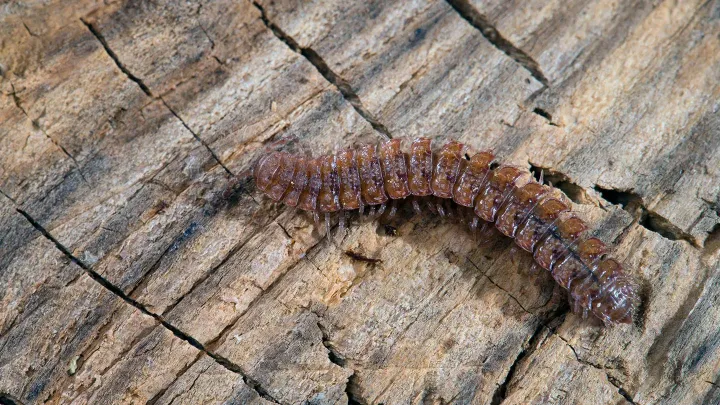
Polydesmus monilaris belongs to the class Diplopoda, order Polydesmida, and family Polydesmidae. These small millipedes, commonly known as flat-backed millipedes, are characterized by a flattened body composed of several segments.
The name of the species refers to the bead-like appearance of the segments. Adults typically measure 10–15 mm in length. Their coloration ranges from pale brown to light yellow, allowing them to blend into the soil environment.
As soil-dwelling organisms, they prefer high humidity and organic-rich environments. They are largely nocturnal, avoiding sunlight and spending most of their time in the topsoil layers or hidden under decomposing plant debris.
Life cycle development involves egg-laying in soil chambers. The larvae hatch and undergo multiple molts, increasing their body segment count during each stage. This growth pattern allows them to mature into reproductive adults.
Their defensive behavior includes rolling into a spiral shape when disturbed. Their physiology is highly adapted to navigating tight soil spaces and micro-cracks, which is essential for their survival in agroecosystems.
What it damages
Polydesmus monilaris is a significant pest for various agricultural crops, especially seedlings and root vegetables. It causes direct damage by feeding on young roots, germinating seeds, and tender stems at the soil level.
The pest creates small, ragged holes and lesions on roots and tubers. This damage disrupts the plant's nutrient and water uptake, leading to stunted growth, wilting, and, in severe cases, the death of the plant.
In greenhouses, these millipedes can be particularly destructive to young seedlings. High-moisture environments typical for indoor cultivation provide perfect conditions for population outbreaks.
Beyond physical tissue consumption, their feeding wounds act as entry points for various soil-borne pathogens. Bacterial and fungal infections often follow millipede attacks, leading to total plant decay.
Crop loss is most severe when environmental conditions are wet, and high amounts of organic matter are present in the soil. Under such conditions, millipede populations can rise rapidly, causing significant economic damage.
Signs of infestation
The presence of Polydesmus monilaris is often indicated by patchy germination in fields. Seeds may be found partially or completely consumed when examined in the soil.
Root vegetables, such as carrots or potatoes, often show characteristic shallow or deep pits with irregular edges. These symptoms distinguish them from the clean-cut damage typically caused by wireworms.
Wilting of seedlings during the day, despite adequate irrigation, suggests root or stem base damage. Inspecting the soil near the stem base during the evening usually reveals the pests.
The presence of fecal pellets near the damaged plant parts is another diagnostic sign. These small, dark deposits confirm that the tissue was indeed fed upon by millipedes.
Using bait traps, such as burying slices of raw potato or carrot, is an effective way to confirm the pest's presence in a specific area. These baits attract the millipedes, making them visible for identification.
Control measures
Management focuses on cultural practices that disrupt the millipede's habitat. Deep plowing and soil cultivation are essential for destroying their living spaces and exposing them to natural predators.
Crop rotation helps minimize population buildup, while proper field sanitation—removing excessive organic debris—reduces their primary food source and hiding places.
In greenhouse settings, maintaining proper irrigation is crucial. Avoiding waterlogged soil prevents millipede migration and reproduction. Regular tillage between rows disrupts their life cycle.
If population levels are high, chemical soil treatments may be necessary. Granular insecticides applied at the time of planting provide protection for germinating seeds and developing roots.
- Using pre-treated seeds to provide early-stage defense.
- Monitoring soil moisture to reduce favorable breeding conditions.
- Maintaining clean borders around crops to prevent re-infestation.
Taxonomy
- Latin name
- Polydesmus monilaris
- Family
- Polydesmidae
- EPPO code
- POLDMO
Discussion
No discussions yet — be the first.