
Flat millipede
Polydesmus complanatus
Description
How to identify
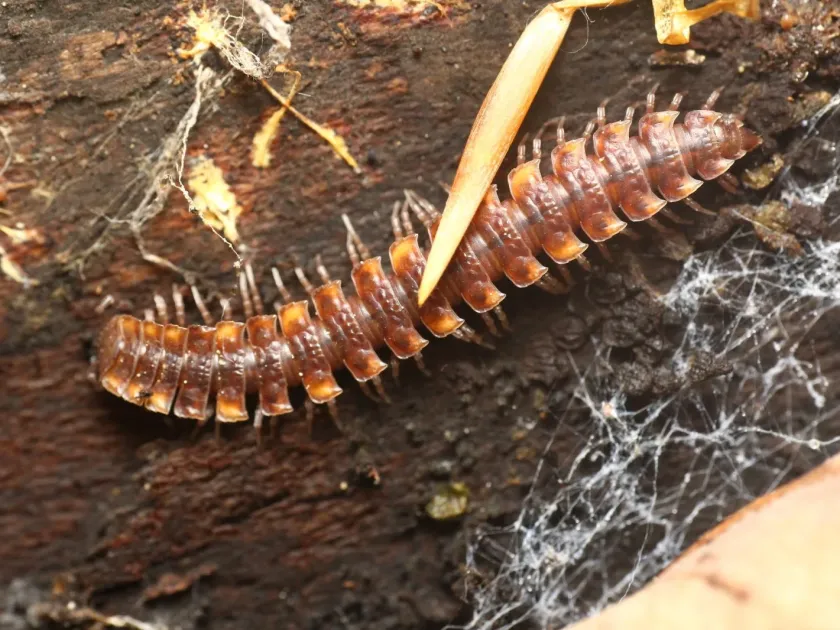
The flat millipede, scientifically known as Polydesmus complanatus, is a member of the Polydesmidae family. These organisms are recognized by their flattened, ribbon-like bodies consisting of 20 segments, typically measuring 10 to 20 mm in length.
Their coloration ranges from light brown to reddish-brown, which provides excellent camouflage against soil particles and decaying organic matter. Unlike predatory millipedes, this species moves slowly and is primarily active at night or in very humid conditions.
The body is covered by hardened plates (tergites) that protect the millipede from physical damage. They possess short antennae used for navigating their environment, which is typically restricted to the upper layers of moist soil or under thick mulch.
Reproduction occurs in the soil, where females lay eggs in sheltered, moist cavities. Larvae undergo several molting stages, gradually increasing their segment count as they develop into mature adults capable of breeding.
These millipedes are highly sensitive to desiccation and will migrate vertically within the soil profile depending on moisture availability, which makes them particularly resilient to surface-applied environmental changes.
What it damages
The flat millipede primarily feeds on decaying organic matter but can become a significant pest when it transitions to living plant tissues, particularly in high-density populations or during drought conditions.
Crop damage is most frequently observed on root vegetables such as carrots, potatoes, and beets. The millipedes create shallow, irregular pits or lesions on the surface of the roots, which compromise the plant's health.
Young seedlings are at extreme risk, as the millipedes can chew through the tender roots or stems near the soil line, leading to rapid wilting and plant death. This is particularly problematic in greenhouses or nurseries.
These feeding lesions serve as entry points for pathogens, facilitating the development of secondary bacterial or fungal rot. This degradation often renders the harvested vegetables unsalable and unsuitable for storage.
High levels of infestation are correlated with humid, poorly drained soils where organic debris accumulates, providing both sustenance and shelter for the millipedes throughout their active growing season.
Signs of infestation
The most visible signs of an infestation include small, pitted marks on the surfaces of tubers and root vegetables. These craters are usually clustered in areas where the soil remains consistently damp.
In greenhouses, signs of activity often manifest as small patches of dying seedlings. Careful excavation around the base of the plant will usually reveal the presence of the millipedes hidden in the topsoil layer.
The presence of mold or slimy lesions around the damaged root surfaces indicates that the tissue has been compromised by secondary infections following the initial feeding by the flat millipede.
During the early morning, one may observe the millipedes moving slowly near the base of the stems, especially after heavy rain or irrigation sessions when soil humidity peaks.
Using monitoring traps, such as placing damp corrugated cardboard or potato slices on the soil surface, will attract the pests, allowing for a clear assessment of the population density in a specific field.
Control measures
Cultural control is the most effective management strategy. Regularly turning the soil and ensuring good drainage prevents the accumulation of the moisture required for the millipede's survival.
Removing plant debris and mulch from the immediate vicinity of sensitive crops reduces available food sources and nesting sites, forcing the population to migrate away from the cultivation area.
Adjusting the soil environment by applying wood ash or sand can create a less favorable habitat for these millipedes, as they prefer high-organic, consistently moist environments.
In cases of severe infestation, biological controls such as entomopathogenic nematodes can be effective. These microscopic worms seek out and infect soil-dwelling pests, providing a safe alternative to chemical applications.
Always maintain a clean growing environment by removing weeds and ensuring that greenhouse humidity levels are kept within the optimal range for the crop but not for the pests.
Taxonomy
- Latin name
- Polydesmus complanatus
- Family
- Polydesmidae
- EPPO code
- POLDCM
Discussion
No discussions yet — be the first.