
Brachydesmus
Brachydesmus
Description
How to identify
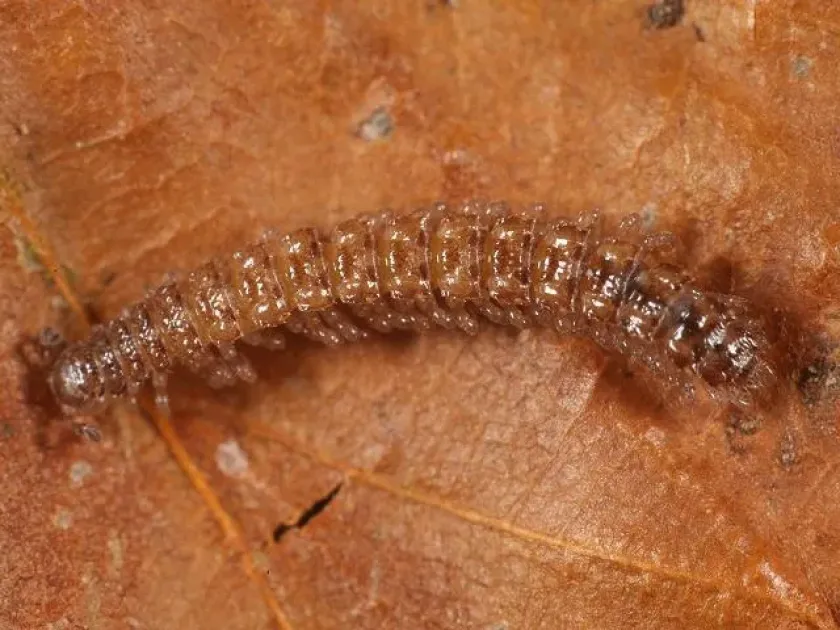
Brachydesmus is a genus of millipedes belonging to the family Polydesmidae within the class Diplopoda, known for their flattened, multi-segmented body structure.
Typically, these millipedes are small, measuring between 5 to 10 millimeters in length, making them easy to miss in the dense soil environment.
Their coloration ranges from pale white to light brown, which provides excellent camouflage amidst decaying organic matter and soil particles.
Each body segment bears two pairs of legs, a trait that allows them to move efficiently through soil cracks and crevices in search of food.
The life cycle is characterized by gradual growth, where the number of body segments increases significantly during successive molting stages until maturity.
What it damages
These pests are opportunistic feeders that primarily attack seeds, young seedlings, and the delicate root systems of various agricultural crops.
Major economic damage is often observed in crops like sugar beets, maize, sunflowers, and diverse vegetable varieties grown in greenhouse or open field conditions.
By consuming plant tissues underground, Brachydesmus weakens the root structure, leading to stunted growth, reduced nutrient uptake, and increased susceptibility to disease.
Severe infestations can lead to the total destruction of germinating seeds, necessitating costly replanting efforts for farmers during the spring season.
Areas with high organic matter content, particularly those treated with fresh manure, are highly susceptible to elevated millipede populations.
When it appears
The peak activity of Brachydesmus is closely linked to soil moisture levels and temperatures, with the highest threat occurring during early spring planting.
When soil temperatures rise above 8–10 degrees Celsius, millipedes emerge from their overwintering sites to feed aggressively on newly sown seeds.
Summer droughts often force these pests to migrate deeper into the soil profile to avoid desiccation, though irrigation may temporarily increase their surface activity.
Autumn brings another period of activity as they feed and prepare for the winter dormancy period in the soil or under plant debris.
Winter survival is typically achieved by adults and older larvae burrowing into deeper soil layers to avoid freezing temperatures.
Signs of infestation
The primary symptom of an infestation is the presence of small, shallow bite marks or ulcers on seeds and the primary roots of emerging seedlings.
A careful examination of the soil around affected plants often reveals clusters of millipedes, especially near un-decomposed plant organic matter.
Plants struggling with millipede damage often exhibit yellowish leaves, wilting despite sufficient soil moisture, and an overall lack of vigor compared to healthy plants.
Uneven crop stands and patches of bare soil in fields can serve as an indicator of significant localized pest activity underground.
The presence of fine, granular fecal pellets near the root zone is a distinctive sign that millipedes are currently feeding on the plant tissue.
Control measures
Effective management begins with sound agronomic practices, such as deep autumn plowing, which disrupts the pests' habitat and destroys their overwintering sites.
Farmers should avoid applying fresh, un-composted manure, as it serves as a primary attractant and food source for these soil-dwelling millipedes.
Seed treatment with systemic insecticides is a highly recommended strategy to provide protective coverage during the critical seedling establishment phase.
Managing soil drainage is vital, as excessive moisture creates an ideal environment for population explosions of moisture-loving millipede species.
- Crop rotation and soil sanitation
- Deep autumn tillage
- Systemic seed dressing
- Optimal irrigation management
Taxonomy
- Latin name
- Brachydesmus
- Family
- Polydesmidae
- EPPO code
- BRACSP
Discussion
No discussions yet — be the first.