
Brachydesmus superus
Brachydesmus superus
Description
How to identify
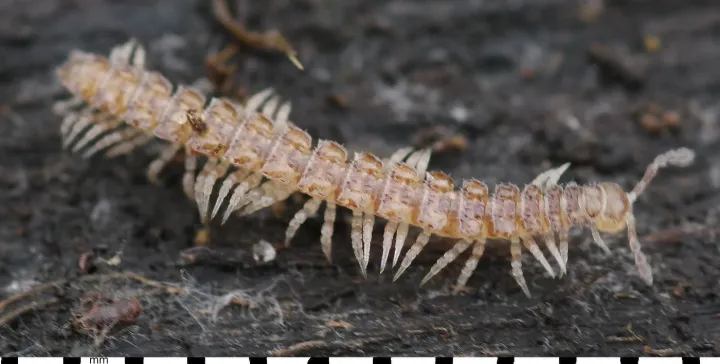
Brachydesmus superus is a small millipede species belonging to the order Polydesmida. It is a common soil-dwelling arthropod often found in gardens, greenhouses, and agricultural fields.
The adult millipede is relatively small, typically measuring 5 to 10 millimeters in length. Its body is composed of numerous segments covered with hard, plate-like structures, and it usually has a pale brown or translucent coloration.
These millipedes thrive in moist environments with high organic matter content. They are highly sensitive to desiccation, so they spend most of their time beneath the soil surface or under decaying plant material.
Their life cycle involves a series of molts, where they gradually grow and add more segments to their bodies. They lay their eggs in the soil, often within protected cavities or clusters of organic matter.
While often considered decomposers, under favorable environmental conditions, their populations can spike, leading them to shift their dietary habits towards living plant tissues.
What it damages
The primary damage caused by Brachydesmus superus involves feeding on germinating seeds, tender roots, and the hypocotyls of young seedlings. This is particularly devastating for direct-sown crops.
Many vegetable crops, including cucumbers, tomatoes, lettuce, and brassicas, are vulnerable. They can cause complete loss of seedlings by severing the roots or gnawing through the stems.
Root crops like potatoes and carrots are also frequently attacked. The millipedes create small, irregular cavities on the surface of these vegetables, which often become secondary infection sites for pathogens.
In greenhouses, these millipedes can be especially destructive due to the consistently high humidity and warm temperatures that allow for year-round reproduction.
- Consumption of germinating seeds leading to emergence failure.
- Severe root pruning in young seedlings.
- Surface scarring and pitting on mature root vegetables.
- Transmission of soil-borne fungal pathogens into damaged tissues.
When it appears
The activity of these millipedes is closely linked to soil moisture levels. They are most active during wet spring months when seeds are being sown and young seedlings are most vulnerable.
During dry summer months, they tend to move deeper into the soil profile to find the moisture required for survival, which naturally reduces their impact on surface-level plants.
In autumn, as rainfall increases and temperatures drop, they return to the upper soil layers, which can pose a threat to late-planted crops or over-wintering plants.
Within protected environments like greenhouses or polytunnels, their activity is not strictly seasonal. Provided the irrigation is frequent, they can remain a constant threat to plant health.
Winter survival is generally successful as they hibernate deeper in the soil, protected from freezing temperatures, ensuring that the population remains viable for the following season.
Signs of infestation
One of the most obvious signs is the sudden collapse of seedlings that appear healthy at the base, often with the root system missing or severely reduced upon inspection.
Evidence of feeding can be found by examining the soil around the base of affected plants, where one might see the small, coiled millipedes when disturbed.
Irregular, shallow pitting on tubers and roots is a classic indicator of millipede feeding, as opposed to the cleaner, deeper holes often left by other pests like wireworms.
Stunted growth or chlorosis (yellowing) in young plants despite adequate nutrient and water supply may suggest underlying root damage caused by Brachydesmus superus.
In greenhouse settings, damp patches on the soil surface often host these creatures, and their feeding tunnels may sometimes be visible if the soil is carefully turned over.
Control measures
Effective management begins with improving soil drainage and avoiding excessive irrigation. Keeping the soil surface slightly drier can significantly reduce millipede activity.
Regular cultivation of the soil, such as shallow tilling, helps to disrupt their habitat and exposes them to predators and unfavorable environmental conditions.
Using sterile or high-quality potting mixes for greenhouse seedling production helps to prevent the introduction of these pests into the early stages of plant growth.
Crop rotation and the prompt removal of crop residues are essential practices to deny the millipedes the organic matter they need for food and shelter during the off-season.
In cases of severe infestation, specifically approved soil insecticides may be applied. However, these should always be used as a last resort and in accordance with local agricultural guidelines.
Taxonomy
- Latin name
- Brachydesmus superus
- Family
- Polydesmidae
- EPPO code
- BRACSU
Discussion
No discussions yet — be the first.