
Flat-backed millipede
Polydesmus angustus
Description
How to identify
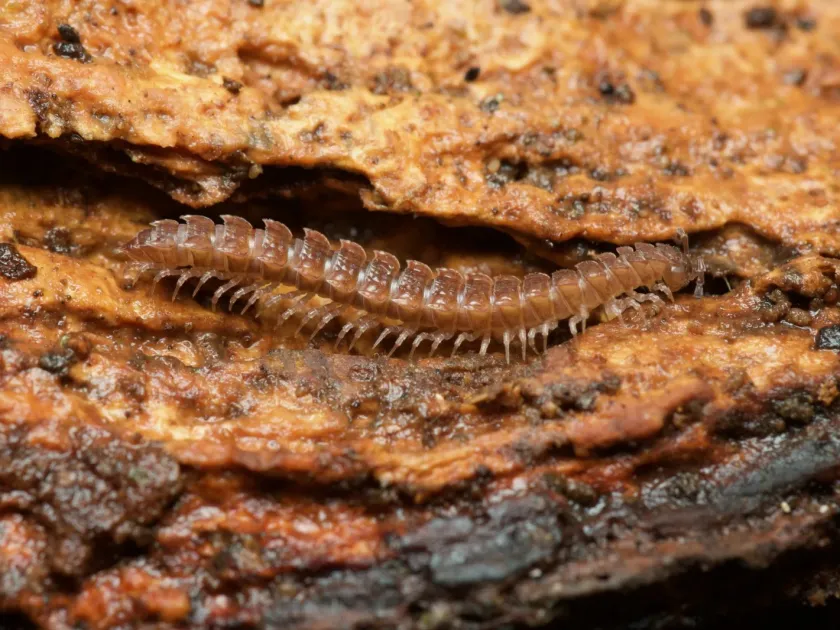
The flat-backed millipede (Polydesmus angustus) is a soil-dwelling arthropod belonging to the order Polydesmida and the family Polydesmidae. Adult specimens have a flattened body measuring about 15–20 mm in length, consisting of 20 body segments.
A distinctive feature of this species is the presence of lateral extensions (paranota) on the body segments, which give the organism a saw-like appearance. The head is equipped with antennae, and the mouthparts are adapted for feeding on soft plant tissues.
Unlike some other millipede groups, Polydesmus angustus is capable of secreting defensive chemicals when threatened. This moisture-loving organism avoids direct sunlight and spends most of its life in the upper layers of the soil.
The life cycle includes an egg stage, several larval instars, and the adult stage. Females lay eggs in soil chambers, often cementing them together with a secretion to protect the clutch from desiccation.
Larvae emerge with fewer segments than adults, adding them progressively through successive molts. The development time to sexual maturity is lengthy and is highly dependent on environmental factors like soil temperature and moisture levels.
What it damages
This pest primarily affects vegetable crops in both greenhouses and open fields, thriving under conditions of high humidity. Seedlings and young plants are the most susceptible to attack.
The flat-backed millipede feeds on roots, the root collar, and young stems, often causing wilting and the subsequent death of the plants. Crops with succulent roots, such as carrots or radishes, are particularly prone to severe damage.
In greenhouses, these millipedes can damage germinating seeds, leading to poor crop establishment and the need for replanting. Feeding wounds often serve as entry points for secondary fungal and bacterial infections.
The pest prefers areas with high organic matter content and poor soil drainage. Under intensive cultivation, populations can reach high levels, significantly threatening the marketability of vegetable yields.
Beyond direct feeding, the flat-backed millipede leaves characteristic ulcers on root crops, which compromises their appearance and shelf life, making them unsuitable for commercial sale.
When it appears
The activity of Polydesmus angustus is closely tied to soil moisture fluctuations. In temperate climates, the most favorable periods are during moist spring and autumn months, with soil temperatures between 12–20 degrees Celsius.
During dry summer periods, millipedes migrate deeper into the soil profile to find necessary moisture. However, under regular irrigation, their feeding activity can persist throughout the entire summer season.
Peak activity in greenhouses is observed during periods of high air and soil humidity, especially at the start of the season when seedlings are most vulnerable. They move through the soil using existing gaps or root channels.
In autumn, the pest feeds actively on decaying plant material before entering dormancy. During this time, they may attack remaining root vegetables in the field, boring holes into the tissue.
They overwinter as adults or older larvae deep in the soil, usually at depths of 20–30 cm, or under layers of leaf litter and mulch that provide a stable microclimate.
Signs of infestation
The first visual sign of a flat-backed millipede infestation is the sudden wilting of seedlings despite adequate soil moisture. Inspection of the root zone reveals characteristic chewed-out patches on the epidermis.
On root crops like carrots or beets, signs of damage appear as small, rounded ulcers or shallow grooves. These areas are frequently associated with secondary rot caused by gray or white mold fungi.
In greenhouse environments, the pest can be detected by examining the soil surface or mulch layer after irrigation, especially during early morning or late evening hours. They are often found hiding under soil clumps.
Increased tunneling in the soil and damaged leaf margins that touch the ground are indirect indicators of their presence. When digging up the soil, the characteristic brown millipedes can often be seen.
The presence of Polydesmus angustus is frequently accompanied by a specific, pungent odor released when the creatures are disturbed. Experienced growers can identify them by the unique damage patterns on cotyledons.
Control measures
The primary control strategy is cultural: practicing proper crop rotation and deep autumn plowing, which exposes the pests to freezing temperatures and reduces the population size.
Ensuring proper soil drainage is crucial, as waterlogged conditions provide the perfect habitat for millipede reproduction. It is also recommended to avoid excessive use of fresh, non-decomposed organic fertilizers.
In greenhouses, simple traps made of potato or carrot slices buried 5–10 cm deep can be effective. Regularly checking and clearing these traps allows for the manual collection and disposal of the millipedes.
Chemical control may be necessary during severe outbreaks using soil-applied insecticides. Products containing diazinon or similar contact insecticides should be applied prior to planting according to local regulations.
Biological control involves the use of entomopathogenic nematodes, which act as natural enemies to soil-dwelling millipedes. Maintaining soil health promotes the presence of natural predators that help regulate pest numbers.
Taxonomy
- Latin name
- Polydesmus angustus
- Family
- Polydesmidae
- EPPO code
- POLDAN
Discussion
No discussions yet — be the first.