
Polydesmus denticulatus
Polydesmus denticulatus
Description
How to identify
Polydesmus denticulatus is a species of flat-backed millipede belonging to the order Polydesmida and the family Polydesmidae.
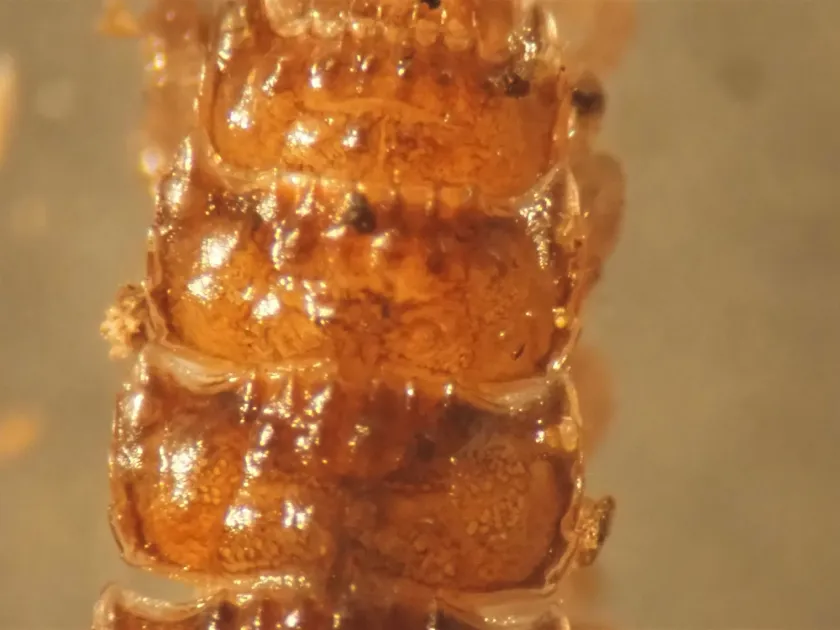
The adult millipede typically measures 8–12 mm in length and is characterized by a flattened body composed of 20 distinct segments.
Each segment features lateral projections, often referred to as keels, which give the organism a distinct, slightly wavy appearance along its edges.
Their coloration is generally a shade of light to reddish-brown, and the dorsal surface of their exoskeleton has a granulated texture.
Like other polydesmids, they possess defensive glands capable of secreting chemicals to deter predators, often noted for their almond-like or acidic scent.
What it damages
This millipede is recognized as a opportunistic pest, particularly in agricultural settings where it feeds on tender plant parts.
It poses a significant threat to germinating seeds, young seedlings, and the delicate root systems of vegetable crops like cabbage, cucumber, and radish.
By consuming the base of the stems and the root hairs, they cause seedlings to wilt and collapse, leading to significant stand reduction in fields.
In greenhouses and nurseries, where humidity levels are constantly high, they can cause extensive damage to young transplants and ornamental plants.
The wounds left by these millipedes are frequently colonized by soil-borne pathogens, leading to further decay and mortality of the crop.
When it appears
The activity of Polydesmus denticulatus is highly correlated with soil moisture levels, making them most active in wet or irrigated environments.
Springtime is a critical period when high humidity and developing seeds or seedlings create optimal conditions for their feeding activity.
During dry spells or extreme temperatures, they migrate deeper into the soil profile to find the moisture required for their survival.
Autumn rains often trigger a secondary period of activity as the soil remains moist and temperatures are moderate, favoring their movement.
Their life cycle is continuous, and they tend to remain within the upper layers of organic-rich soil throughout most of the growing season.
Signs of infestation
The presence of unexplained wilting in young seedlings is a primary indicator of potential infestation in the root zone.
Small, irregular gnaw marks on the root collar or roots themselves are indicative of millipede feeding, which distinguishes them from other soil pests.
To detect their presence, farmers can place moisture-retaining traps, such as cardboard pieces or slices of vegetables, on the soil surface overnight.
Checking under mulch, leaf litter, or debris after a rainfall will often reveal aggregations of these millipedes due to their photophobic behavior.
Evidence of shallow tunnels or hollowed-out areas on root crops like carrots or potatoes at harvest time confirms their presence in the soil.
Control measures
Integrated pest management focusing on soil moisture control is the most effective approach to preventing large-scale infestations.
Thorough cultivation and the removal of organic debris from the field reduce the habitat and food sources necessary for their proliferation.
Ensuring good soil drainage and avoiding over-irrigation are key cultural practices to keep the environment unsuitable for these moisture-loving pests.
In greenhouse settings, maintaining proper sanitation and using sterilized potting media are essential to prevent the introduction of these pests.
- Use of trap crops to aggregate pests for easier removal.
- Deep tillage to disrupt their habitat and expose them to surface predators.
- Targeted soil treatments if the population density reaches economic injury levels.
Taxonomy
- Latin name
- Polydesmus denticulatus
- Family
- Polydesmidae
- EPPO code
- POLDDE
Discussion
No discussions yet — be the first.