
Polydesmus coriaceus
Polydesmus coriaceus
Description
How to identify
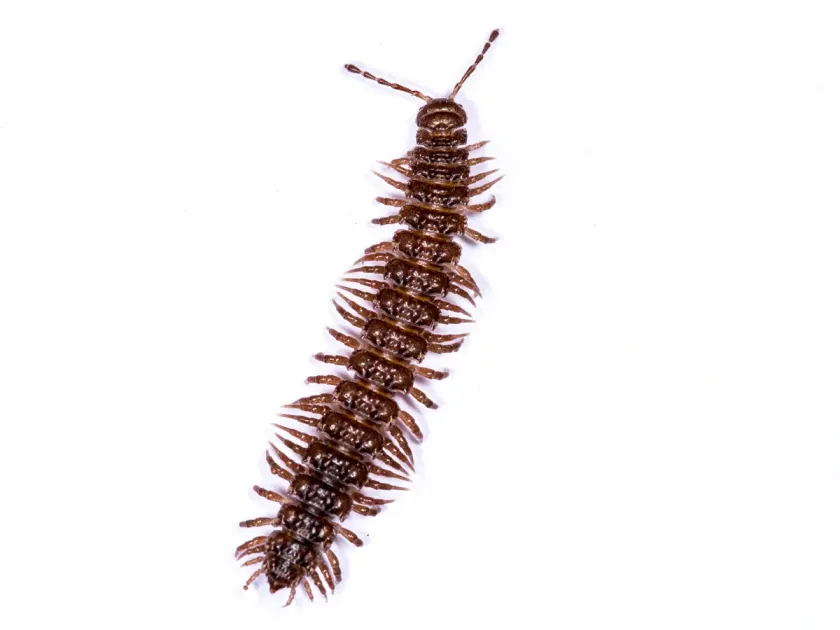
Polydesmus coriaceus is a species of flat-backed millipede belonging to the order Polydesmida. These organisms are characterized by their flattened, segmented bodies, usually reaching a length of 10 to 15 mm, with prominent lateral extensions on each body segment.
Their coloration typically ranges from light brown to reddish-brown, allowing them to blend into the soil environment. Each segment bears two pairs of legs, which facilitate efficient movement through moist soil layers and decaying organic matter.
These millipedes are strictly moisture-dependent. They are primarily nocturnal or active during periods of high humidity, remaining hidden in the soil or under debris during dry and sunny weather to prevent desiccation.
The life cycle involves a gradual increase in the number of body segments following sequential molts. They thrive in environments rich in organic material, which serves as both a primary food source and a protective habitat.
In managed agricultural systems, they are most common in areas with poor drainage or in greenhouses, where high soil moisture and stable temperatures provide an ideal setting for population growth.
What it damages
Polydesmus coriaceus acts as a pest to a variety of vegetable crops, including potatoes, carrots, beets, and young ornamental seedlings. They feed by consuming the soft tissues of roots, tubers, and stems.
On root crops and tubers, these millipedes create shallow but wide ulcers. While these lesions may seem minor, they significantly degrade the marketability of the produce and serve as entry points for secondary fungal and bacterial infections.
Young plants are particularly vulnerable, as the millipedes feed on the tender root collars and root systems, leading to sudden wilting and death. Large populations can devastate seedling beds in a very short time.
In greenhouses, Polydesmus coriaceus can cause significant damage by feeding on the delicate roots of young seedlings, preventing them from establishing properly and causing high rates of seedling mortality.
The damage caused by these millipedes is often complicated by soft rot bacteria, which rapidly colonize the wounded tissue, leading to complete disintegration of the root or tuber surface.
When it appears
The activity of Polydesmus coriaceus begins with the warming of the soil in early spring. The period from sowing to seedling establishment is the most critical time for potential crop damage.
Throughout the growing season, these millipedes remain active as long as soil moisture is sufficient. During hot, dry summer months, they migrate deeper into the soil profile but return to the surface layers during rainfall or irrigation.
Reproduction occurs throughout the warmer months. Females lay eggs in small chambers created in the soil, protecting the offspring from predators and environmental fluctuations.
Winter survival is achieved by adults and older nymphs residing deep in the soil or protected under decaying plant matter. This allows the population to persist through winter and resume activity as soon as conditions improve.
In heated greenhouses, seasonal patterns are largely ignored by the pest, as they can continue to reproduce and feed year-round if the soil environment remains consistently moist and temperate.
Signs of infestation
The most evident sign of a Polydesmus coriaceus infestation is the presence of irregular, eaten-out patches on underground plant parts. Plants that wilt suddenly for no apparent reason should be inspected for root damage.
Regular monitoring during irrigation or after rain may reveal the millipedes on the soil surface, especially near the base of the plant where they congregate to feed on organic matter or root tips.
When harvesting root crops, the presence of ulcers or pitted areas on the surface of carrots or potatoes is a clear indication that millipedes were present during the growing season.
- Sudden wilting of seedlings without foliage symptoms.
- Small, flat millipedes visible under mulch or decaying leaves.
- Ulcers and pitting on potato tubers and root vegetables.
Secondary signs often include foul-smelling black patches on the roots, which signify that the initial mechanical damage from the millipede has been followed by microbial rot.
Control measures
Cultural management is the primary defense. Deep fall tillage helps expose millipedes to freezing temperatures and predators, significantly reducing the overwintering population.
Improving soil drainage and avoiding excessive irrigation are critical, as these millipedes are highly sensitive to moisture fluctuations and cannot survive in well-drained, drier soils.
Trap crops or baiting can be effective; burying pieces of fresh vegetables like potato or carrot attracts the millipedes, which can then be collected and destroyed periodically.
When chemical control is necessary, targeted soil insecticides may be used according to local regulatory guidelines. However, these should be used as a last resort to minimize impact on beneficial soil organisms.
Biological control using entomopathogenic nematodes is an environmentally friendly and effective strategy, as these microscopic worms specifically parasitize and kill millipedes without harming the plants or soil health.
Taxonomy
- Latin name
- Polydesmus coriaceus
- Family
- Polydesmidae
- EPPO code
- POLDCR
Discussion
No discussions yet — be the first.